Olympic Shooting Disciplines: 2026 Guide for Athletes
- Mo-Su 10.00 – 20.00
- +372 555 85 416
- sale@laskmine.ee





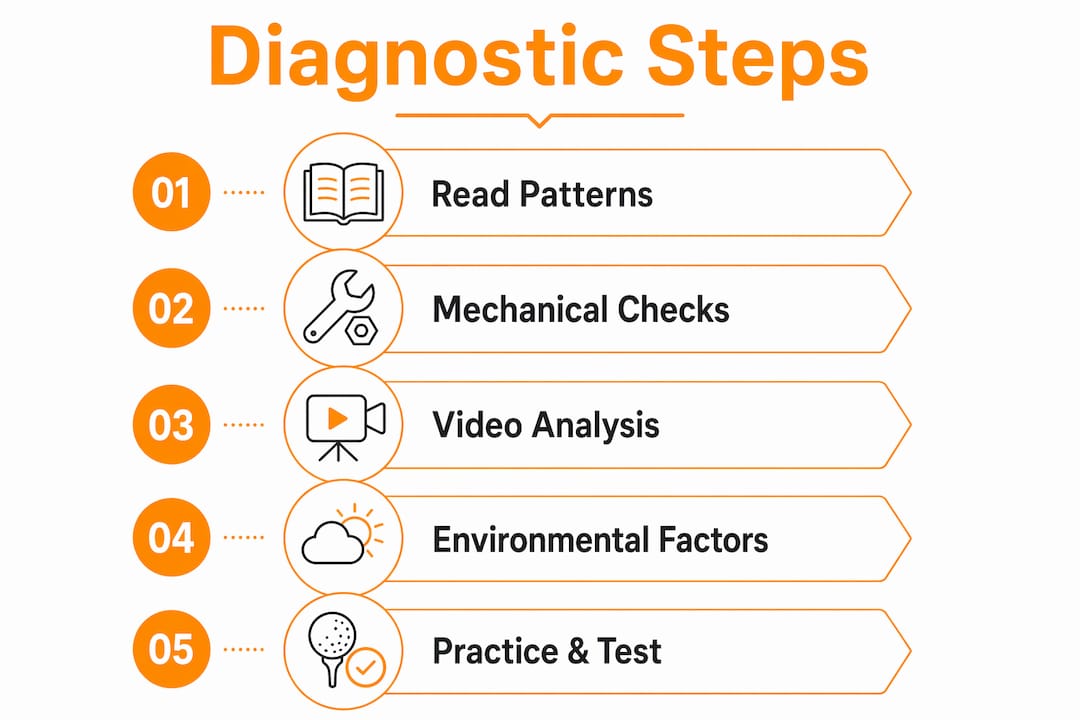
Diagnosing shooting errors is the process of identifying the root causes of accuracy problems by analyzing shot patterns, shooter behavior, equipment condition, and environmental factors. Most shooters who struggle with consistency are not dealing with a broken gun. They are dealing with an undiagnosed technique flaw, a loose screw, or a misread environmental condition. Learning how to diagnose shooting errors correctly separates shooters who plateau from those who keep improving. This guide walks you through the full process, from reading your shot groups to running mechanical checks to using video analysis tools that reveal what your eyes miss entirely.
Shot placement patterns are the first and fastest diagnostic tool available to any shooter. Every group you fire tells a story about your technique, and learning to read that story is the foundation of effective error diagnosis.
For right-handed pistol shooters, shot placement zones map directly to specific technique faults. Shots landing at 7 o’clock indicate trigger jerking. Shots at 9 o’clock mean too little trigger finger is contacting the trigger face. Shots at 11 o’clock point to recoil anticipation. Shots at 3 o’clock show too much trigger finger on the trigger. Left-handed shooters see mirror-image patterns. These are not random. Each zone corresponds to a predictable muscle error.
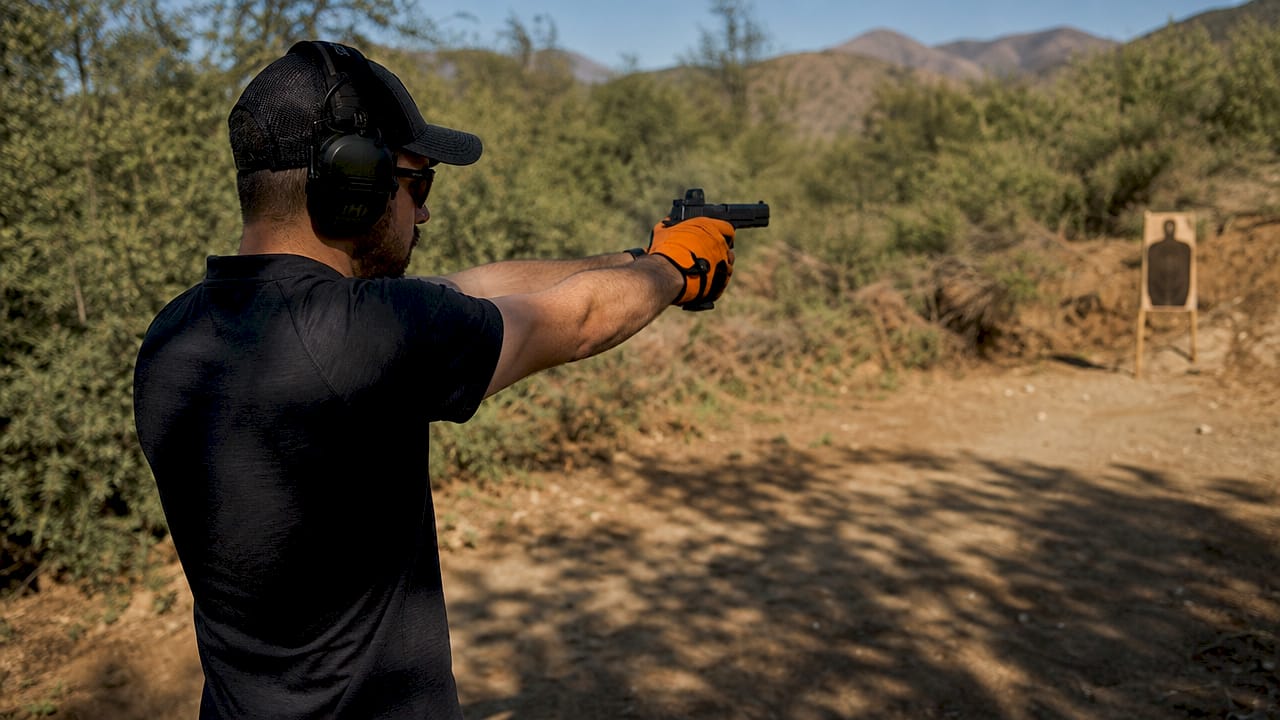
Three-shot groups are the minimum reliable sample for pattern recognition. A single flyer tells you almost nothing. Three shots in the same zone confirm a repeatable fault, not a one-time disturbance. Five-shot groups give you even more confidence in the diagnosis.
The most common errors found through pattern analysis are trigger jerking and recoil anticipation. Both produce low-and-left impact zones for right-handed shooters. They feel identical to the shooter in the moment, which is why objective analysis matters more than gut feeling.
Pro Tip: Draw a clock face over your target after each group. Label each shot by its clock position. After three sessions, you will see a clear pattern that tells you exactly which technique fault to address first.
Consistent grouping, even if off-center, is actually a good sign. It means your technique is repeatable. An off-center but tight group is a zeroing or grip problem. A scattered group with no pattern points to inconsistent fundamentals or a mechanical issue. Knowing the difference saves you hours of guesswork.
Most rifle accuracy problems start with shooter technique, then action screw torque, then ammunition selection. Less than 10% of sudden accuracy drops come from mechanical rifle failure. That statistic means you should exhaust technique and setup checks before touching your ammo or optics.
A systematic mechanical inspection follows this order:
| Mechanical check | What it reveals | Fix |
|---|---|---|
| Action screw torque | Loose bedding shifts point of impact | Torque to manufacturer spec |
| Scope ring alignment | Lateral stress on tube | Re-lap or replace rings |
| Parallax setting | False group enlargement | Adjust for shooting distance |
| Trigger condition | Unconscious shooter compensation | Clean and inspect trigger group |
| Carbon ring at throat | Sudden accuracy drop | Deep clean the chamber throat |
Proper diagnosis requires changing only one variable at a time. If you swap ammo and adjust your scope on the same day, you cannot know which change affected your groups. Fix one thing, shoot a group, record the result, then move to the next variable.
Pro Tip: Keep a range notebook. Log every change you make, the date, the distance, the ammunition lot number, and the group size. After a month, patterns emerge that are invisible session to session.
Recording your shooting sessions with AI-driven apps is the most objective method for identifying subtle errors. Video with shot timer overlays reveals micro-flinching, inefficient draw strokes, and recoil management flaws through frame-by-frame review. These are errors that feel completely normal to the shooter in real time.
The core problem video solves is the proprioceptive gap. Your body’s sense of what it is doing and what it is actually doing are often different. A shooter who flinches before the shot fires will swear they did not flinch. The video proves otherwise. That gap between feeling and reality is where most ingrained errors live.
Specific errors that video analysis consistently exposes include:
“Video analysis reveals subtle errors invisible to the naked eye, enabling targeted corrections for improved speed and accuracy.”
Shot timer data adds another layer. Split times between shots tell you where your process slows down. A consistent slow split on the second shot of a pair often points to a recoil management problem, not a speed problem. Fixing the recoil management fixes the split time automatically.
Environmental conditions are the most common source of misdiagnosis in field shooting. Experts warn shooters to blame physics, not the gun, when accuracy drops during adverse conditions. Wind and heat mirage are the two biggest culprits.
Wind deflects bullets in ways that change with every shot, depending on gusts, direction shifts, and the shooter’s reading of the condition. A shooter who does not account for wind will see scattered groups and assume the rifle is inconsistent. The rifle is fine. The wind is not.
Heat mirage bends the visual path between the shooter and the target. At high magnification, mirage makes the target appear to shift laterally. The shooter adjusts their aim to compensate, then fires at the wrong point. The result looks like a scope or rifle problem when it is purely optical distortion from heat.
The fix is controlled testing. Diagnose mechanical and technique issues on calm days with stable light. If you must shoot in adverse conditions, log the wind speed, direction, and temperature alongside every group. That data lets you separate environmental influence from genuine equipment or technique faults.
Pro Tip: Shoot your diagnostic groups early in the morning. Wind is typically calmer, mirage is minimal, and barrel heat from the sun does not affect your point of impact. Morning sessions give you the cleanest data for troubleshooting shooting problems.
Shooting position also affects diagnosis. A bipod on soft ground compresses differently shot to shot. A bag rest that shifts between shots introduces vertical movement. Standardize your rest setup before concluding that your rifle or technique is the problem.
Accurate diagnosis of shooting errors requires separating technique faults, mechanical issues, and environmental variables before making any corrections.
| Point | Details |
|---|---|
| Read your shot patterns first | Clock-position analysis of shot groups identifies specific technique faults before any other check. |
| Mechanical checks follow a fixed order | Verify torque, parallax, and carbon build-up before changing ammo or optics. |
| Video catches what you cannot feel | Frame-by-frame review exposes micro-flinching and grip errors invisible during live fire. |
| Change one variable at a time | Altering multiple factors simultaneously makes it impossible to isolate the actual cause. |
| Control the environment before diagnosing | Test in calm, stable conditions to avoid misattributing wind or mirage effects to equipment faults. |
Shooters struggle with self-diagnosis because it challenges the ego. Shooters tend to blame their sights before their own anticipatory flinching. I have watched experienced shooters spend hundreds of dollars on new triggers, new scopes, and premium ammunition when a week of dry-fire practice would have solved the problem entirely.
Dry-fire drills are the most underused diagnostic tool in the sport. They remove all external variables. No recoil, no noise, no environmental conditions. Just you, the trigger, and the sights. If your front sight dips before the striker falls, you have a flinch. No equipment change fixes that. Only deliberate practice does.
The systematic approach I trust most is this: shoot a five-shot group, analyze the pattern, make one change, shoot another group. Repeat. It feels slow. It is actually the fastest path to real improvement because every session produces usable data instead of noise.
The shooters who improve fastest are not the ones with the best gear. They are the ones willing to admit that the problem is probably them, run the mechanical checks anyway to rule out equipment faults, and then put in the dry-fire repetitions to fix what the video reveals. That combination of honesty, method, and practice is what separates good shooters from great ones.
— Tõnis
Reading about error diagnosis builds knowledge. Applying it under real conditions builds skill. Laskmine’s Tondi Shooting Range in Tallinn gives you the structured environment to do exactly that.

The practical shooting challenges at Tondi Shooting Range put your technique under pressure in ways that a static range cannot replicate. You will see your diagnosed faults surface immediately when the clock starts and the targets move. Laskmine also offers IPSC safety training courses where expert coaches give you direct feedback on technique, positioning, and trigger control. Guided sessions compress months of solo practice into focused, corrected repetitions. If you are serious about fixing your shooting mistakes, this is where the work gets done.
A low-left group typically indicates trigger jerking or recoil anticipation. Both errors cause the muzzle to push down and left at the moment of firing.
Three shots in the same zone confirm a repeatable fault. Five-shot groups give you higher confidence that the pattern reflects a consistent technique error rather than a random variation.
Analyze your shot patterns first to rule out obvious technique faults. Then run mechanical checks in order: action screw torque, parallax setting, trigger condition, and carbon build-up at the chamber throat.
Yes. Dry-fire drills remove recoil and noise, which are the triggers for anticipatory flinching. Regular dry-fire sessions break the anticipation habit that live fire reinforces.
Environmental factors like wind, mirage, and temperature are the most common cause. Log conditions alongside every group to separate environmental influence from genuine technique or equipment changes.