72–100 Million Kalashnikov Rifles: History, Tech, and Tallinn Range
- Mo-Su 10.00 – 20.00
- +372 555 85 416
- sale@laskmine.ee





Yes, you can shoot at a range in winter: book an indoor, police-authorized shooting range and let a supervised session handle the cold. Before you go, confirm two things: the facility’s booking availability and its posted safety rules. Tondi Lasketiir runs indoor sessions year-round, so checking its schedule is the fastest next step.
TL;DR:
- Indoor ranges operate year-round with consistent schedules and supervision, making winter visits just as accessible as in any season.
- Confirm range booking availability early, especially for weekends and group events, to avoid missing desired time slots due to high demand.
- No firearm license is needed for standard supervised sessions since rental firearms and safety gear are provided, but bringing your own firearm requires license validation.
- First-timers will be guided through handling and live-fire on-site, with every session designed to accommodate novices and experienced shooters alike.
- Booking one to two weeks ahead ensures better selection of weekend times, especially for corporate and large group events during peak holiday planning.
Shooting practice is only allowed at ranges or shooting sites authorized by the police, and informal or unsanctioned shooting locations are off limits no matter how private the spot looks. Every legitimate range builds its own terms on top of that baseline: supervision requirements, minimum ages, storage rules for firearms you bring in, and a list of banned activities on the firing line.
Before booking anywhere, check:
Our firearm safety rules page walks through the supervision and handling standards we apply at every session, which mirrors what you should expect from any properly run range.
Indoor ranges solve most winter problems before they start. Heating, lighting, and lane assignments stay the same in January as in July, and a supervisor is on hand the entire time. Outdoor ranges depend on the weather and often cut back their hours or close sections entirely once the ground freezes.
If you do plan an outdoor session, work through this order:
Most indoor ranges, including ours, supply rental firearms, ear and eye protection, heating, and an assigned lane, so you mainly need to bring valid ID, a firearm license if you own one, closed-toe shoes, and a layer you can shoot comfortably in.
Pro Tip: Dress in breathable layers rather than one heavy coat. You will warm up fast under range lighting and hearing protection.
For a fuller rundown, our winter shooting prep guide covers what to pack and what ranges typically handle for you.
Winter does not usually mean fewer slots, but weekends still fill faster once people start planning holiday gatherings and office parties. Checking availability early, rather than the week you want to shoot, saves you from settling for a leftover time.
Weekend slots and larger group bookings are worth locking in at least one to two weeks ahead. Corporate events benefit from even more lead time, since instructors need to plan the format around group size.
Range conduct is non-negotiable regardless of the season: firearms stay unloaded until you are on the line, muzzles point downrange at all times, and you follow the instructor’s commands without exception. These rules exist because practicing outside an authorized range is not permitted under any circumstance, and the authorized ranges enforce their own version of the same discipline.
When renewing certain firearm licenses, an additional shooting test covering both handling and live-fire is required before the license can be extended.
That requirement comes directly from police guidance on license renewal, and practicing at an authorized range beforehand is the recommended way to prepare. The test itself typically runs in two parts: a handling check where you demonstrate safe loading, carrying, and unloading, followed by a live-fire portion scored against a basic standard. Bring your license, the firearm you intend to test with if allowed, and any documentation the police have specified for your appointment.
A typical visit follows the same shape whether it is July or December. You check in, show ID, and get fitted with hearing and eye protection. A safety briefing covers the specific firearms and lane rules for your session, then you move to supervised live-fire with an instructor correcting your stance, grip, and trigger control as you go. A short debrief wraps things up, often with a chance to ask questions about what you just learned.
Packages vary by occasion: first-timers usually start with something short and low-pressure, corporate groups book formats built around turns and friendly competition, and celebrations like birthdays or bachelor parties lean toward longer, higher-energy packages. No prior experience is needed for any of them, since every session is supervised from start to finish. Sessions commonly run 60 to 90 minutes, which pairs well with a nearby meal or drinks afterward if you are organizing a group outing. Our visitor checklist covers what a first-time participant should know walking in.
Tondi Lasketiir operates an indoor shooting range with sessions that run on a fixed schedule regardless of the weather. Every session is supervised by a professional instructor, safety training is built into the package rather than sold as an add-on, and the firearm selection is wide enough to suit a nervous first-timer or an experienced owner looking to try something new.
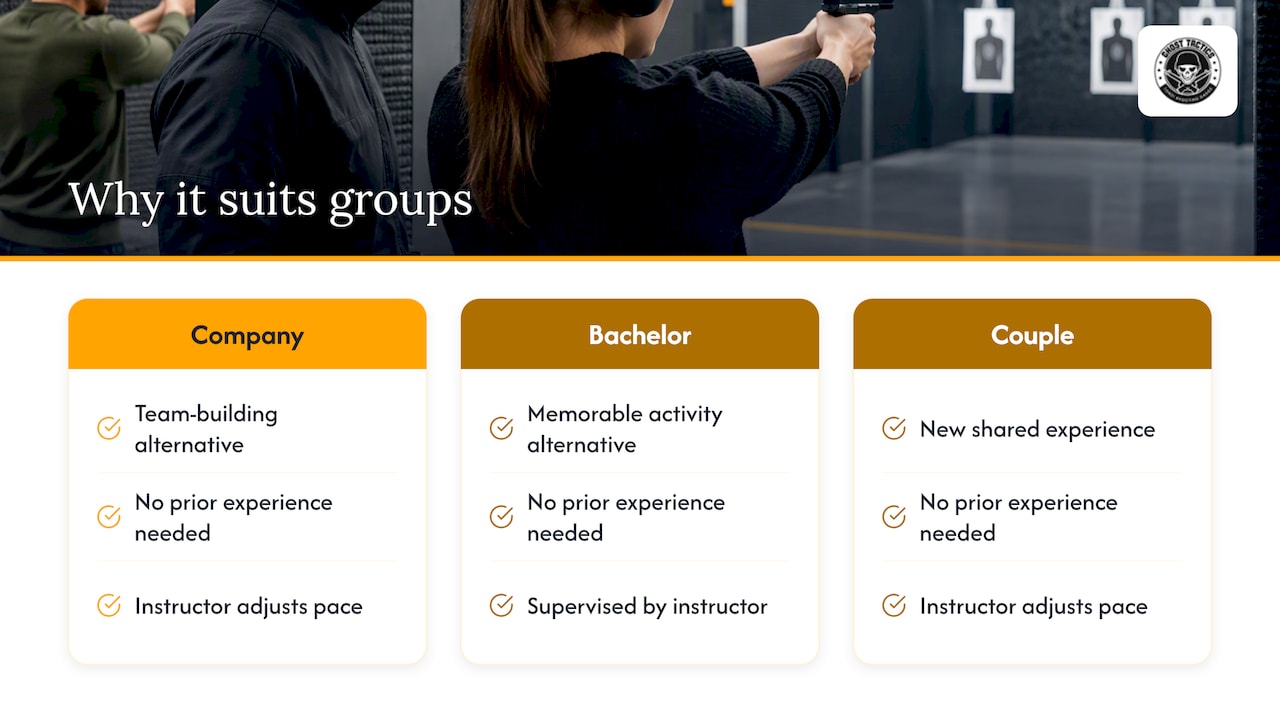
Groups book for a mix of reasons: a company wants a team-building afternoon that is not another trust fall, a bachelor party wants something memorable that is not another bar crawl, and a couple wants an activity neither of them has tried before. Across those formats, the common thread is that nobody needs prior shooting experience, because the instructor adjusts the pace to the group in the room. Our beginner primer covers the three things every first-timer should know before their first visit.
Winter is actually one of the easier times to book an indoor session, since the range stays open on the same schedule year-round and nothing about the experience changes when it snows. Whether you are planning a quiet solo visit, a birthday outing, a bachelor party, or a corporate team event, there is a package built for the group size and energy you want.
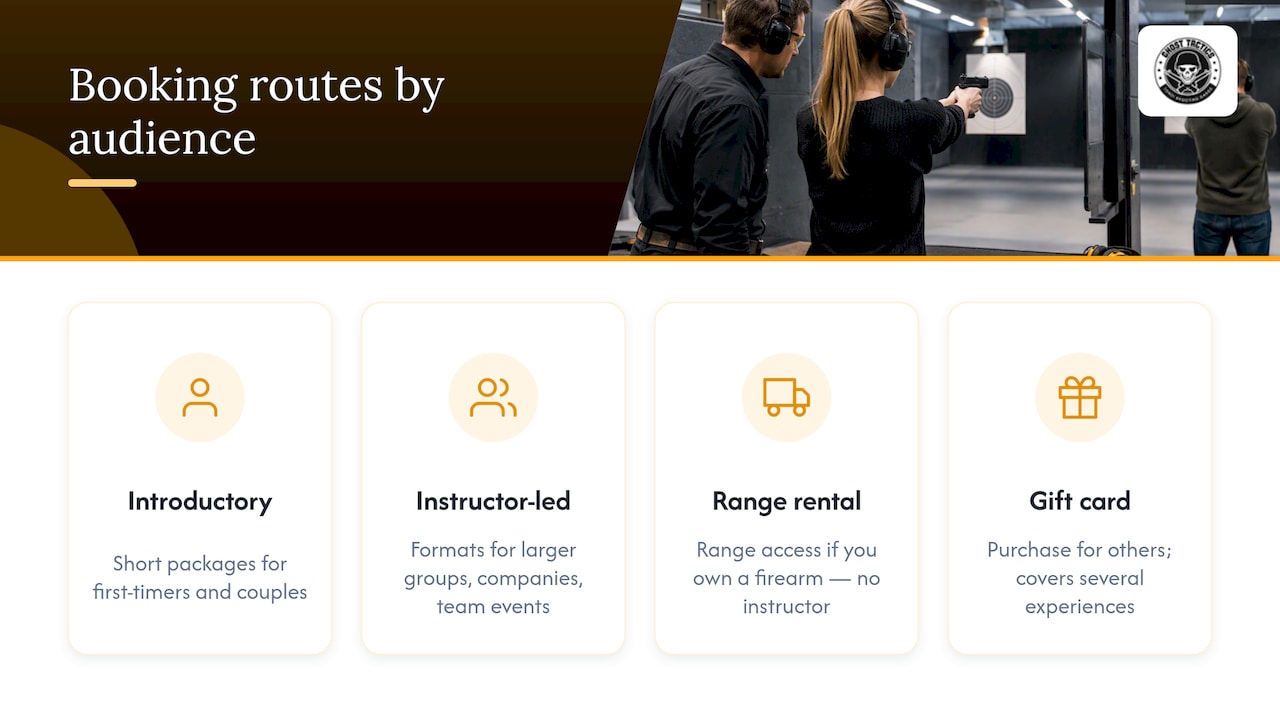
First-timers and couples tend to do well with shorter introductory packages, while larger groups and companies get more value from the dedicated event formats built around friendly competition and instructor-led coaching. If you already own a firearm and just want range access, range rental options cover that without bundling in an instructor-led package. For office parties and team-building days, the corporate and group event page lays out formats built specifically for that format. Gift cards covering several of these experiences are available on the gift card page, which works well if you are booking for someone else or still deciding which package fits.
Weekend slots in winter fill up around office party season, so reserving one to two weeks ahead gives you the best pick of times. Every session stays indoors, supervised, with safety training included and a full range of firearms to choose from. Check availability and reserve your slot today.
Yes, indoor ranges run supervised sessions year-round, and instructors walk first-timers through every step from handling to live-fire. No prior experience is required for standard introductory packages.
No, you do not need a license to book a standard supervised session, since the range provides rental firearms and all required safety gear. A license only matters if you are bringing your own firearm or booking range rental specifically for license holders.
Wear closed-toe shoes and breathable layers you can move in comfortably, since indoor ranges are heated and you will warm up under hearing protection. Avoid bulky gloves or scarves that could interfere with grip or sight lines.
For certain license types, yes: police guidance requires an additional shooting test covering handling and live-fire before renewal. Practicing at an authorized indoor range beforehand is the recommended way to prepare.
Book one to two weeks ahead for weekend slots, since office parties and celebrations fill those times quickly in winter. Corporate events benefit from even more lead time so instructors can plan the format around your group size.