Breath Control Shooting Technique: Your 2026 Accuracy Guide
- Mo-Su 10.00 – 20.00
- +372 555 85 416
- sale@laskmine.ee





A shooting instructor is defined as a certified professional who delivers firearms safety education, marksmanship fundamentals, and legal training to students of all experience levels. The role of shooting instructor goes far beyond standing on a range and correcting aim. It requires technical mastery, clear communication, legal awareness, and the ability to adapt to every type of learner. Industry standards call for 24–40 hours of formal coursework and 3–5 years of active teaching or law enforcement experience before an instructor is considered fully qualified. At Tondi Lasketiir in Tallinn, skilled instructors apply exactly these standards to create safe, memorable sessions for beginners, groups, and experienced shooters alike.
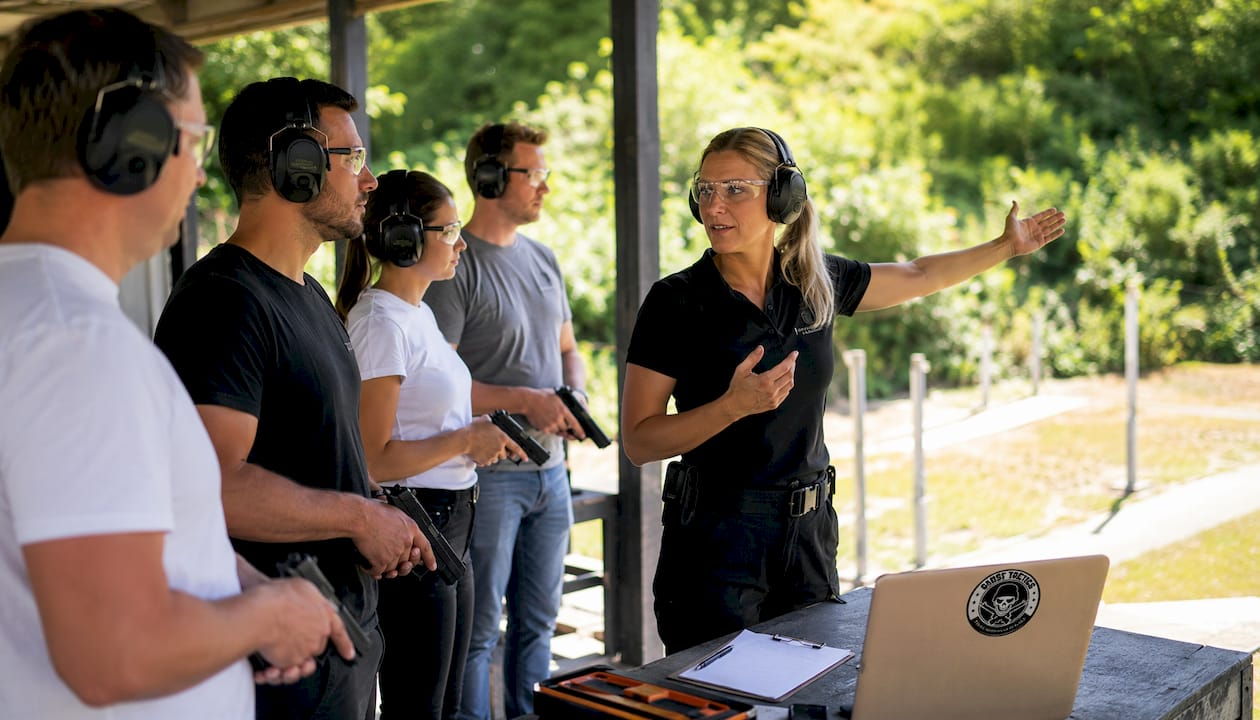
A shooting instructor manages three core responsibilities: safety enforcement, skills instruction, and legal education. Safety is non-negotiable. Before a student ever touches a firearm, the instructor establishes range rules, explains the four fundamental firearm safety rules, and confirms the student understands them. That foundation protects everyone on the range.
Skills instruction covers stance, grip, sight alignment, trigger control, and follow-through. A good instructor does not just demonstrate these techniques. They watch each student, identify specific errors, and correct them with targeted feedback. The difference between a student who improves and one who stagnates is almost always the quality of that feedback loop.
Legal education is the third pillar, and it is the one most often overlooked. Instructors must teach students about use-of-force laws, safe storage requirements, and local regulations. This is not optional content. It is a core part of what a qualified firearms training instructor delivers in every course.
Certification requirements vary by country and governing body, but clear benchmarks exist across the industry. Professional programs require between 24 and 40 hours of formal firearm and range safety coursework as a baseline. That figure represents the minimum, not the ideal. Most hiring organizations also prefer candidates with 3–5 years of active teaching or law enforcement experience before they step into an instructor role.
Internationally recognized certifications include the ISSF D Course, which is the entry-level coaching license issued by the International Shooting Sport Federation. The ISSF D Course costs approximately 490 euros and expires every five years. That expiration matters. It forces instructors to complete mandatory refresher courses, which keeps their knowledge current with evolving safety standards and techniques.
Ongoing education does not stop at certification renewal. Instructors must independently track changes in regional laws, court rulings, and constitutional amendments that affect firearms use. Training bodies rarely provide these updates automatically, so the responsibility falls entirely on the instructor. This is one reason why legal literacy is listed as a core qualification, not a bonus skill.
Pro Tip: When evaluating a shooting instructor’s credentials, ask specifically about their most recent legal training update. An instructor who cannot name a recent court ruling or regulatory change may be teaching outdated use-of-force information.
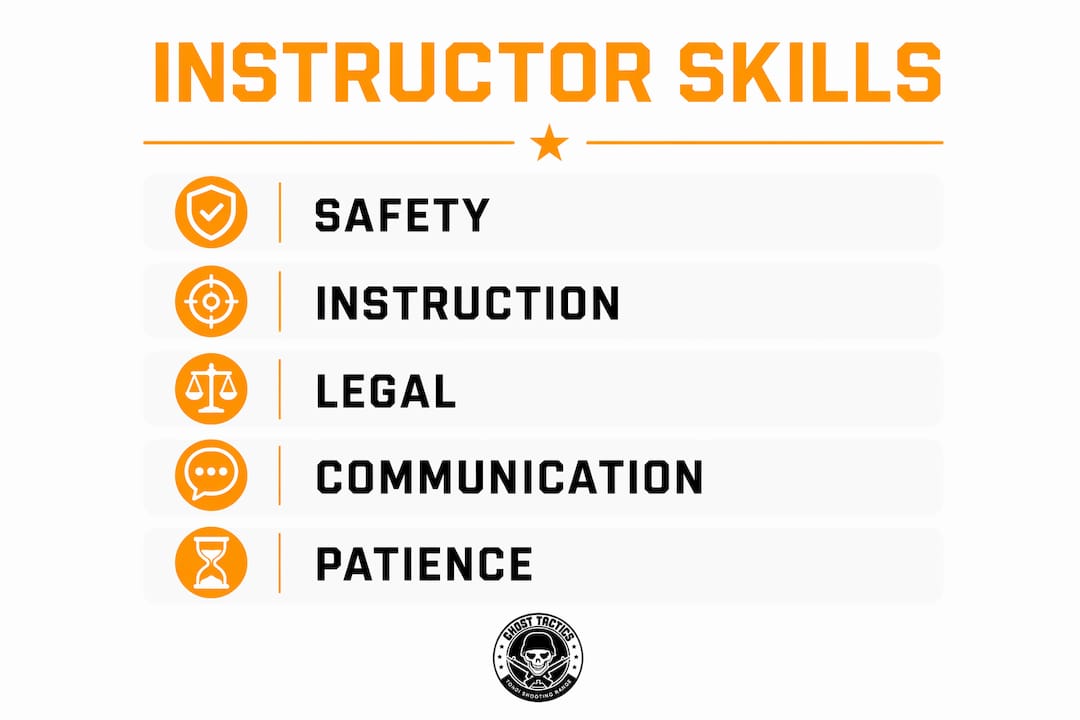
Technical proficiency is the starting point, not the finish line. Strong instructors combine firearm proficiency with legal expertise, communication, stress management, and professionalism. Each of those qualities serves a specific function in the training environment. Remove any one of them and the quality of instruction drops noticeably.
Communication is the skill that separates average instructors from excellent ones. A student who is nervous, inexperienced, or struggling with a technique needs clear, calm, and specific feedback. Vague corrections like “relax your grip” do not help. Precise corrections like “your support hand thumb is pointing forward, rotate it down” produce immediate results. Adaptability matters just as much. The same explanation rarely works for every learner, so effective instructors carry multiple ways to explain the same concept.
Ego is the most common obstacle to good instruction. Effective firearms instruction requires separating the instructor’s ego from training and focusing entirely on student development. An instructor who spends range time demonstrating their own accuracy is not teaching. They are performing. Students notice the difference, and their progress reflects it.
“An instructor focusing on self-performance is a red flag. Good instructors prioritize student growth over showcasing their own proficiency. The measure of a great instructor is not how well they shoot. It is how well their students shoot after working with them.”
The distinction between instructor, coach, and mentor is also worth understanding. Instruction delivers required information and skills, while mentorship involves personal commitment to a student’s long-term growth. Coaching sits in between, providing personalized technique corrections during active training. Not every instructor is a coach, and not every coach is a mentor. Knowing which role you need from a training relationship helps you find the right person.
Pro Tip: Watch how an instructor responds when a student makes the same mistake twice. A patient, varied explanation signals a skilled teacher. Frustration or repetition of the same correction signals a skills gap in the instructor, not just the student.
A firearms instructor’s day is rarely just live-fire training. The visible range work represents only a portion of the actual workload. The rest happens off the range, and it is just as demanding.
A structured day for a shooting instructor typically includes:
The workload is significant. Instructors who treat the role as a part-time commitment tend to deliver part-time results. The best ones treat it as a full professional practice.
At Tondi Lasketiir, the instructor is the single biggest factor in whether a visitor leaves with a great experience or a forgettable one. The range itself provides the environment. The instructor provides the value.
For first-time visitors, the instructor’s job starts before the first shot. They explain the range layout, cover the safety rules, and help the visitor choose the right firearm for their size and experience level. That initial briefing removes anxiety and builds confidence. A nervous beginner who feels informed and supported shoots better and enjoys the session more.
Group events like bachelor parties and corporate outings require a different approach. The instructor manages multiple participants with varying experience levels, keeps the energy positive, and maintains strict safety standards throughout. That combination of crowd management and safety enforcement is a specialized skill. Not every technically proficient shooter can do it well.
| Visitor type | Instructor focus |
|---|---|
| First-time beginner | Safety briefing, firearm selection, basic stance and grip |
| Returning shooter | Technique refinement, trigger control, accuracy drills |
| Group event | Safety management, engagement, pacing for mixed skill levels |
| Corporate outing | Team experience, structured challenges, professional facilitation |
Laskmine’s standards at Tondi Lasketiir reflect exactly what professional shooting instruction looks like in practice. Every session is instructor-led, every visitor receives individual attention, and safety is never treated as a formality.
Tondi Lasketiir is Tallinn’s indoor shooting range, and every session there is guided by a qualified instructor who prioritizes your safety and your progress.

Whether you are booking your first session, planning a group event, or looking for a memorable activity in Tallinn, the instructors at Tondi Lasketiir are ready to guide you through it. The range offers shooting packages for all experience levels, from complete beginners to experienced shooters looking to sharpen specific skills. Group bookings for bachelor parties, corporate events, and tourist groups are available and fully instructor-led. Every visit is structured, safe, and genuinely enjoyable. Book your session at Tondi Lasketiir and see what expert-guided shooting actually feels like.
A qualified shooting instructor combines technical firearm skills, legal knowledge, and strong communication to deliver safe, effective training that produces measurable student progress.
| Point | Details |
|---|---|
| Core qualifications | Industry standards require 24–40 hours of coursework and 3–5 years of experience before instructing. |
| Certification renewal | Certifications like the ISSF D Course expire every five years and require mandatory refresher training. |
| Ego-free instruction | Effective instructors focus entirely on student development, not personal performance. |
| Legal responsibility | Instructors must independently research use-of-force laws and court rulings to keep curricula accurate. |
| Instructor vs. coach vs. mentor | Each role serves a different function; knowing the difference helps students find the right training relationship. |
A shooting instructor delivers live-fire training sessions, maintains equipment, updates lesson plans, and researches legal case law. Administrative duties are a significant part of the role alongside range time.
Most programs require 24–40 hours of formal safety coursework and 3–5 years of teaching or law enforcement experience. Certifications like the ISSF D Course provide an internationally recognized baseline credential.
An instructor manages curriculum and safety for groups, while a coach provides personalized technique corrections during active training. Mentorship goes further still, requiring personal investment in a student’s long-term development.
Instructors must teach use-of-force laws and safe storage requirements as core content. Training bodies rarely provide legal updates automatically, so instructors research regional court rulings independently to keep their teaching accurate.
Yes. Instructors at Tondi Lasketiir tailor every session to the visitor’s experience level, starting with a full safety briefing and firearm selection guidance before any live fire begins.