Drooni registreerimine Eestis: täielik juhend LOIS-i kaudu
- Mo-Su 10.00 – 20.00
- +372 555 85 416
- sale@laskmine.ee





The most effective shooting range warm-up drills include the 10-Shot Warm-Up, Bill Drill, Controlled Pairs, Mozambique Drill, Blake Drill, The Accelerator, Distance Changeup, The Dots, Group Shooting, and Double Reload Double (Four Aces), as detailed on Tir À l’Arc – Combat. A solid warm-up uses 10–50 rounds and runs about 5–10 minutes, starting at 3–7 yards before stepping back.
These drills share a common purpose: reacquiring grip, re-establishing sight picture, and resetting trigger control before the real work begins. Skip them, and your first magazine of serious training is essentially wasted.
Quick-reference list of the top warm-up drills:
Safety applies from the first round. Keep the firearm pointed downrange, finger off the trigger between strings, and perform a visual and physical clear after each stage.
Developed by Ken Hackathorn, this drill covers three distances in one run. Draw and fire one shot to the head at 3 yards, then step back to 6 yards for three chest shots, then 9 yards for three more chest shots. Repeat the 6-yard and 9-yard strings once each for a total of 10 rounds. The target is a 4-inch circle for both zones. Shoot only as fast as you can hit cleanly.
Six rounds into the A-zone of an IPSC or USPSA target from 7 yards. The goal is pure recoil management: draw, fire six, and keep every shot in the scoring zone. Speed is secondary to control. Many shooters run this from the ready position during warm-up rather than the holster, since the focus is tracking the sights through recoil, not the draw stroke.
Fire two rounds per cycle, always finishing with a third sight picture to reinforce follow-through. Start slow at your closest distance, then increase speed until hits start drifting outside the target shape. That drift point is your current performance ceiling. Back off slightly, regain control, and note the speed. These are not double-taps; each shot gets its own sight confirmation.
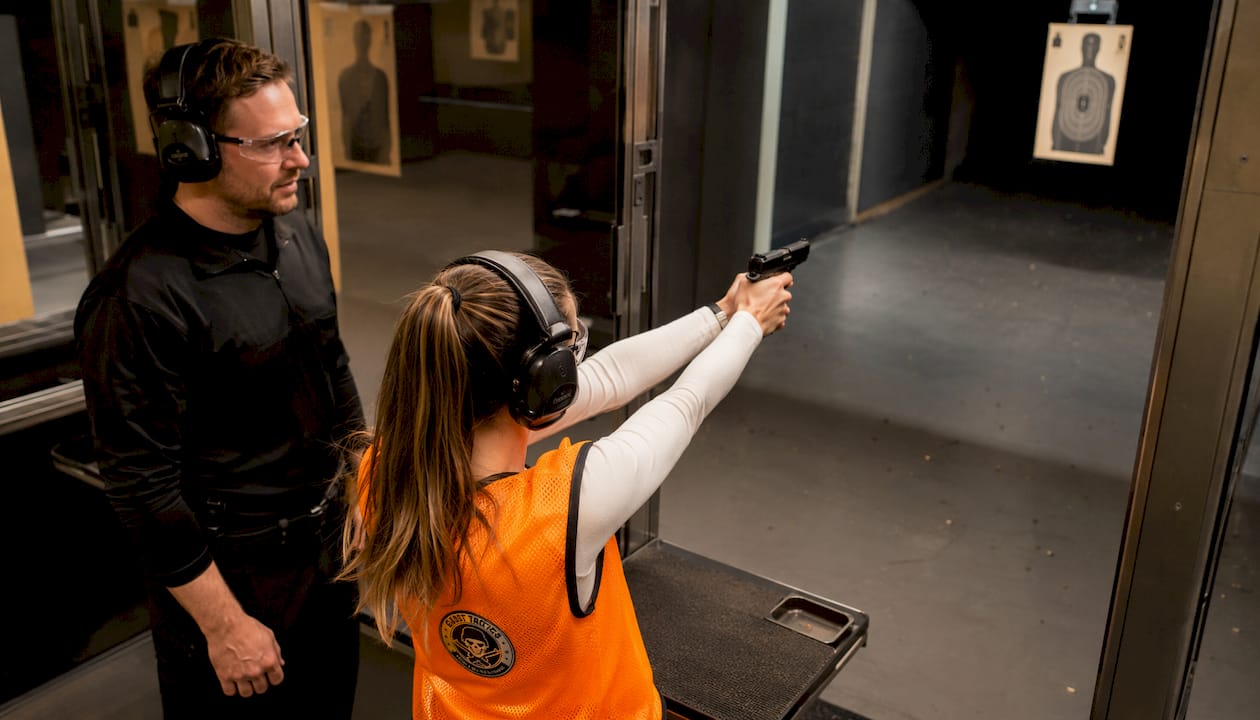
Two shots to center mass, one to the head. The Mozambique drill trains the transition from body to a smaller, higher target zone under time pressure. During warm-up, run it slowly and deliberately. The value is in the transition itself, not the speed.
Both drills build on the controlled-pairs concept. The Blake Drill alternates between body and head zones, forcing your eyes to shift target areas with each pair. The Accelerator starts with a deliberate controlled pair and adds speed with each repetition until accuracy degrades, then resets. Both work well at 5–7 yards during warm-up.
Run any single drill (controlled pairs, single shots) at 3 yards, then 7, then 10 or beyond. The drill itself stays constant; the distance variable reveals how your fundamentals hold up as the target shrinks. Most shooters discover their grip or trigger press degrades before their sight picture does.
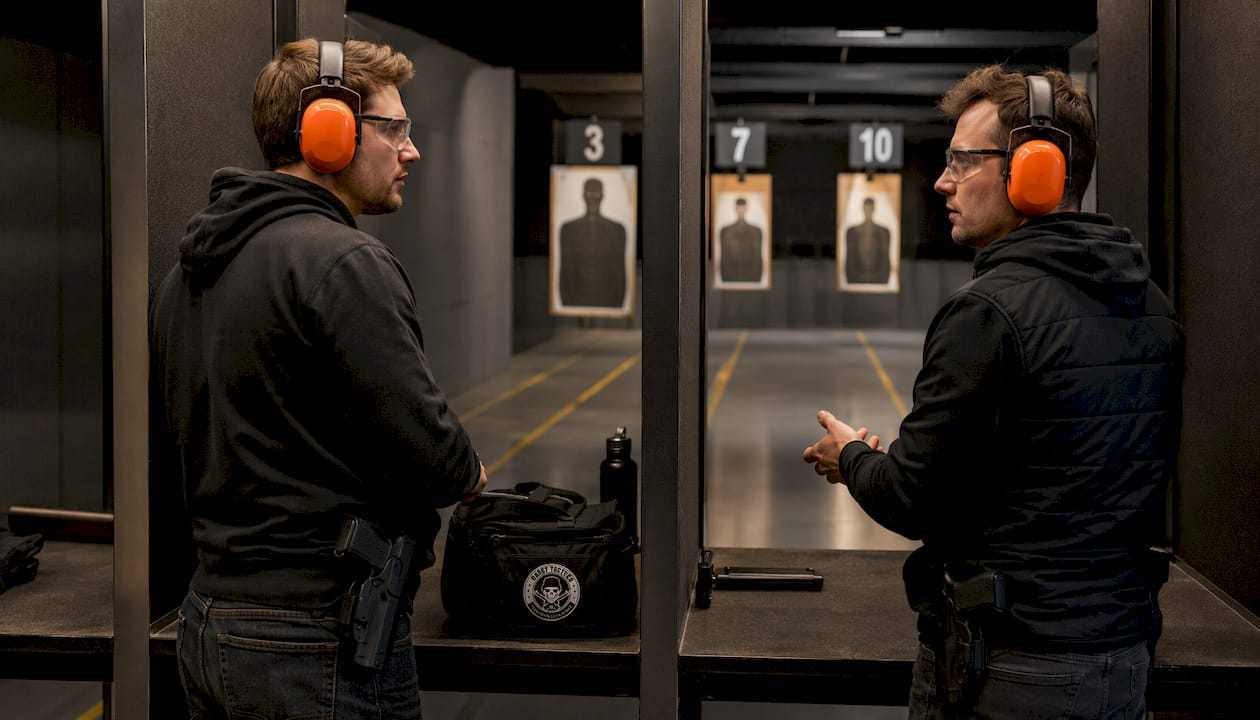
Small dot targets (1–3 inches) at close range, typically 5–7 yards. Fire one round per dot, moving across the target. The small size forces genuine sight alignment rather than area aiming. This drill is especially useful for diagnosing flinch, since a miss on a 2-inch dot at 5 yards has nowhere to hide.
Slow, deliberate fire into a single zone with the explicit goal of putting every round through the same hole. No time pressure. This is a diagnostic drill: if your group walks left, check your trigger press; if it scatters vertically, check your grip. Run 5–10 rounds here before moving to speed-based drills.
One shot, reload, one shot, repeated four times for 8 rounds total. The reload under no time pressure during warm-up builds the muscle memory for a smooth, consistent reload before the main session demands it under stress.
Drill reference table:
| Drill | Rounds | Distance | Primary focus |
|---|---|---|---|
| 10-Shot Warm-Up | 10 | 3–9 yards | Draw, fundamentals, distance |
| Bill Drill | 6 | 7 yards | Recoil control |
| Controlled Pairs | 10–50 | 3–7 yards | Sight tracking, speed ceiling |
| Mozambique Drill | 6 | 5 yards | Target transition |
| The Dots | 5–10 | 5–7 yards | Sight alignment, precision |
| Group Shooting | 5–10 | 5–10 yards | Diagnostic accuracy |
| Double Reload Double | 8 | 5 yards | Reload mechanics |
| Distance Changeup | 10–50 | 3–10+ yards | Fundamentals under distance |
Good warm-up routines for shooting address both the body and the mind. Physical preparation should avoid spiking your heart rate; joint circles, wrist rotations, and light grip exercises get blood moving without the fine-motor degradation that comes from intense cardio right before shooting. Stretching cold muscles is counterproductive and can reduce performance.
The mental side gets underestimated. A 10-minute mental warm-up focused on breath control or visualization prepares concentration as effectively as any physical drill. Slow, deliberate breathing before the first shot lowers heart rate and sharpens focus.
Common mistakes to avoid:
Warm-up drills are platform-agnostic: grip, sight alignment, and trigger press apply equally to a pistol and a rifle. The distances and target sizes shift, but the underlying mechanics do not.
Pro Tip: Use warm-up rounds for shot calling: before you look at the target after each shot, predict where the bullet landed based on your sight picture at the break. When your prediction matches the hole, your feedback loop is working. When it does not, you have found exactly what to fix before the main session starts.
For shooters who want to build these accuracy improvement drills into a structured practice plan, starting with a consistent warm-up routine is the fastest path to measurable progress. Pairing that with solid trigger control fundamentals makes every session more productive.
Ready to run these drills with real guidance behind you? Tondi Lasketiir is Tallinn’s premier indoor shooting range, and it is the kind of place where warm-up routines actually get taught, not just assumed. Whether you are a first-time visitor, part of a corporate group, or planning a bachelor party that goes beyond the usual options, the range offers structured shooting packages with experienced instructors who walk you through exactly this kind of progressive drill work.

Groups get dedicated lane time and instructor support. First-timers get a proper safety briefing and a guided session that starts exactly where a warm-up should: slow, deliberate, close range. Gift cards are available for anyone who wants to give someone an experience worth remembering. Book your session and see what a properly structured range visit feels like from the first shot.
A standard warm-up uses 10–50 rounds and lasts about 5–10 minutes, starting at short distances like 3–7 yards.
The Bill Drill is six rounds fired into an IPSC target from 7 yards, focused on recoil control and keeping every shot in the scoring zone.
The Mozambique drill trains target transitions: two shots to center mass followed by one precise shot to the head zone.
Yes, the drills are the same; beginners set targets at 3 yards and shoot without time pressure, while experienced shooters extend distance and add speed constraints.
Tondi Lasketiir offers structured shooting packages with instructor guidance, making it a practical venue for running warm-up drills at any skill level.
Effective shooting warm-ups use 10–50 rounds over 5–10 minutes at 3–7 yards, combining physical readiness, mental focus, and progressive drill intensity.
| Point | Details |
|---|---|
| Round count and duration | Warm-ups use 10–50 rounds and last 5–10 minutes; start at 3–7 yards before increasing distance. |
| Top drills to run | Bill Drill, 10-Shot Warm-Up, Controlled Pairs, Mozambique, and The Dots cover the core fundamentals. |
| Mental preparation matters | A 10-minute breath control or visualization session before shooting improves focus as much as physical drills. |
| Shot calling accelerates learning | Predicting bullet impact before checking the target creates a self-correcting feedback loop that speeds up skill development. |
| Laskmine at Tondi Lasketiir | Offers guided warm-up drill sessions, group packages, and first-timer-friendly experiences at an indoor range in Tallinn. |