The Role of a Shooting Instructor: Skills and Responsibilities
- Mo-Su 10.00 – 20.00
- +372 555 85 416
- sale@laskmine.ee




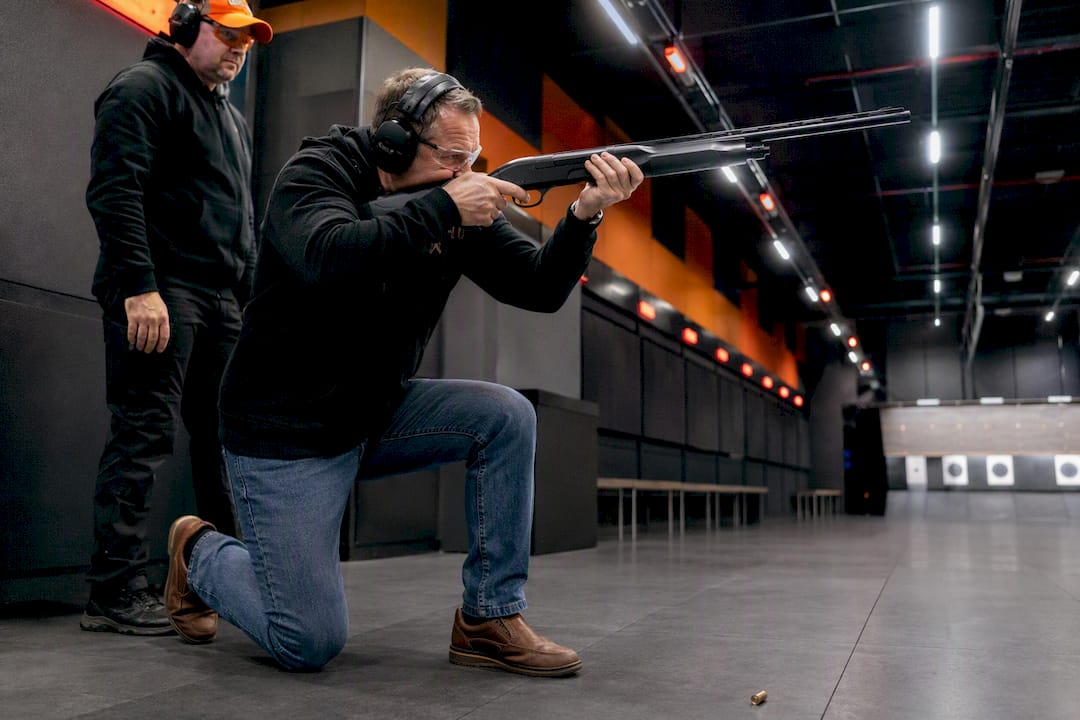
Shotgun shooting comes down to one habit: point and swing the gun at a moving target instead of aiming at it like a rifle. Aiming, in fact, is the single most common form fault that keeps beginners from breaking clays. Two things fix that fast. First, lock in the four basic safety rules before you touch a shell. Second, book an instructor-led beginner session or start a supervised dry-fire routine so a coach can catch the small habits, a hitched mount or a stalled swing before they turn into permanent flinches.
Shotgun shooting improves fastest when beginners pair correct pointing and swing mechanics with supervised, instructor-led practice instead of solo trial and error.
| Point | Details |
|---|---|
| Point, don’t aim | Track the target with both eyes open and swing the gun through its flight path instead of aiming down the barrel. |
| Safety comes first | Follow the four cardinal rules and expect a briefing plus dry handling before any live fire. |
| Gear is rented, not owned | Most ranges supply guns, target loads, and protective gear, so beginners need nothing of their own. |
| Expect early misses | Missing your first 10 to 15 targets is normal; consistency matters more than hit rate at the start. |
| Train with instructors | Tondi Shooting Range offers indoor, supervised, instructor-led beginner sessions with rental firearms for individuals and groups. |
Every reputable range runs on four rules: treat every shotgun as loaded, keep the muzzle pointed in a safe direction, keep your finger off the trigger until you’re on target, and know what’s beyond your target before you shoot. Eye and ear protection are mandatory, and closed-toe shoes plus a snug-fitting top (loose collars catch recoil oddly) round out the basics.
A typical first lesson follows a set sequence:
Introductory sessions usually run for a few hours for an orientation-style visit, while more in-depth lessons can be longer depending on how much ground you want to cover, according to Orvis’s beginner shotgun guide. If you want a clearer picture of what a first-timer session actually involves before you show up, our shooting range beginner guide walks through it step by step.
You don’t need to own a shotgun to start. Most ranges rent target-appropriate guns, sell shells by the box, and hand out protective gear on-site, according to Beretta’s clay shooting primer. Here’s what you’re choosing between:
Proper gun fit does more for recoil comfort than gauge alone. A shotgun sized correctly to your body and a balanced stance make recoil manageable even for first-timers, according to the University of Arizona’s shotgun instructor materials.
Your stance sets up everything that follows, including your swing and your follow-through. Rehearse this sequence until it’s automatic, ideally with an empty, checked gun before you ever load a shell:
Pro Tip: If your cheek weld feels different every time you mount, mark the comb with a strip of tape at your natural contact point. Dry-fire against that mark until the mount feels identical rep after rep, and flag it to your instructor if the gun still feels off after a dozen tries. That’s usually a fit issue, not a technique issue.
Shotgun shooting relies on pointing and tracking a moving target with your eyes, then swinging the gun to match its flight path, rather than aiming down the barrel the way you would with a rifle, according to the Estonian Foundation of Sports Education and Information. Our guide on point shooting technique breaks down the mechanics in more depth if you want to go deeper.
Reality check: Most beginners miss their first 10 to 15 targets they shoot at. That’s normal. Early on, your goal is a consistent pre-shot routine and safe handling, not a high hit rate.
Pick your first discipline based on what skill you want to build, not which one looks the most impressive.
Progress between range visits happens in your living room as much as it does on the firing line. A stepwise structure, safety, then stance, then mount, then swing, then trigger, then follow-through, paired with repeated dry-fire rehearsal is a proven approach for building the habit fast, according to the MSU Extension shotgun teaching plan.
Pro Tip: Structure each range session as warm-up, then a focused drill block, then a deliberate break. Track small wins like a consistent mount or a clean follow-through rather than obsessing over hit count. Our dry-fire practice guide has a full at-home routine if you want to build reps between visits.
Three errors show up more than any others, and all three have quick fixes.
If any of these sound familiar, they’re worth flagging to an instructor directly. Our breakdown of common shooting mistakes covers a few more posture and handling issues that carry over from other firearm disciplines.
One-on-one coaching corrects subtle faults, a hitched mount, a swing that dies early, faster than solo practice ever will, because those habits are genuinely hard to self-diagnose without a second set of eyes. This matters most in your first three to five sessions, when bad habits are still cheap to fix and expensive to unlearn later.
If you’re deciding between formats, choose a private lesson when your goal is rapid technical improvement, and a group session when you’re planning a social event. Our page on why professional instruction matters goes deeper into how coaching accelerates the learning curve.
Shotgun ownership and use are regulated differently depending on where you live, and the rules generally split into two categories: owning a shotgun and shooting one at a supervised range. Renting and shooting a shotgun under professional supervision at a licensed range is typically a separate legal matter from personal firearm ownership, since the range holds the licensing and the firearm never leaves its custody or its premises. That’s precisely why supervised range sessions are the accessible entry point for tourists, first-time shooters, and visitors who could not legally purchase or import a firearm themselves.
Personal ownership is a different matter entirely, and it usually involves a license application, a background check, safe storage requirements, and sometimes a completed safety course before a permit is issued. These requirements vary significantly by country and even by region within a country, so a rule that applies to one reader’s home jurisdiction may not apply at all where you’re standing on any given range.
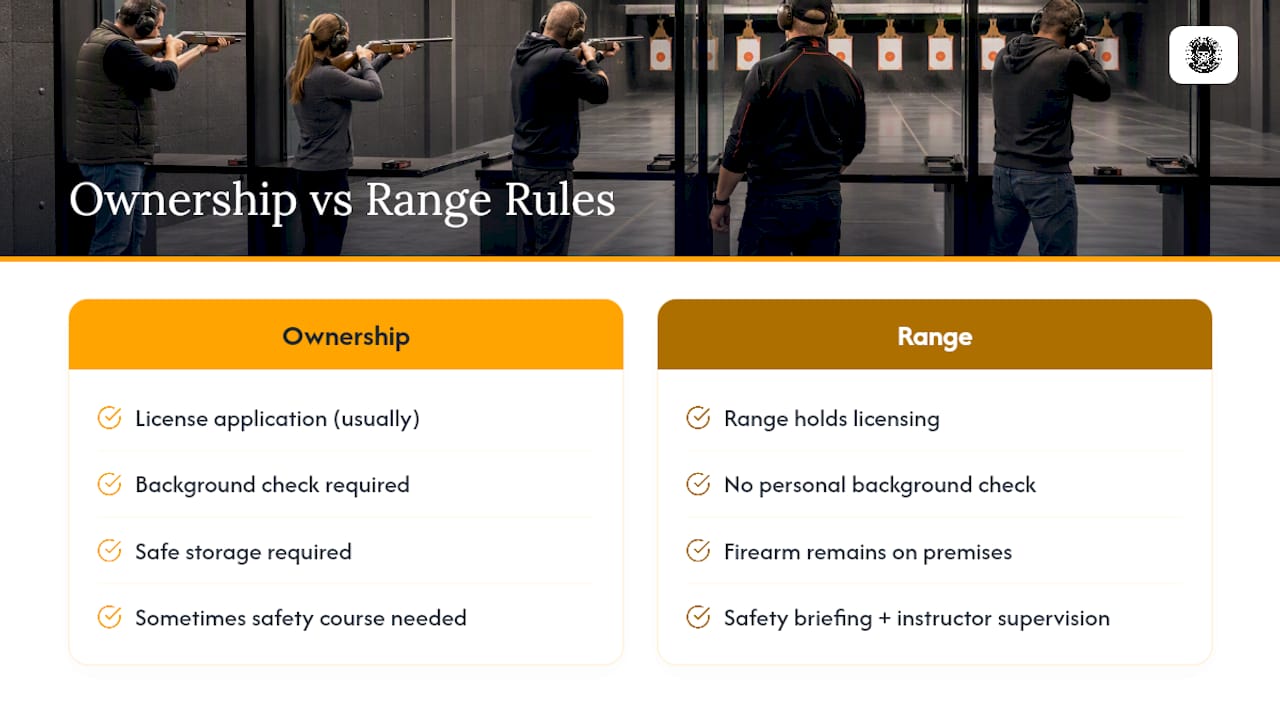
If your goal is simply to try shotgun shooting, whether you’re a tourist, a bachelor party group, or a first-timer testing the waters, none of the ownership licensing applies to you. You show up, complete a safety briefing, and shoot under direct instructor supervision using a range-owned firearm. If your goal eventually shifts toward personal ownership or a gun club membership, that’s a separate conversation worth having directly with range staff, who can walk you through what’s required locally rather than relying on generic guidance that may not match your situation.
You don’t need to own a shotgun, hold a firearms license, or have ever pulled a trigger to shoot with us. Tondi Shooting Range is the largest indoor shooting facility in the Baltic region, and every session, from a first-timer’s introduction to a bachelor party of ten, runs under direct supervision from a professional instructor who corrects your stance and swing in real time. That’s the real advantage over trying to piece technique together from videos: a coach catches your mount fault on rep three instead of rep three hundred.
We provide the firearms, the safety training, and the indoor range. You bring your curiosity. Couples, tourists, corporate teams, and many others book us for exactly the reasons covered above: no experience required, everything supervised, everything indoors regardless of weather. If you’re planning a corporate outing, our team-building page breaks down group formats, and if you’re ready to shoot, book your session at Tondi Shooting Range directly and pick a time that works.
No. Every session at Tondi Shooting Range starts with a safety briefing and dry handling, so complete beginners are the norm, not the exception.
Introductory sessions typically run a few hours, while more in-depth lessons can extend to a half or full day depending on how much ground you want to cover.
Wear closed-toe shoes, a snug-fitting top without a loose collar, and expect to be issued eye and ear protection on-site.
Properly fitted guns and a balanced stance make recoil manageable for most beginners, and lighter gauges like 20-gauge reduce it further if you’re recoil-sensitive.
Yes, shooting under direct instructor supervision at a licensed indoor range like Tondi Shooting Range does not require personal firearm ownership or a license, since the range holds the firearm and the licensing.