Solo Travelers in Estonia: Reality, Safety, and Booking Questions
- Mo-Su 10.00 – 20.00
- +372 555 85 416
- sale@laskmine.ee


The difference is in how the pistol hits the primer. A striker-fired pistol releases a spring-loaded pin straight into the cartridge. A hammer-fired pistol releases a hammer that swings forward and hits a firing pin. Both are reliable and both are used by police forces. What changes is the trigger feel, the controls you have to learn and how the gun carries. You can read about it all day, but the quickest way to understand it is to hold both types with an instructor next to you. At Tondi Shooting Range in Tallinn that needs no experience, and our indoor sessions are supervised by professional instructors.
A striker is a spring-loaded pin or rod. It is held back against spring pressure by a sear, a small catch. When you press the trigger, the catch lets go, and the striker moves forward and hits the primer, the small ignition cap at the base of the cartridge. No hammer is involved in the energy transfer.
The idea is old. The Luger pistol had no hammer and fired by releasing a spring-loaded striker, and many European pistols that followed used strikers instead of hammers. The modern twist came with the Glock series: the striker is held only partially loaded after the slide cycles, and the trigger pull finishes loading the spring before it releases. That is why many modern striker pistols feel the same on every shot.
In plain terms, a striker-fired pistol has fewer visible parts on the outside. There is no hammer spur, and on most models no lever to flip before firing.
A hammer-fired pistol uses a hammer that, once released by the trigger, rotates forward and hits the firing pin, which is driven into the primer. How the hammer gets cocked depends on the type:
You can see the hammer, which is useful: its position tells you at a glance whether the pistol is cocked. Many hammer-fired pistols also have a decocker or a safety lever, which are controls you learn once and then use without thinking.
When shooters compare the two, the trigger comes up first. Striker-fired designs typically give a trigger that is the same pull weight and length every time, with mechanical safeties often built into the trigger. According to one industry overview, the pull usually falls between 4 and 6 pounds, roughly 1.8 to 2.7 kg, though some designs go heavier.
Hammer-fired pistols can feel quite different from one model to the next. A good single-action trigger is short and crisp, which many people enjoy for precision. A DA/SA pistol asks you to manage a heavy first pull and then a light one. That is not hard, but it is one more thing to think about while you are also learning stance and sight alignment.
Here is a quick side-by-side:
| Feature | Striker-fired | Hammer-fired |
|---|---|---|
| Ignition | Spring-loaded pin hits the primer | Hammer hits a firing pin, which hits the primer |
| Trigger pull | Usually the same every shot | Depends on SA, DA/SA or DAO |
| External controls | Often only a trigger safety | May include a safety lever and decocker |
| Visible parts | Smooth outside, no hammer | Hammer visible, shows cocked state |
| Learning curve | Simple manual of arms | One or two extra controls to learn |
Neither column is a winner. The right choice depends on what you want to do with the pistol.
The safest pistol is the one handled by a person who follows the basic rules, whatever the action. Those rules are the same for both types: treat every gun as loaded, keep the muzzle in a safe direction, and keep your finger off the trigger until you are ready to fire. Our guide to firearm safety rules covers them in full.
What changes is where the habits matter most:
In both cases, the gun’s internal safeties are there to prevent a discharge if it is dropped, and the lack of an external safety is a plus for some shooters and a minus for others. That is exactly the kind of thing that is easier to understand with the pistol in your hands and an instructor beside you than from a spec sheet. If you want to build good habits first, our common handgun training mistakes page lists what instructors correct most often.
This is the question people ask most, and the honest answer is that both are highly reliable. Striker-fired pistols are known for simple construction and few external parts, which supports durability. Hammer-fired pistols have a long track record in military and law enforcement use.
One experienced handgun writer put it this way: the advantages and disadvantages of hammer versus striker ignition are more theoretical than real. Simplicity tends to go with reliability, durability and ease of manufacture, but a well-made pistol of either type will run.
There is a practical Estonian example. The Police and Border Guard Board’s standard service pistols include the Walther P99Q, which is striker-fired, and the Heckler & Koch USP, which is hammer-fired. Professionals here rely on both designs.
If you are a beginner, the action is a small part of your progress. What matters much more is a steady stance, a consistent grip and a smooth trigger press. Still, a few points may help.
A striker-fired pistol has a simple manual of arms. There is no hammer to manage and, on most models, no safety lever to find. That makes it easy to focus on aiming. The same pull every time also makes it easy to feel whether your trigger press was smooth.
A hammer-fired pistol teaches you a bit more about how a handgun works mechanically. A single-action trigger is short and light, which many first-timers find pleasant for accuracy. A DA/SA pistol adds the heavier first pull, which is a good lesson in trigger control.
At a range session you do not have to decide in advance. With a wide selection of firearms available and a professional instructor supervising, you can ask what each pistol does and feel it for yourself. No experience is required, and the safety briefing is part of the session.
If you want to prepare, these pages build the fundamentals that apply to any pistol:
Reading about trigger pull weights is one thing. Pressing the trigger yourself is another. Tondi Shooting Range is an indoor range in Tallinn, so the weather does not matter, and every session is supervised by professional instructors. Safety training is included, and you do not need any previous experience.
The options depend on who you are coming with:
Book the session, tell your instructor you are curious about the difference between actions, and they will walk you through what you are holding and how it behaves.
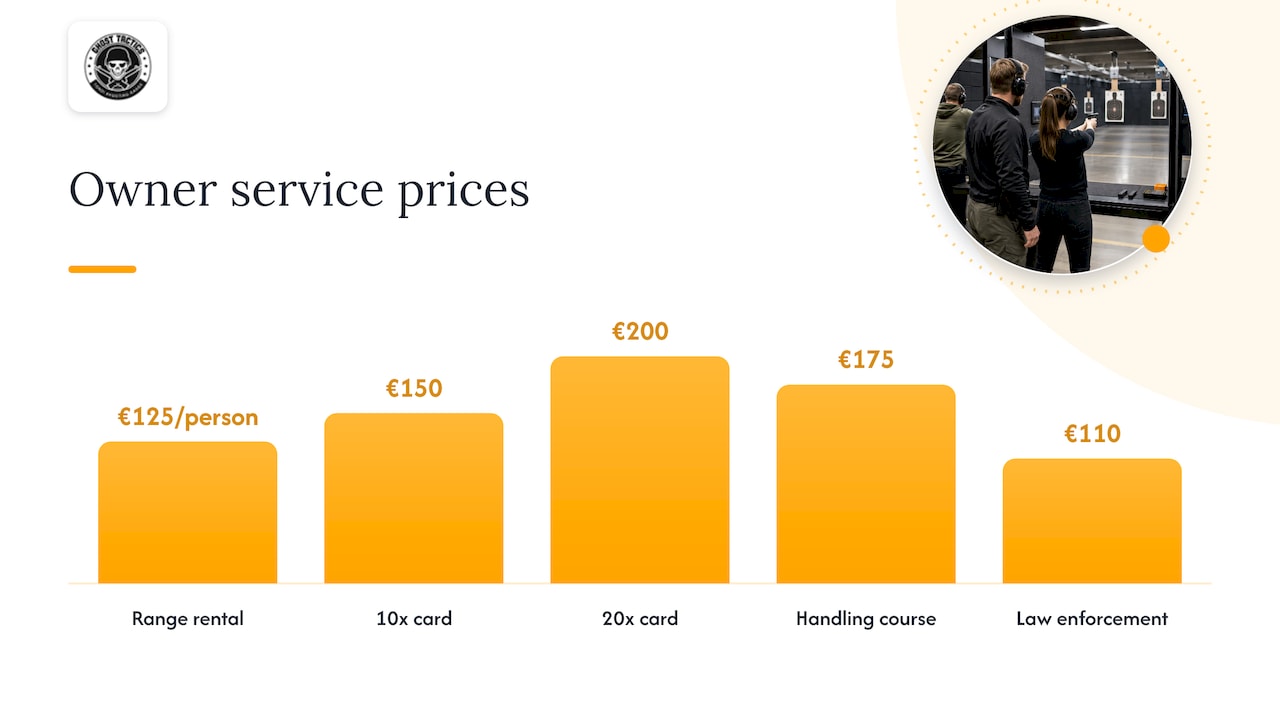
If you own a pistol, the range works for you too. Laskeraja rent (range rental) is €125 per person, and a friend can join you under Relvaomanik sõbraga tiiru for €15 per person. Frequent shooters can use the 10x card at €150 or the 20x card at €200. Relvakäsitsemise koolitus (a firearms handling course) costs €175. Law enforcement staff have their own option, Jõustruktuuri töötajale, at €110. All of these are on the owners’ page.
If you are thinking about buying your own pistol, the rules in Estonia are worth knowing. Under the Weapons Act, a person aged at least 21 may acquire and own a pistol or revolver for personal safety, and must register it at the prefecture of residence within seven working days. Each acquisition currently needs a separate permit, with a state fee of €60 per weapon. The Ministry of the Interior has planned amendments to simplify the paperwork, expected in the first half of 2027, so check the official page for the current rules before you apply. Visitors from Finland, Sweden, Denmark or the UK should know that these rules apply to people acquiring weapons in Estonia, and that a range visit is a separate matter that needs only a booking.
Whichever action you end up preferring, handling it well is what counts. Our page on why professional instruction matters explains how coaching speeds up the basics, and the personal defense handgun safety guide covers safe habits for owners.
Use these questions to narrow it down:
Most people who try both find a preference within one session. That preference tells you more than any chart can.
Both are highly reliable. Striker-fired pistols have a simple design with fewer external parts, and hammer-fired pistols have decades of military and police use behind them. Reliability depends more on build quality, ammunition and care than on the action type.
The trigger. A striker-fired pistol usually gives the same pull on every shot. A hammer-fired pistol may have a long first pull and a short later pull (DA/SA), or a consistent pull, depending on the model.
Many modern polymer-frame pistols are, including the Glock series and the Walther P99Q used by Estonian police. The Heckler & Koch USP, also used by Estonian police, is hammer-fired. The Luger of the early twentieth century was an early striker-fired design.
No. Our sessions are for first-time shooters, and professional instructors supervise every session. Safety training is included, and the range is indoors, so you can book in any season.
It is safe when handled by the rules. Internal safeties prevent a discharge if the pistol is dropped, and your own habits do the rest: finger outside the trigger guard until you are ready to fire, and the muzzle in a safe direction. Your instructor will practice these with you before you shoot.