Relvaseadus püstoli ja revolveri kohta jahirelvana
- Mo-Su 10.00 – 20.00
- +372 555 85 416
- sale@laskmine.ee





Solo travelers can visit a supervised shooting range safely, and most first-timers do just fine on their own. Instructors handle firearm safety and pacing, the range supplies the guns, and rules exist precisely so a single visitor can shoot confidently without a group. Bringing your own firearm or ammunition without permits is a separate matter entirely. Book an instructor-led session, read the checklist below, and you are set.
TL;DR:
- Bringing personal firearms or ammunition without permits is prohibited, and customs strictly restrict imports; using range firearms is the safest option.
- Compliance with safety commands and keeping the firearm pointed downrange at all times are mandatory, with instructors able to end sessions immediately for violations.
- Booking in advance and confirming firearm, age, ID, and language requirements help ensure the session matches your expectations and safety protocols.
- The indoor, climate-controlled range offers a wide firearm selection and is equally welcoming to beginners, groups, or solo travelers seeking supervised shooting experiences.
A first visit follows a predictable sequence, which helps if you are walking in without a friend to lean on for cues.
A typical session for a solo tourist runs somewhere between thirty minutes and an hour, depending on the package, and includes a set number of rounds across two or three firearm types, often a pistol and a rifle or shotgun. Tourist-oriented packages are built around exactly this kind of one-off visit rather than club membership, so you are not expected to know anything going in. Instructors are used to absolute beginners and slow the pace accordingly, repeating instructions as needed and adjusting for left-handed shooters or smaller hands.
Pricing for a solo, beginner-friendly package starts from 45 EUR and goes up depending on how many firearms and rounds are included, with flexible booking often available on the same or next day. If you want a sense of what a beginner-focused session covers before you commit, a dedicated guide for first-timers walks through the pacing and etiquette in more detail.
The legal framework around firearms is stricter than most tourists expect, and it is worth understanding before you book anything.
Range conduct itself is governed by formal safety rules. Estonian range safety regulations require every visitor to obey the range officer’s commands without delay, keep the firearm pointed downrange at all times, and load or unload only when specifically instructed. These are not suggestions. An instructor who tells you to stop, freeze, or unload expects immediate compliance, and ignoring a command is grounds for ending your session on the spot.
Instructors can end a session immediately for any safety violation, a rule built into how Estonian ranges operate under law, which means the margin for error on commands is effectively zero.
Firearms themselves are tightly controlled outside the range. The EU Firearms Directive tightened cross-border carriage rules, and acquiring or possessing certain semi-automatic firearms now requires proof of active club membership or regular sport shooting practice in many member states. For a solo traveler, the practical upshot is simple: do not attempt to bring a personal firearm along on your trip.
Customs backs this up directly. The Estonian Tax and Customs Board lists firearms and ammunition as restricted goods that cannot be imported without a special permit and a border declaration. Items that do not meet the requirements can be retained at the border, and skipping the declaration step risks penalties. Using the range’s own firearms, which is the normal route for any visiting tourist, sidesteps this entirely.
A short checklist covers the essentials:
Age and ID requirements vary by session type, so confirm the minimum age when booking, particularly if you are traveling with a younger companion. For a closer look at how ammunition rules apply to visitors, the page on ammunition types and restrictions is worth a read before you pack.
Solo visitors have two main paths: a fixed tourist package built around one or two firearms, or an open range slot if you already have some experience and just want range time. For a first visit, the tourist package is almost always the better fit, since it bundles the safety briefing, firearm selection, and instructor time into one predictable block.
Booking a day or two ahead is usually enough for a solo slot, though weekends can fill faster because of group bookings. At check-in, bring:
The range supplies the firearms, ammunition, targets, and standard eye and ear protection, so you do not need to own or bring any of that. If you are sensitive to noise or prefer your own hearing protection, most ranges will let you bring it, just mention it when you book. If you need a session in a language other than the local one, ask ahead of time whether an instructor can accommodate that or whether a translated briefing is available.
Here is the part most guides skip: a lot of shooting range bookings come from stag parties, birthday groups, and tourist groups of friends, and that shapes the mood on any given day. Walk in on a Saturday afternoon and you may find a rowdy bachelor party a few lanes over, cracking jokes and taking turns filming each other. It is not intimidating, just loud, and it is worth knowing ahead of time so it does not catch you off guard.
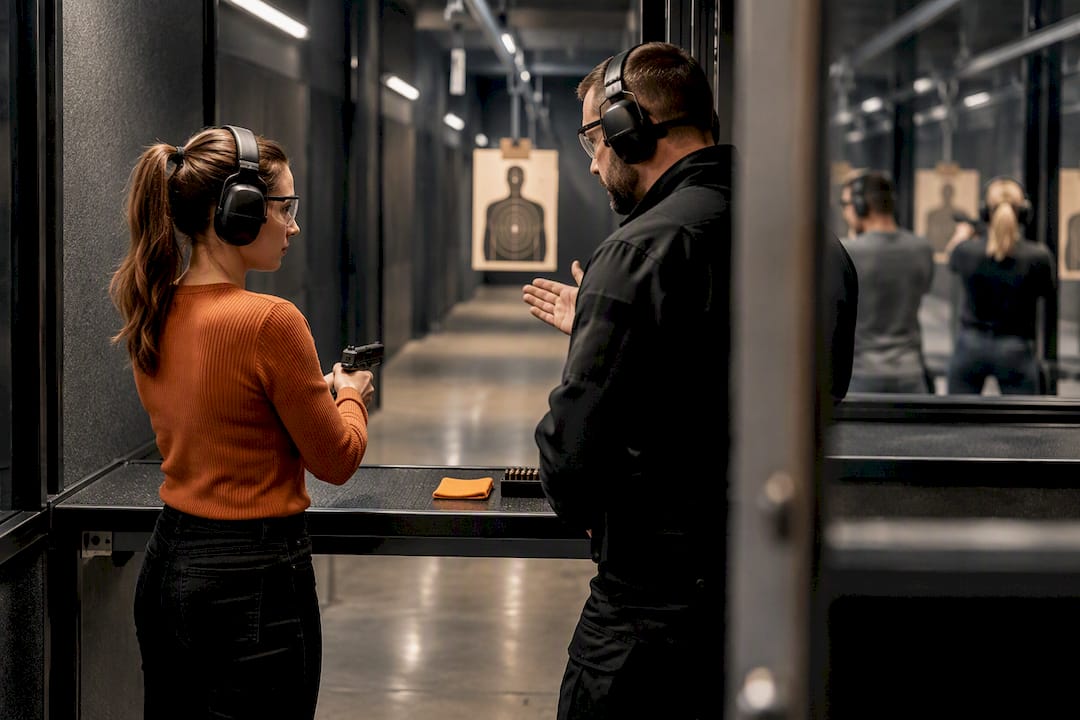
If you would rather have a quieter, more focused session, weekday mornings tend to see fewer group bookings than weekend afternoons, and asking for an “introductory” or “first-timer” slot when you book can nudge you toward smaller groups and more direct instructor attention.
Pro Tip: Tell the instructor upfront that you are shooting solo and want extra coaching. Most are glad to slow down and give you more one-on-one time when there is no group pulling their attention elsewhere.
Range etiquette among visitors is fairly relaxed: a nod, a “good shot,” or a quick question between turns is normal, but nobody expects a solo visitor to socialize beyond that. Staff and instructors are the people you will interact with most, and being clear about your comfort level, whether that is pacing, noise, or how much explanation you want, gets you a better experience than staying quiet and hoping it works out. For more on how to read the room and settle in, the guide for shooting range beginners covers this in more depth.
A short round of questions before you commit money or show up can save you from a mismatched session.
Getting clear answers to these upfront avoids the awkward situation of arriving and discovering the session does not match what you pictured.
Keep your bag light. Bring a valid photo ID, your booking confirmation, closed-toe shoes, and comfortable clothes you do not mind getting a bit dusty. If you have a strong preference for your own ear or eye protection, packing it is fine, though the range provides both as standard.
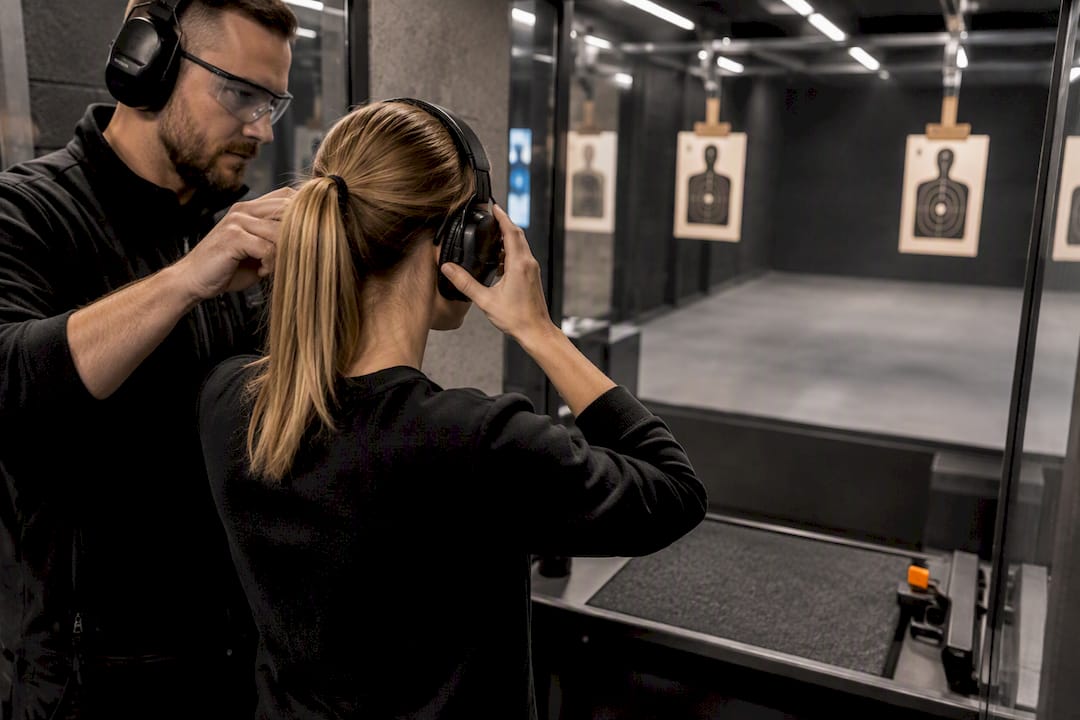
Leave personal firearms and ammunition at home unless you already hold the specific permits required to import them, since customs treats both as restricted goods without prior authorization. Skip alcohol before your session entirely, and leave any other prohibited items, like knives beyond a basic pocket tool, in your hotel room. The range supplies the firearms, protective gear, targets, and ammunition for your session, so anything beyond personal comfort items is unnecessary weight in your bag. A quick look at the visitor checklist for range safety before you leave your hotel is a fast way to confirm you have not missed anything.
Tondi Lasketiir welcomes solo travelers as readily as bachelor parties and corporate groups, and every session is supervised by professional instructors from check-in to your last shot. No experience is required. Safety training is built into every package, the range is fully indoor, and you get access to a wide selection of firearms rather than being locked into a single option.
If you want to see the full range of tourist-focused packages before you book, the tourist shooting experience page lays out what each package includes. Ready to book your own session? Head to the gift card and package overview to pick the option that fits your visit and reserve your slot.
Yes, non-citizens can visit a shooting range in most countries, including as a tourist, as long as they meet the venue’s age, ID, and sobriety requirements. Rules vary by country, so check the specific range’s policy and any local firearms regulations before booking.
Tourists can generally visit shooting ranges in the United States, though requirements around ID, waivers, and sometimes background checks vary by state and by range. It is worth confirming the specific range’s tourist policy directly since rules are not uniform nationwide.
Traveling internationally with a personal firearm typically requires special import permits and formal customs declarations, and the EU Firearms Directive has tightened cross-border carriage rules further within the EU. Most solo travelers find it far simpler to use a range’s own firearms rather than attempt to import one, since customs authorities can retain undeclared or improperly permitted weapons.
Yes, foreign visitors can shoot guns at many American ranges under supervision, typically after showing photo identification and signing a liability waiver. Specific age limits, ID requirements, and any background check steps depend on the individual range and its state’s rules.
No prior experience is needed for a supervised solo session at Tondi Lasketiir, since instructors brief every visitor on safety and handling before live fire begins. Sessions are paced to match a beginner’s comfort level, and firearms, protective gear, and ammunition are all supplied by the range.