Best Tallinn Adrenaline Activities: Shoot at Tondi Range
- Mo-Su 10.00 – 20.00
- +372 555 85 416
- sale@laskmine.ee




Yes, a supervised corporate shooting training is a practical, no-experience-required team event that builds focus, safety awareness, and communication under pressure. Tondi Lasketiir runs turnkey corporate sessions with full instructor supervision, so no prior firearm license or shooting background is needed. Planners typically choose it for the mix of team building, safety culture, and a genuinely memorable format that a standard offsite rarely delivers.
TL;DR:
- Group sizes vary based on lanes and instructors, with smaller groups receiving more range time; most book two to three weeks in advance.
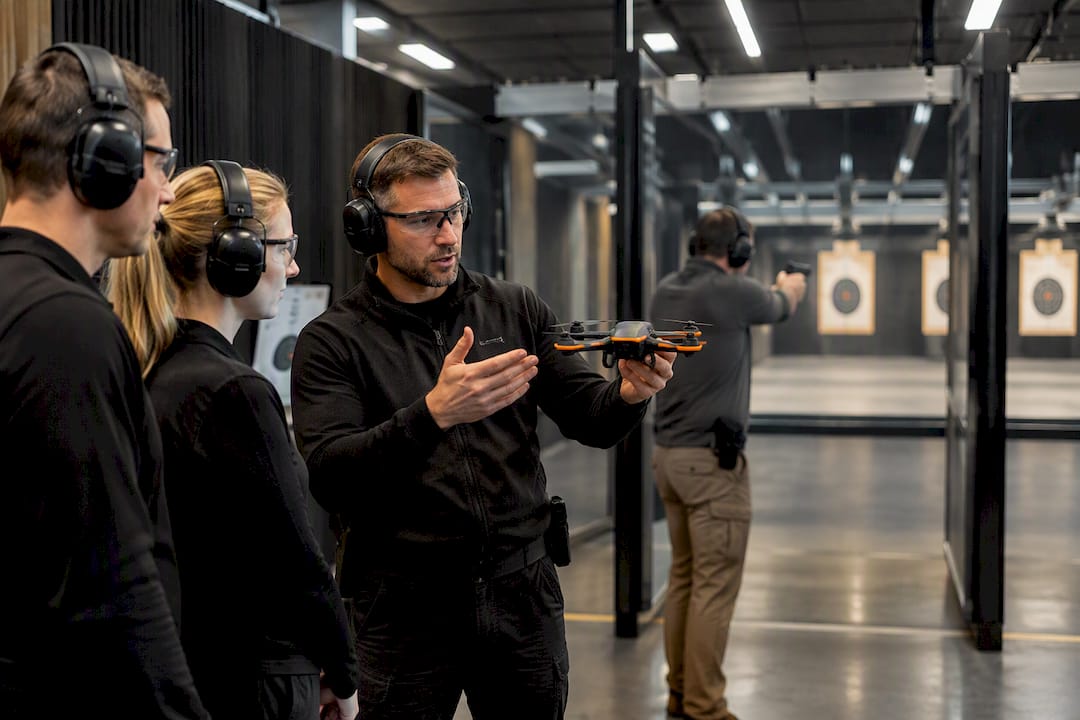
- The session typically includes safety briefing, dry-fire and live-fire practice, and a team activity, with optional modules like drone demonstrations.
- Liability insurance and active supervision are mandatory under Estonian regulations, and companies should verify coverage and emergency protocols before booking.
- No firearm license is needed for employees attending supervised corporate sessions, as instructors handle all equipment and supervision.
- Asking for a detailed safety brief, instructor credentials, and a sample agenda before committing helps ensure the provider’s organization and safety standards.
A well-run corporate session starts with a mandatory safety briefing, followed by continuous instructor supervision through every stage of the visit. Nobody handles a firearm before the range rules, hand signals, and emergency stop procedures are covered, and an instructor stays on the line for the entire session. Equipment, including eye and ear protection and the firearms themselves, is provided on site, and the shooting happens on indoor lanes regardless of the weather outside.
The activity itself usually blends several formats rather than sticking to one drill:
Packages offer flexible formats supporting mixed-experience corporate groups, accommodating both beginners and experienced shooters.
Corporate shooting training tends to attract a specific mix of groups: HR and event teams organizing an offsite, leadership groups on a retreat, security or facilities staff who want practical stress exposure, and general mixed-experience departments looking for something different from a trust fall or an escape room.
The value companies report is less about marksmanship and more about the soft skills that come with it:
EU-OSHA guidance on workplace training notes that interactive, task-tailored training improves retention and builds safety culture more effectively than passive instruction, which is exactly the format a supervised shooting session follows. To capture that value after the event, most planners run a short participant survey and ask supervisors to note any change in team communication over the following weeks, rather than relying on gut feel alone.
Sessions typically include safety orientation, dry-fire and live-fire practice, and a team scenario or friendly competition, with options for longer sessions and additional modules.
Group size and instructor ratios matter more than most planners expect. Smaller groups get more range time per person, while larger groups need more instructors running in parallel to keep wait times reasonable. Ranges that operate in English as well as the local language make coordination easier for international teams or visiting colleagues, which is worth confirming before booking rather than assuming.
Shooting range safety is not optional or informal in Estonia, and any provider running corporate sessions has to operate within a specific regulatory framework. The Estonian range-safety regulation requires continuous instructor supervision, defines the range’s physical safety areas, and requires that participants confirm they understand the rules before shooting, with records kept on file afterward.
Before signing a contract, planners should confirm a short list of items with any range they are considering:
This kind of active, hands-on format also lines up with how EU-OSHA frames effective safety training: participatory exercises tied to real risk assessment tend to stick better than a lecture or slide deck. It is worth noting that a supervised corporate event is not the same as the process required to obtain a personal firearm license. The Estonian police’s own guidance on firearm exams makes clear that licensing and exam preparation are separate from attending a supervised range session, so no employee needs a license to take part in a corporate booking.
Not every provider structures its packages the same way, so it helps to ask a few direct questions before comparing quotes. Ask about instructor credentials, exactly what safety rules apply, what equipment is included in the price, the maximum group size per session, and the cancellation policy in case plans change.
Our internal pricing guide for corporate shooting events walks through these cost drivers in more detail, and the HR booking checklist covers the pre-event admin most planners forget until the last week.
Pro Tip: Ask for a written safety brief and a sample agenda with the quote, not just a price. It tells you how organized the provider actually is before you commit a date.
A recommended choice for corporate bookings offers turnkey events specifically designed rather than adapted from walk-in bookings. Every session runs on supervised indoor lanes, with equipment provided and a certified instructor present throughout, so a group can show up with zero shooting experience and leave with a completed, structured event.
What sets the format apart is the range of modules available within a single booking. Groups can combine live-fire and dry-fire practice with a team-building session designed around shooting-range activities, or add a drone demonstration module for variety. The corporate and event packages page lists options like Turvaline ettevõte and Esmane droonikoolitus ettevõttele, both built around the same principle: measurable team outcomes, not just an afternoon on the range.
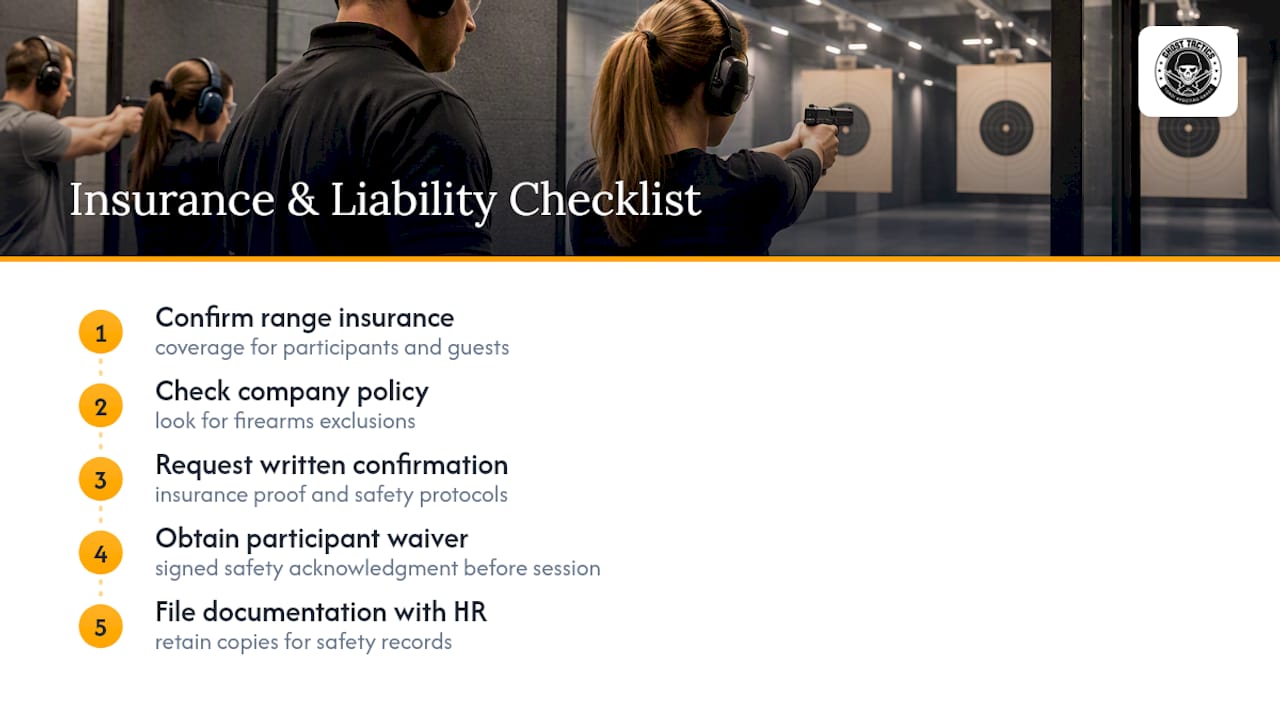
Any company organizing a shooting-based event, even as a one-off offsite, should treat liability the same way it would for any physical activity involving equipment and risk. The first question is whether the range itself carries liability insurance covering participants during the session, and whether that coverage extends to guests who are not direct employees, such as clients or partners invited along.
Companies should also check whether their own general liability or events insurance has any exclusions related to firearms activities, since some policies carve these out explicitly. Requesting written confirmation of the range’s insurance coverage, alongside its safety protocols, before the event is a reasonable ask and a normal part of vetting any activity provider.
Participant sign-off matters here too. A short waiver or safety acknowledgment, signed before the session starts, protects both the company and the range and creates the kind of record the Estonian range-safety regulation already expects providers to keep. HR teams booking the event should ask for a copy of this documentation for their own files, particularly if the session is being logged as part of a broader workplace safety initiative rather than a purely social outing.
The event does not need to end when the group leaves the range. Most providers can share a short feedback form immediately after the session, which gives HR teams a quick read on what landed well and what participants would change next time. This is also the easiest moment to capture qualitative comments while the experience is still fresh.
Some companies fold the session into their internal safety-awareness programming, using it as a reference point in later training or onboarding materials. Others treat it as a standalone team event and simply file the completion records for their own HR documentation. Either way, keeping a copy of the safety briefing materials and participant confirmations gives the company a paper trail that supports its own workplace safety records, aligned with the retention expectations set out in the Estonian range-safety regulation.
Groups that enjoyed the format often come back for a refresher session or a follow-up event with a different module, such as a drone demonstration or a more advanced scenario track, rather than repeating the exact same agenda.
Getting a quote is straightforward: confirm your headcount, a preferred date range, which modules you want (team scenario, drone demo, or both), and flag any medical notes in advance. No experience is required, every session is fully supervised by professional instructors, and the entire event runs indoors regardless of weather.
Browse the corporate and event packages to see current options like Turvaline ettevõte, or reach out through the turnkey corporate event page to start planning a date for your team.
Planners who want to check the source material directly can review the Estonian range-safety regulation covering instructor supervision and range operating rules, EU-OSHA’s guidance on OSH training for the safety-culture reasoning behind active training formats, and the Estonian police’s firearm exam guidance for context on how licensing differs from a supervised corporate event.
No. A supervised corporate shooting event does not require a personal firearm license, since instructors handle supervision and equipment throughout. Licensing and exam requirements, as outlined by Estonian police guidance, apply to personal ownership, not to attending a supervised session.
Group size depends on the number of lanes and instructors available on the day, and most providers can scale sessions from small teams to larger departments. Tondi Lasketiir can advise on the right instructor ratio once you confirm your headcount.
Yes, sessions are designed for mixed-experience groups and start with a mandatory safety briefing before anyone handles equipment. Continuous instructor supervision throughout the event follows the requirements set out in the Estonian range-safety regulation.
Ask for instructor credentials, a written safety brief, a sample agenda, and clarity on what equipment and modules are included in the price. Our pricing guide for corporate events breaks down what typically changes the cost.
Most groups book two to three weeks ahead to confirm dates, headcount, and any language needs. The HR booking checklist covers the pre-event steps worth handling early.