Esmaabi koolitus septembris 2020
- E-P 10.00 – 20.00
- +372 555 85 416
- sale@laskmine.ee




A shooting course is a structured training program that teaches firearm safety, handling, and marksmanship to participants at every skill level. Whether you are picking up a firearm for the first time or refining your technique for competitive sport, formal instruction separates safe, capable shooters from those who rely on guesswork. The NRA Basics of Pistol Shooting course is one of the most recognized entry points for new shooters in the United States, and it illustrates how structured programs build foundational skills that self-teaching rarely achieves. Courses range from single-afternoon safety classes to multi-day field and tactical programs, each designed around a specific discipline and audience.
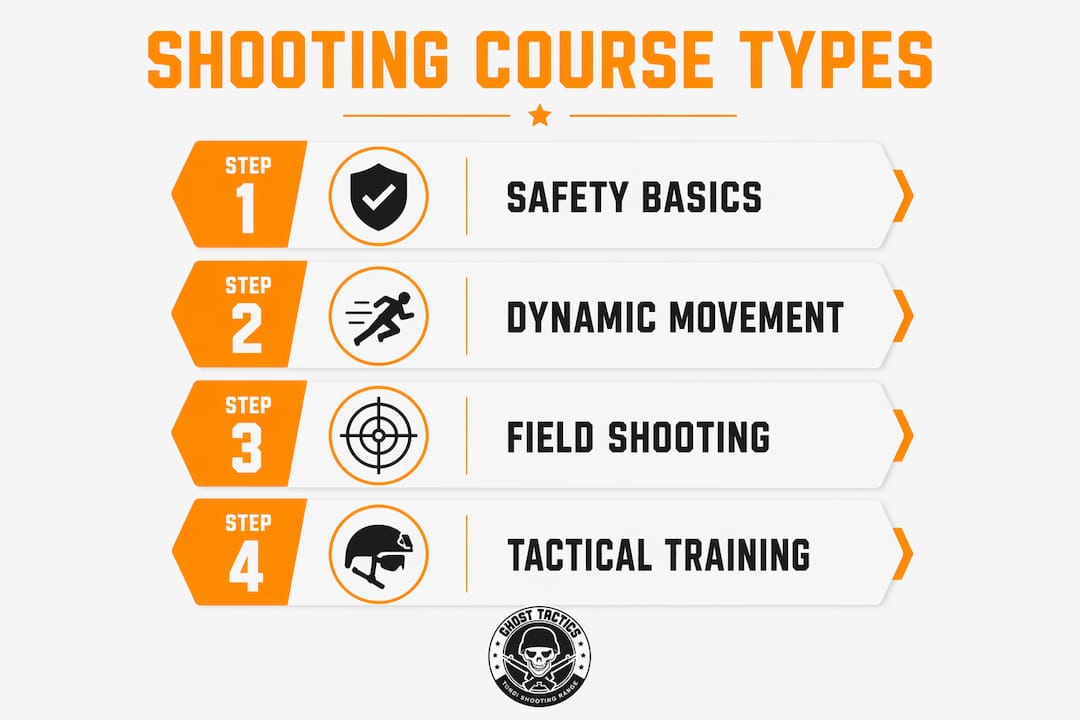
A shooting course is any organized program where a qualified instructor teaches participants to handle, aim, and fire a firearm safely and accurately. The industry groups these programs into four main categories, each serving a different purpose and audience.
Beginner courses focus on two things: safe firearm handling and the fundamentals of accurate shooting. Participants learn grip, stance, sight alignment, trigger control, and range etiquette before they fire a single round. These courses are the right starting point for anyone who has never handled a firearm or who wants to correct bad habits picked up from informal practice.
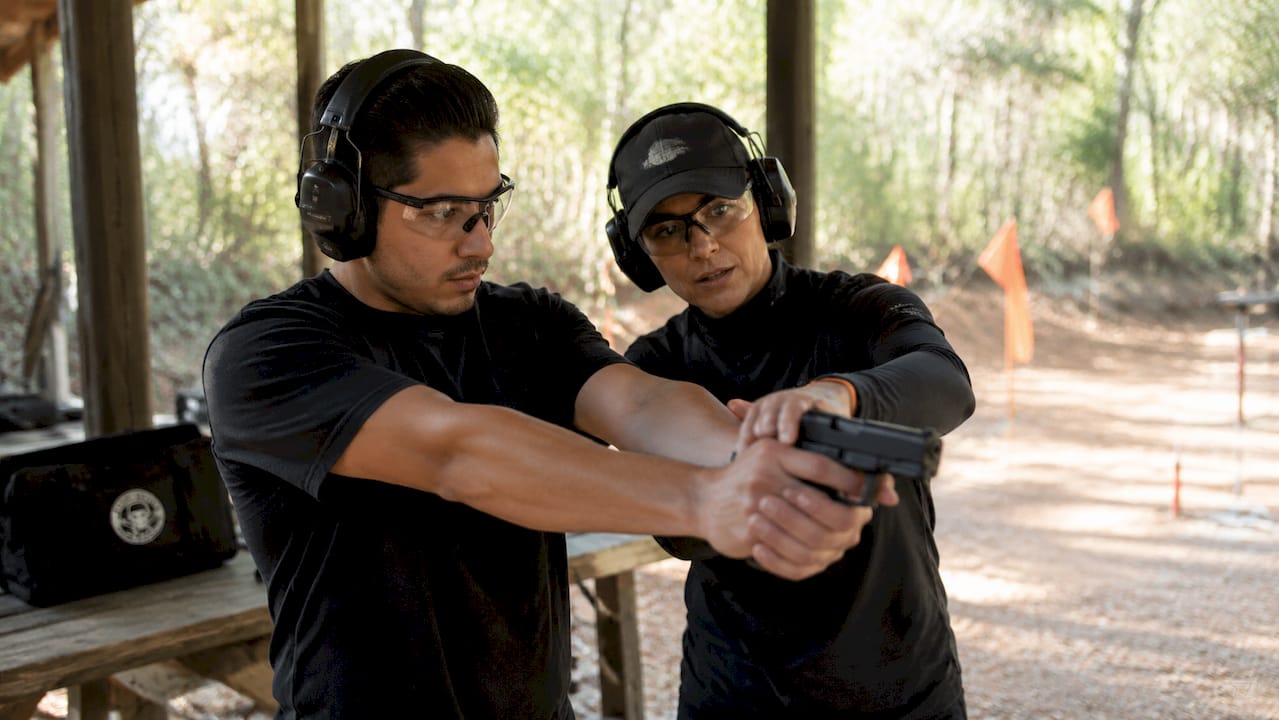
A dynamic shooting course adds movement to the equation. Dynamic shooting is the technical foundation for tactical training, emphasizing movement, balance, and weapon handling under pressure. That distinction matters: shooters who skip dynamic training and jump straight into tactical scenarios often develop unsafe habits because their technique is not yet automatic. Dynamic courses teach you to draw, move between positions, and engage multiple targets while maintaining control of the firearm at all times.
A field shooting course places shooters in outdoor environments with targets set at varying distances and angles. In the field target discipline, courses include 25–50 metal knock-down targets placed at distances ranging from 7 to 55 yards. That range of distances forces shooters to estimate range and adjust aim without relying on a fixed bench. The Troyer rating system measures target difficulty by dividing distance by kill zone diameter, with kill zones standardized between 15mm and 40mm. Hunter Field Target (HFT) takes this further by simulating hunting scenarios where shooters must estimate range without assistance and fire from various positions at unmarked distances between 8 and 45 yards.
Advanced tactical programs are designed for experienced shooters who want scenario-based training. These courses simulate real-world situations and demand that participants apply dynamic shooting skills under stress. They are not appropriate for beginners. Technique must be automatic before stress is added, or training reinforces errors rather than correcting them.
Pro Tip: Before signing up for any course, confirm your current skill level honestly with the instructor. Enrolling in a course above your level wastes money and can create safety risks for everyone on the range.
Every shooting course follows a predictable structure, even when the content varies by discipline. Knowing that structure in advance removes anxiety and lets you focus on learning.
Most courses open with classroom instruction covering safety rules, firearm mechanics, and the day’s objectives. Range time follows, starting with static drills before progressing to more complex exercises. The balance between classroom and range time shifts depending on the course level: beginner courses spend more time on theory, while advanced courses spend most of the day on the range.
Here is what a typical course day looks like:
Indoor courses offer controlled conditions: consistent lighting, no wind, and predictable distances. Outdoor courses introduce variables that make training more realistic and more demanding. Weather, terrain, and natural light all affect performance in ways that an indoor range cannot replicate.
Pro Tip: Arrive at least 20 minutes early. Instructors cover critical safety information at the start, and late arrivals disrupt the group and miss material that cannot be repeated mid-session.
Preparation determines how much you get out of a course. Showing up without the right gear or the right mindset cuts your learning in half.
The single most important step is to request a gear list before your course. Many shooters assume ranges provide everything. They do not. Arriving without required equipment can prevent you from completing the course entirely.
Essential gear for most shooting courses:
Outdoor courses require planning for weather conditions that can shift temperature by 30–40 degrees over the course of a day. Layered clothing is the standard solution. A base layer, insulating mid-layer, and wind-resistant outer shell cover most scenarios.
Nutrition and hydration are underestimated by almost every first-time course attendee. Calorie-dense snacks and consistent hydration are necessary to maintain marksmanship performance through a full day of training. Fatigue degrades trigger control and concentration before most shooters notice it happening. Pack water, protein-rich snacks, and plan for a real meal if the course runs longer than four hours.
Mental preparation is equally practical. Arrive ready to focus, accept correction, and ask questions. Instructors notice shooters who are coachable, and those shooters improve faster.
Formal training produces results that self-directed practice rarely matches. The benefits fall into three categories: safety, skill, and confidence.
Safety is the most direct benefit. Instructors correct unsafe habits immediately, before they become ingrained. A shooter who has never been formally trained often develops grip or trigger habits that increase the risk of negligent discharge. A single course can identify and fix those habits in hours.
Skill development accelerates under expert coaching. An instructor watching your technique can identify why your shots are grouping low and left, while a solo shooter at a public range may spend months guessing at the same problem. Access to structured drills, immediate feedback, and a progression of difficulty produces measurable improvement in a short time.
“The most significant barrier to shooting improvement is not lack of practice. It is practicing the wrong things repeatedly without correction. A qualified instructor eliminates that barrier in the first session.”
Confidence is the benefit that surprises most beginners. Firearm anxiety is common among new shooters and often stems from unfamiliarity rather than genuine danger. Formal instruction replaces anxiety with competence. Shooters who complete even a basic course report feeling significantly more comfortable handling firearms safely.
Shooting courses also connect you to a community. Field target clubs, IPSC leagues, and local range programs create ongoing training opportunities and competitive outlets that keep skills sharp long after the initial course ends.
A shooting course is the most direct path from uncertainty to competence with a firearm, regardless of your starting point.
| Point | Details |
|---|---|
| Courses serve every skill level | Beginner, dynamic, field, and tactical programs each target a specific experience level and discipline. |
| Dynamic training comes before tactical | Mastering movement and weapon handling technique is required before scenario-based tactical training is effective. |
| Gear preparation is non-negotiable | Request a gear list before your course; missing required equipment can prevent full participation. |
| Nutrition affects performance | Calorie-dense snacks and consistent hydration maintain marksmanship through full-day training sessions. |
| Formal instruction accelerates improvement | Expert feedback corrects errors that solo practice reinforces, producing faster and safer skill development. |
People often treat formal shooting instruction as something for beginners only. That is exactly backwards. The shooters I have seen improve the most dramatically are experienced shooters who finally decided to get structured feedback after years of self-directed practice.
The uncomfortable truth is that bad habits compound. Every hour of practice without correction makes those habits harder to break. A shooter who has been pulling the trigger the wrong way for three years has three years of muscle memory working against them. A beginner has none of that to undo.
The other mistake I see constantly is skipping dynamic training to get to “the exciting stuff.” Tactical courses look impressive, and I understand the appeal. But dynamic shooting provides the technical foundation that makes tactical training meaningful. Without it, you are practicing chaos, not skill.
My advice is simple. Start with a beginner or fundamentals course regardless of how long you have been shooting. Let an instructor watch you for one session. The feedback you get in that session will be worth more than months of solo range time. Then, once your technique is solid, explore the shooting challenges at Tondi Shooting Range to test your skills in a structured, progressive environment.
Field shooting courses, in particular, are underused by recreational shooters. The combination of range estimation, varied positions, and knock-down targets makes field target one of the most complete tests of marksmanship available. If you have never tried it, find a course and go.
— Tõnis
Laskmine operates Tondi Shooting Range in Tallinn, offering a variety of structured shooting programs for participants at every level.

The range hosts everything from foundational marksmanship sessions to advanced challenge events that test technique under realistic conditions. For shooters who want something beyond standard range time, the Zombie Weekend event at Tondi Shooting Range delivers a themed, scenario-based experience that puts practical skills to work in an engaging format. Laskmine’s courses are run by qualified instructors who prioritize safety and measurable skill development. Visit the Laskmine website to review the current course schedule and register for the program that fits your level.
A beginner shooting course teaches firearm safety rules, basic handling, and marksmanship fundamentals under the guidance of a qualified instructor. The NRA Basics of Pistol Shooting course is one of the most widely recognized programs for new shooters in the United States.
A dynamic shooting course trains participants to move, draw, and engage targets while maintaining safe firearm control. It is the required technical foundation before advancing to tactical or scenario-based training.
A field shooting course places shooters outdoors with metal knock-down targets set at distances ranging from 7 to 55 yards, requiring range estimation and shooting from multiple positions. Hunter Field Target courses add the challenge of unmarked distances between 8 and 45 yards.
Course length varies by discipline and level. Beginner courses often run half a day, while advanced field or tactical programs can span a full day or multiple days.
Most courses require ballistic-rated eye protection, ear protection, closed-toe shoes, appropriate ammunition, and clothing suited to the environment. Always request a specific gear list from the range before attending.