Personal Defense Handgun Safety Center: Beginner’s Guide
- Mo-Su 10.00 – 20.00
- +372 555 85 416
- sale@laskmine.ee





Prioritize safety, teaching ability matched to your level, and supervised lessons. That combination is what makes an instructor worth hiring, whether you’re a first-timer, a bachelor party group, or a corporate team looking for something different. If you want a straightforward, low-risk starting point in Tallinn, supervised sessions led by an instructor like Instructor TO at Tondi Shooting Range check every one of those boxes, with indoor ranges, full gear, and zero experience required.
TL;DR:
- Supervised shooting lessons at Tondi Shooting Range include safety training, gear, and indoor ranges suitable for all experience levels.
- Effective instructors emphasize fundamentals, clear communication, patience, and consistent safety briefings, rather than flashy drills or intimidating jargon.
- Beginners typically need several supervised sessions to develop comfort with firearm handling, with packages starting at around 45 EUR.
- Vetting an instructor requires asking about their teaching experience, adaptability, safety measures, and checking reviews or class observations.
- Group and event packages prioritize pacing and supervision over individualized correction, making them suitable for team-building or social outings.
The choice of shooting instructor comes down to three things: how seriously they treat safety, whether they can actually teach (not just shoot well themselves), and how they communicate under pressure. Watch how a prospective instructor talks about muzzle discipline, eye and ear protection, and student spacing before you ever pick up a firearm. Vague answers here are a bad sign.
Credentials matter, but they’re a floor, not a ceiling. A certification tells you someone passed a course. It doesn’t tell you they can break down a stance for a nervous beginner or notice a flinch developing before it becomes a habit. Ask how long they’ve actually been teaching, not just how long they’ve been shooting.
Pro Tip: Ask an instructor to explain one fundamental, like trigger control, in two different ways. If they can only explain it one way, they’re reciting a script, not teaching.
Define what you actually want before you book anything. Are you learning basic firearm safety, training for defensive shooting, chasing sport marksmanship, or planning a group event where the real goal is fun and bonding? Each answer points to a different kind of lesson.
Groups shouldn’t expect the same one-on-one correction private lessons offer, but a well-run event still keeps safety and instruction front and center for every participant.
Vetting an instructor isn’t complicated, but most people skip it entirely. A short phone call or email answers most of what you need to know before committing money or time.
Certifications alone don’t guarantee someone can teach, which is why asking for real examples of adapted instruction matters more than a wall of certificates. If a range lets you observe a class in progress or watch instructor-made videos before booking, take that offer. It tells you more in five minutes than any brochure will.
Walk away from an instructor who treats safety violations casually, brushes off your questions, or teaches every student the exact same way regardless of experience. Ego is a bigger warning sign than a lack of polish. A skilled instructor who can’t check their own confidence at the door isn’t paying attention to you, and that’s the entire job.
A solid first lesson generally follows this order: safety briefing, dry-fire fundamentals practice, supervised live fire at close range, direct feedback, and a short list of take-home drills to build muscle memory before your next session. Expect it to run 60 to 90 minutes, and bring closed-toe shoes and a willingness to be corrected repeatedly.
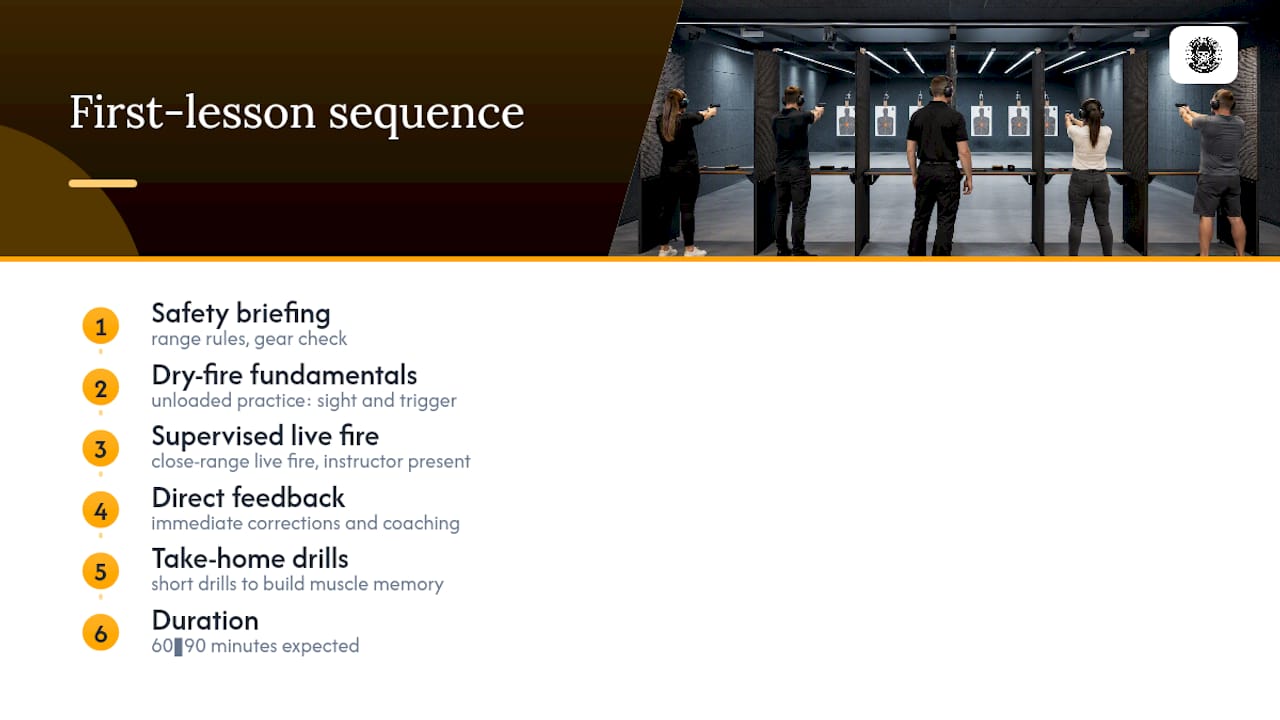
Pro Tip: If a first lesson skips straight to live fire without a safety briefing or dry-fire warmup, that’s a scheduling problem disguised as efficiency. Slow down.
Pricing usually follows a few shapes: hourly private lessons, half-day or full-day sessions, and per-person group or event packages. Cheaper classes often cut supervision time or skip individual feedback entirely, so low price rarely means better value.
Effective firearms instruction blends classroom explanation, supervised live fire, and scenario practice, with the choice of different shooting disciplines and target types influencing training, and that structure is exactly what separates a real lesson from someone just handing you a gun and a target from Ferus Outdoors. As the largest shooting range in the Baltic region, Tondi Shooting Range builds its beginner and group sessions around that same standard, with every session supervised indoors by professional instructors, including Instructor TO.
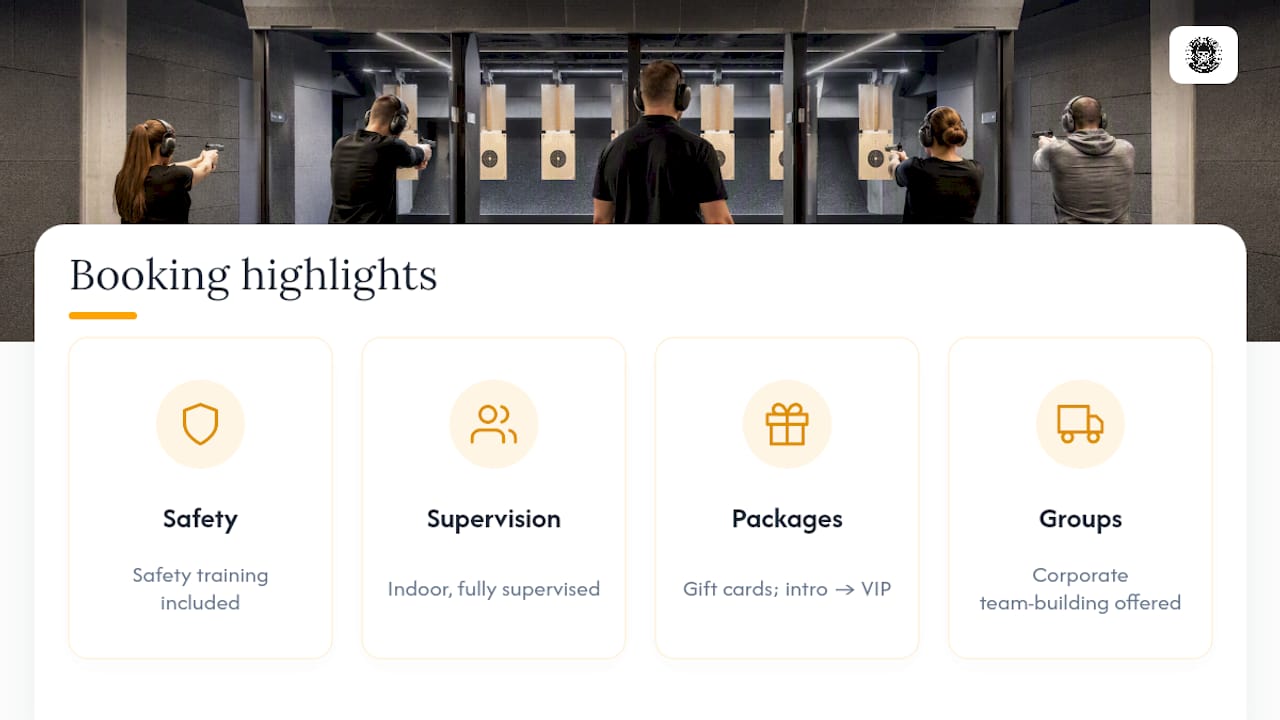
No experience is required to book. Safety training is built into every package, and the indoor range means weather never cancels your plans. The firearm selection is wide enough that first-timers, tourists, and returning gun owners all find something suited to their level.
Additional trainer certifications, customer testimonials, and data on training outcomes are available directly through the range for readers who want more detail before booking.
You’ve seen what separates a good instructor from a risky one: safety enforcement, real teaching skill, and supervision that never lets up. Tondi Shooting Range builds every package around exactly that standard, so you’re not gambling on an unknown when you show up. No experience needed, every session supervised indoors, safety training included, and a firearm selection wide enough for a nervous first-timer or a returning enthusiast.
If you’re planning something personal, browse the gift card and experience packages to find the right fit, from an introductory session to a full VIP outing. Planning for a group instead? Check the corporate team-building options or see what a first visit to the range actually looks like before you commit. Either way, the next step is simple: check available dates and ask the same vetting questions this guide walked through. A good range won’t mind answering them.
Before you book, it helps to see the role a shooting instructor actually plays day to day, or how a range visit works for complete beginners. For readers coordinating a group outing, team-building at a shooting range covers what to expect logistically. Outside sources worth a look include the NRA Family guide to choosing a gun instructor and Personal Defense World’s breakdown of what to look for.
No. Reputable instructors, including those at Tondi Shooting Range, are built specifically for first-timers with zero prior experience. Every session includes a safety briefing and fundamentals before any live fire happens.
Ask for certifications, but also ask for a real example of how they adapted a lesson for a struggling student, since teaching skill matters more than a certificate alone. Reviews, references, and watching part of a class beforehand all help confirm fit.
Beginner sessions include supervised instruction, safety training, and access to a wide firearm selection, with pricing starting around 45 EUR for an introductory package. Specific inclusions like ammunition and rentals vary by package, so check the exact listing before booking.
Most people need a handful of supervised sessions to build real comfort with grip, stance, and trigger control, not just one. Progress depends more on instructor feedback quality than on raw hours spent shooting.
Yes. Group and event packages, like those built for bachelor parties or corporate team-building, trade some one-on-one correction for pacing that keeps a whole group engaged, while still keeping every participant under full supervision.