Halloween 2024 Tallinn
- Mo-Su 10.00 – 20.00
- +372 555 85 416
- sale@laskmine.ee




For supervised handgun safety and personal-defense training, book a session at a certified personal defense handgun safety center — and if you’re visiting Central Europe, Tondi Shooting Range in Tallinn is the easiest, safest option to book. Courses are led by credentialed instructors including Instructor TO, cover a documented safety syllabus, and include supervised live-fire on a certified indoor range. No previous experience required. Check available packages and book your session before your visit.
Firearms law across Central Europe varies significantly by country. Most EU member states require a firearms license or permit before you can purchase, own, or carry a handgun — and the categories, storage requirements, and prohibited configurations differ between Estonia, Latvia, Lithuania, Poland, Germany, and their neighbors. Ranges that host visitors typically require a valid government-issued ID, a signed waiver, and sometimes proof of eligibility before you handle any firearm on-site.
Carrying a handgun off-range is a separate legal matter entirely and almost always requires an additional permit.
Before you travel or train: Always verify current permit requirements with your national police firearms authority or the official government portal of the country you’re visiting. Cross-border transport of firearms within the EU requires a European Firearms Pass and advance notification to border authorities — rules that catch travelers off guard more often than any other compliance issue.
Pro Tip: Search “[country name] firearms authority” plus “handgun permit” to find the official government page. Avoid relying on forum posts or third-party summaries — regulations change, and the official source is the only one that counts.
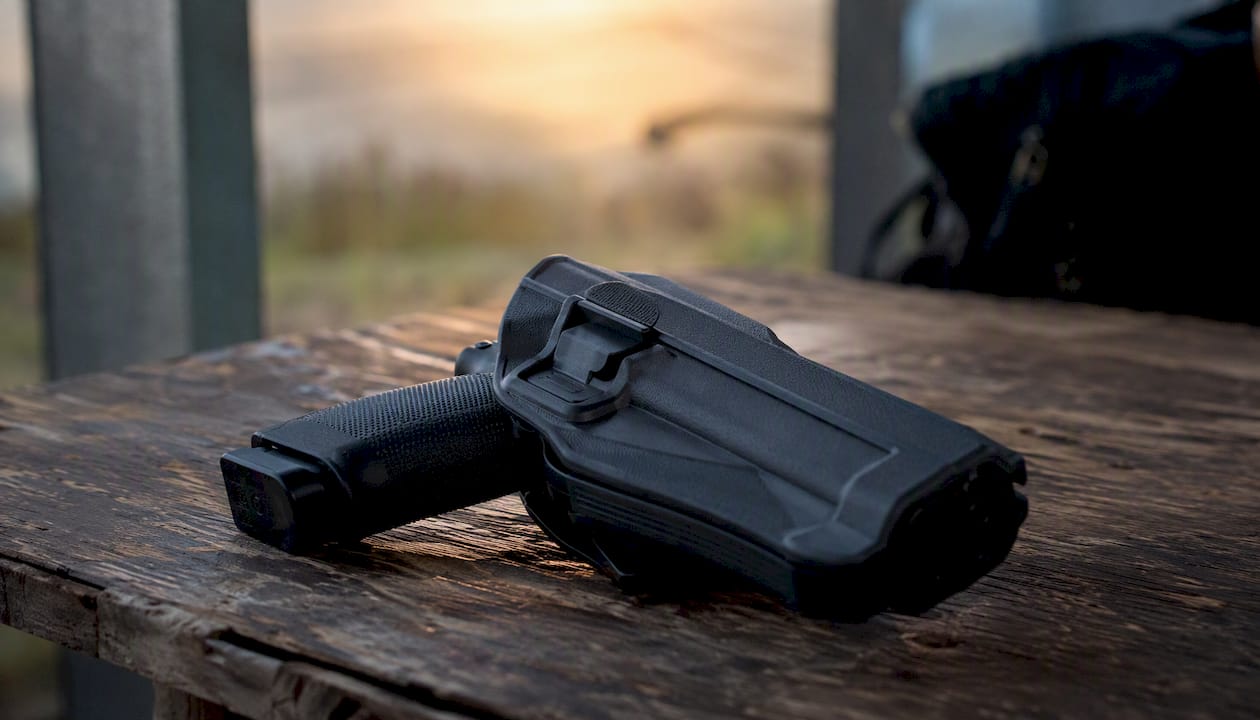
One area where ranges consistently align: holster requirements. Carrying a handgun without a proper holster, sometimes called “Mexican carry,” significantly raises the risk of a negligent discharge. Carrying without a holster removes the trigger-guard protection that prevents unintended firing from pressure or impact. Most certified ranges require that any personally owned firearm brought to the range be transported in a case or holster that fully covers the trigger guard. Instructors consistently recommend a holster with positive retention as the minimum standard for any carry situation.
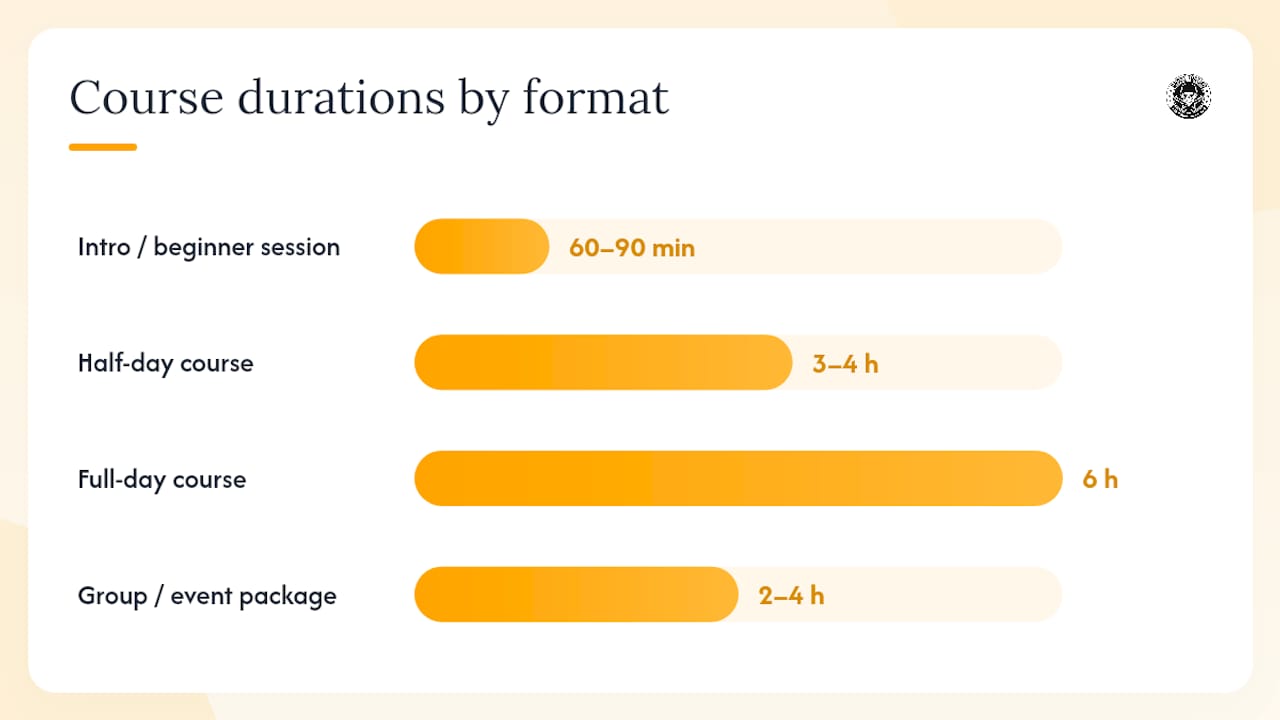
Session lengths vary by format. A standalone intro session runs 60–90 minutes. A half-day course covers 3–4 hours including breaks. Full-day and multi-day programs are available at larger facilities and typically include advanced drills, scenario work, and more live-fire rounds.
| Format | Typical Duration | What’s Usually Included |
|---|---|---|
| Intro / beginner session | 60–90 min | Safety brief, dry-fire, supervised live-fire, targets |
| Half-day course | 3–4 hours | Full syllabus, legal overview, more live-fire volume |
| Full-day course | 6 hours | Advanced drills, scenario work, debrief |
| Group / event package | 2–4 hours | Shared instruction, multiple firearms, group debrief |
Basic safety checks at most ranges are pass/fail on safe handling behavior, not marksmanship scores. Instructors watch for muzzle discipline, trigger discipline, and following range commands. Most beginners pass on the first attempt when they pay attention during the safety brief. Re-instruction is common and expected — no one is turned away for needing a second explanation.
One training assumption worth correcting: the widely cited “3-3-3 rule” (3 feet, 3 seconds, 3 rounds) originates from officer-involved shooting data, not civilian defensive encounters. Armed attorneys analyzing civilian data found that civilian engagements averaged roughly 9.5 feet, about 6 seconds from draw to resolution, and 3.75 to 4 shots fired on average. Independent analysis confirms the rule doesn’t reliably describe civilian defensive use situations. NRA Women’s training coverage puts it plainly: training built around a fixed “three” metric leaves civilians underprepared for the actual variability of defensive encounters.
Start with what’s legal in your jurisdiction. Many Central European countries restrict magazine capacity, prohibit certain calibers for civilian ownership, or require specific storage configurations. Once you know what’s permitted, narrow by these criteria:
Pro Tip: Before purchasing, rent two or three different models at a supervised range and shoot at least 50 rounds through each. Accuracy at 7–10 meters, comfort under recoil, and ease of manipulation all feel different in your hands than they look in a review.
Storage and transport responsibilities under Central European law apply from the moment you take ownership. Most countries require a locked container for home storage and a locked case for transport, separate from ammunition.
Tondi Shooting Range operates the largest shooting range in the Baltic region, with modern indoor facilities, a wide selection of firearms, and group packages designed for tourists, corporate teams, bachelor parties, and first-time shooters alike. No previous experience is required — every session is supervised by professional instructors.
Instructor TO’s authored guides on firearm safety rules and dry-fire practice are published on the Tondi Shooting Range platform, establishing a documented, repeatable syllabus rather than informal instruction. That matters when you’re booking for a group: everyone gets the same safety brief, the same progression, and the same standard of supervision.
From Instructor TO’s firearm safety guide: “Treat every firearm as if it is loaded — this rule applies at all times, regardless of whether you have personally verified the chamber. It is the foundation of every safe range session.”
Packages range from a single intro session to half-day team-building events and gift-card experiences. The pistol shooting experience page covers group options in detail. For corporate teams, the team-building package combines instruction, live-fire, and a structured debrief that works as a standalone event in Tallinn.
Supervised training at a certified personal defense handgun safety center is the safest and fastest path to competent, legal handgun handling — and Tondi Shooting Range offers that with documented instructor credentials, modern facilities, and no experience required.
| Point | Details |
|---|---|
| Course structure | Sessions progress from safety rules and dry-fire to supervised live-fire; beginners typically pass safety checks on the first attempt. |
| Legal check first | Permit requirements, storage rules, and carry laws vary by country in Central Europe — verify with your national firearms authority before training or purchasing. |
| Realistic training distances | Civilian defensive encounters average roughly 9.5 feet, 6 seconds, and 3.75 to 4 shots fired; train at 3–7 meters, not just close range. |
| Holster is non-negotiable | Carrying or transporting without a trigger-guard-covering holster increases negligent discharge risk; most ranges require one. |
| Tondi Shooting Range | Modern indoor range in Tallinn with Instructor TO credentials, group packages, and no experience required — book at laskmine.ee. |
Tondi Shooting Range gives you something most venues in Tallinn can’t: a fully supervised, instructor-led shooting session inside the largest range in the Baltic region, with no experience required and a documented safety syllabus behind every session. Whether you’re organizing a bachelor party, a corporate team day, a birthday, or just want to try something genuinely different in Tallinn, the range handles everything — firearms, safety gear, instruction, and targets.
Gift cards are available for anyone who wants to give the experience rather than book it directly. Group packages cover two to twenty-plus people, with options scaled for a quick intro session or a half-day event. First-time shooters are the majority of guests, not the exception.
Browse packages and book your session — or check the group experience page if you’re planning for a party or corporate event. Confirm local legal requirements before traveling with a personally owned firearm.
The claims in this article draw on the following sources. Use them to verify legal points, check training standards, or read deeper on specific topics.
On legal requirements: Always use your national police or government firearms authority as the primary source. Third-party summaries, including this article, are general information only — not legal advice. Rules change; the official source is the only one that counts.
The 3-3-3 rule claims most defensive shootings happen at 3 feet, last 3 seconds, and involve 3 rounds. It originates from officer-involved shooting data, not civilian encounters — case analysis shows civilian engagements average roughly 9.5 feet, about 6 seconds, and 3.75 to 4 shots fired, so training should cover variable distances and shot counts.
“Mexican carry” refers to carrying a handgun tucked into a waistband without a holster. It removes trigger-guard protection and significantly raises the risk of a negligent discharge; certified ranges and instructors consistently require a proper holster that covers the trigger guard.
Most basic safety checks at certified ranges are pass/fail on safe handling behavior — muzzle discipline, trigger discipline, and following range commands — not marksmanship scores. The majority of beginners pass after a thorough safety brief; re-instruction is standard and expected.
For most civilian shooters in Central Europe, a mid-size 9mm pistol from a proven platform balances legal availability, recoil management, and accuracy. Fit your hand first — rent and shoot several models at a supervised range before purchasing, and confirm that your chosen caliber and configuration are permitted under your country’s firearms law.