Halloween 2024 Tallinn
- Mo-Su 10.00 – 20.00
- +372 555 85 416
- sale@laskmine.ee


If you plan to fly a drone in Estonia, the short version is this: register as an operator if your drone weighs 250 g or more (or has a camera), hold the right pilot competency, keep the drone in sight and below 120 m, and check the official drone map for restricted zones before every flight. The rest of this guide walks through each rule, explains where people usually slip up, and shows how to build the habits that keep flights safe, whether you live in Tallinn or are visiting for a weekend.
We run Tondi Shooting Range in Tallinn, and we also teach drone handling to company teams and groups. Safety is the thread that runs through everything we do, so we care about drone rules as much as range rules.
Estonia follows the European Union drone framework, set out in Commission Regulations 2019/947 and 2019/945. According to the Transport Administration’s flight awareness leaflet, these rules exist so that drones, regular air traffic and people on the ground can share the same space more safely.
The rules apply to everyone who flies in the country: residents, tourists, hobbyists and companies. Two roles matter:
The official Transport Administration page on flying drones explains that the operator registers, and the remote pilot holds the competency certificate. If you own and fly your own drone, you do both.
For a deeper look at the legal side, see our guide to drone laws in Estonia for residents and visitors.
Registration happens in LOIS, the aviation safety information system. The Transport Administration states that all operators of drones over 250 g must register, and that operators of lighter drones must also register if the drone has a camera. After registering you receive a number that has to be marked on every drone you own, and the registration must be renewed each year.
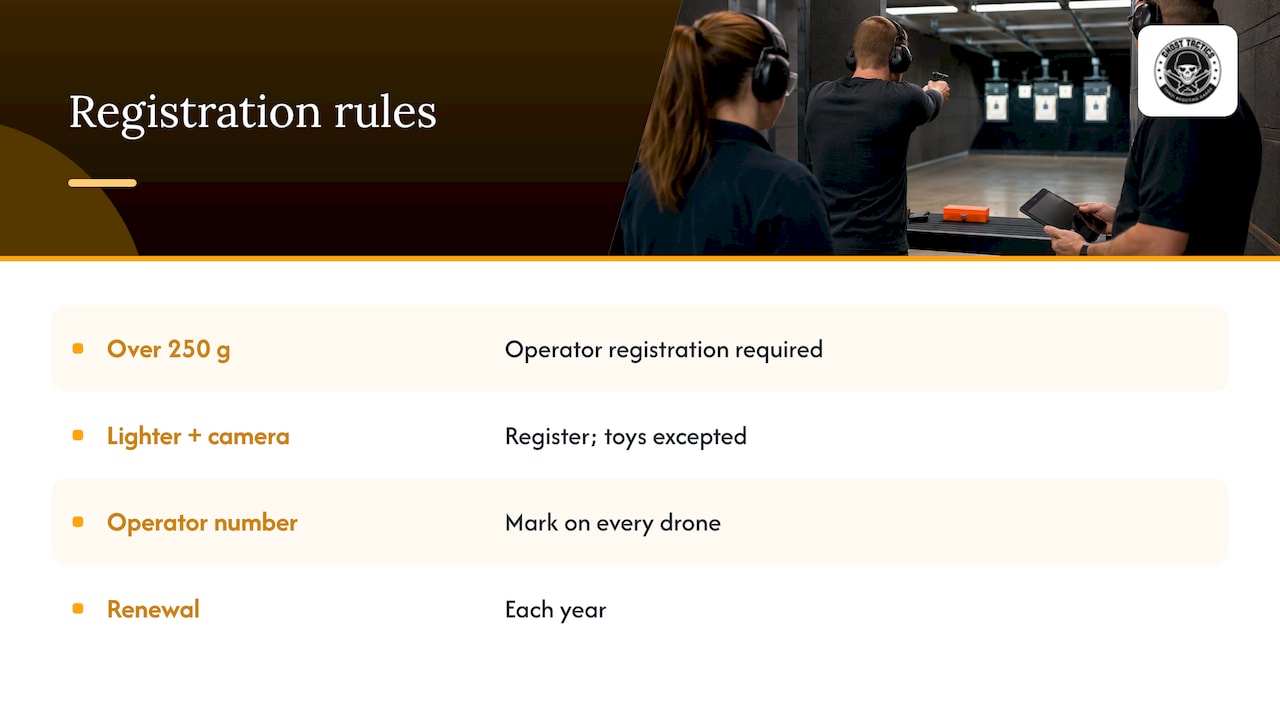
In practice, that means almost every consumer drone is covered. Even a small sub-250 g model with a camera falls under the registration duty. The Transport Administration’s FAQ says registration is usually mandatory in that case, with an exception for toys.
Want the click-by-click version? Our walkthrough on registering a drone in Estonia through LOIS covers it.
The operator registration is valid across the EU, so if you are already registered at home you generally do not start from scratch. Finland and Sweden, two of our most common visitor countries, run the same framework through Traficom and Transportstyrelsen. Still, confirm the current details with the Estonian authority before you travel, and carry your registration number on the drone.
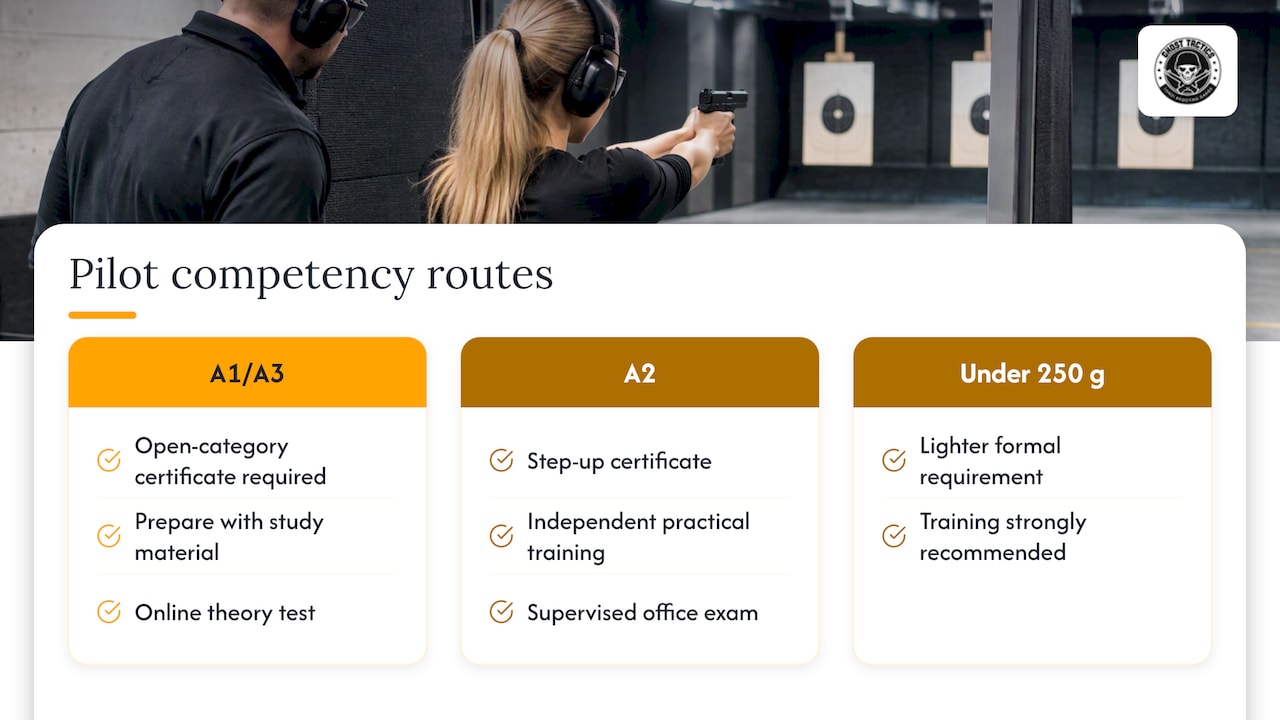
The Transport Administration lists the basic A1/A3 certificate of competency as the requirement for remote pilots of drones in the open category. You prepare with the study material, then complete the theory test online through the system. The A2 certificate is a step up: it requires independent practical training and a supervised exam at a Transport Administration office.
For drones under 250 g, the formal requirement can be lighter, but the authority strongly recommends the training anyway. We agree. The test is not paperwork for its own sake. It teaches how a drone behaves near manned aircraft, why signals fail, and what a flyaway looks like from the other side.
Our checklist article, three things to check before every flight, covers LOIS, competency and the drone map in one place.
These are the rules most people need day to day. The wording below follows the Transport Administration’s English guidance.
| Rule | What it means in practice |
|---|---|
| Visual line of sight | You see the drone with your own eyes, or an unmanned aircraft observer does. Looking at the screen does not count. |
| Weight | The drone must weigh less than 25 kg. |
| Maximum height | 120 m above the ground. Some areas have lower limits shown on the drone map. |
| Dangerous goods | No transport of dangerous goods, and no flying that harms people or property. |
| Accident scenes | Flying a drone at the scene of an accident is prohibited under the EU regulation. |
Two more points come up constantly in Google results and are worth stating plainly. Do not fly over crowds of people: the Transport Administration’s open category rules say drones must not be flown directly above gatherings. And keep your distance from people who have not agreed to be near the flight, because privacy rules apply to anything you film.
We break down the height limit and the map in Estonia drone rules: check the map and stay below 120 meters.
Before you take off, open the official Estonian Drone Map. It shows where flying is limited or banned, including areas around airports, and where altitude limits are lower than the standard 120 m.
If your plan takes you into a restricted area, you need permission from the area holder first. Allow plenty of time: the application usually asks for the purpose of the flight and a plan for what happens if you lose the signal, and approvals are not instant. Do not assume you can sort it out on the day.
The Police and Border Guard Board has published flight restrictions along the eastern border that apply to both manned and unmanned aircraft, and it asks for a flight permit in the affected zone. Signal jamming has also become more common near the eastern frontier, with GPS loss and control link problems reported, as described on the police flight permit page. If your trip takes you toward Narva, Lake Peipus or Setomaa, check the current restrictions and dates on the police site before you pack the drone.
Tallinn visitors should also remember that the city sits close to the airport and has plenty of sensitive sites. The map is the only reliable way to know whether your launch spot is clear.
Good pilots do the same short routine every time. Here is ours:
After the flight, note anything odd: a battery that heated up, a motor sound, a signal drop. Small things become big ones.
A drone is a flying camera, and people notice it. Estonian and EU rules on privacy apply to the footage you take, so avoid filming identifiable people without a reason, and think twice before publishing clips with faces, car plates or private yards. When in doubt, fly higher or somewhere else, or ask people for consent. Our broader overview of drone safety in Estonia, rules and alerts covers what to do if you see an unusual drone yourself.
Rules are one half. Handling is the other. Many people who buy a drone crash it in the first week because nobody showed them how it behaves when the wind picks up or when a signal flickers.
At Tondi Shooting Range in Tallinn, we offer drone training in a safe, supervised, indoor setting. It is built for groups: companies, teams, friends and event guests. No experience is needed, and professional instructors guide every session, with safety briefing included. You can read about the event drone safety course for parties and teams, or look at the drone training modules for security teams if you organize training for a professional group.
For companies, our introductory drone training for businesses starts from €85 per person. The same page lists our other team packages, including the safety-focused event and the pick-your-own colleague package from €25 per person. If you are building a bigger day, look at team building in Tallinn and the safety rules we apply to corporate shooting events.
Because the range is indoors, weather never cancels the plan, and we have a wide selection of equipment to match different groups. Ready to book or ask a question? Start at laskmine.ee and tell us your group size and date.
It may sound odd that a shooting range writes about drones. It is not. A firearm and a drone both reward the same habits: read the rules before you start, check your surroundings, follow the instructor, and never rush. Our approach to events is built on security awareness and clear communication, which is why people who come for a team day often leave with sharper habits at work too. If that interests you, read about tactical shooting sessions and building awareness through tactical training.
The Transport Administration frames the competency exam the same way: the knowledge is there to prevent serious accidents with manned aircraft and people on the ground, not to add bureaucracy. Treat it that way and the rules become easy to follow.
Yes, in most cases. Operators of drones weighing 250 g or more must register in LOIS, and operators of lighter drones must register if the drone has a camera. The registration is renewed annually, and the number must be marked on the drone.
The maximum is 120 m above the ground. Some areas have lower limits, which are shown on the official drone map, so check it before every flight. You must also keep the drone within your line of sight.
Yes, as long as you follow the same rules as residents. That means registration as an operator (an EU registration is generally recognized), the right competency, and a check of the drone map. Confirm current requirements with the Transport Administration before you travel.
Only after checking current restrictions. The Police and Border Guard Board has set flight restrictions along the eastern border for manned and unmanned aircraft, and a flight permit may be required. Signal interference is also reported there, so it is not a good place to try a flight casually.
Yes. We run supervised drone sessions for groups at our indoor range in Tallinn. No experience is needed, and instructors lead the session from the safety briefing onward.