Kuidas ma poole aastaga laskma õppisin
- Mo-Su 10.00 – 20.00
- +372 555 85 416
- sale@laskmine.ee





Firearm safety rules are the core principles every gun owner must follow to prevent accidents, injuries, and negligent discharges. These rules are not suggestions. They are the non-negotiable foundation of responsible firearm ownership, endorsed by safety organizations including the NRA and recognized health and safety bodies across the United States. Whether you are a first-time owner or a seasoned shooter, understanding and internalizing these principles is what separates safe handling from dangerous complacency. This article covers each rule in full, explains the reasoning behind it, and shows how to apply it in every situation you will encounter.
The five core gun safety guidelines form a system, not a checklist. Most negligent discharges occur when a shooter breaks two or more rules at the same time. That means each rule acts as a backup for the others. Miss one, and the remaining rules still protect you. Miss two, and the risk of a serious incident rises sharply.
This is the first and most important rule. Firearms should always be visually and physically checked before handling, regardless of what anyone tells you about their status. Assuming a gun is unloaded because you set it down five minutes ago is exactly how negligent discharges happen. Treat every firearm as live, every single time.
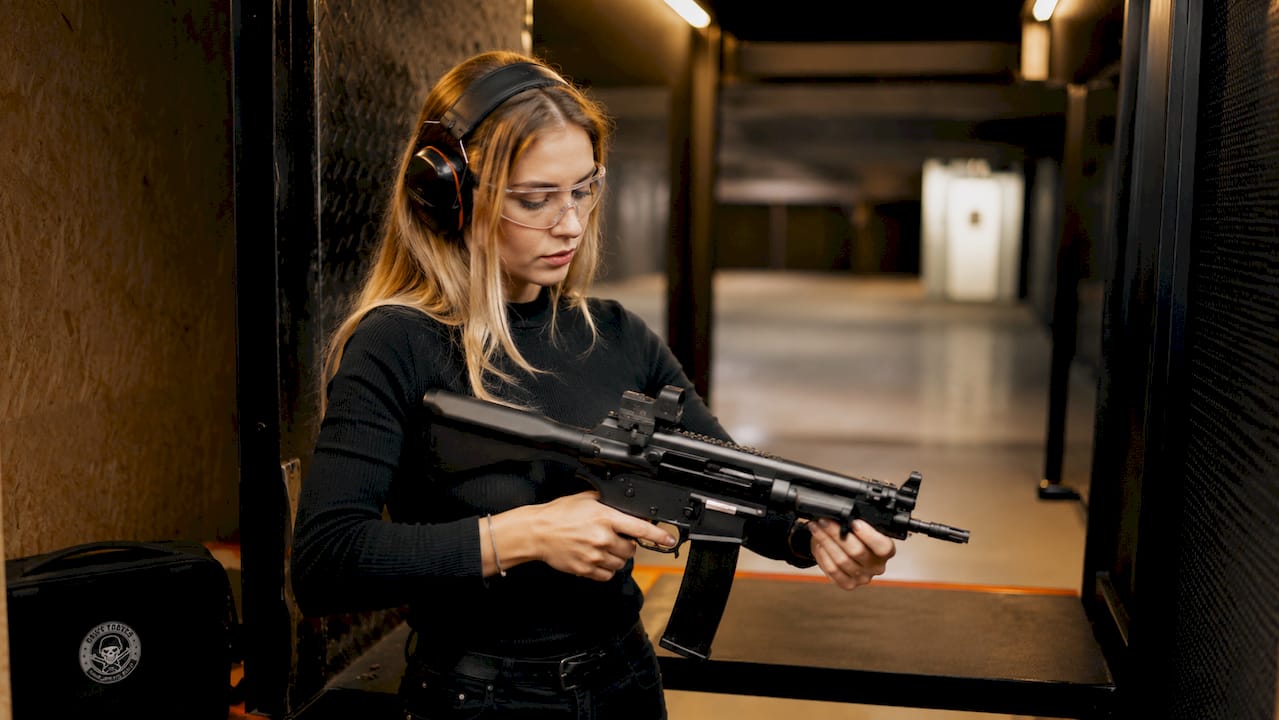
A safe direction is the direction where an unintended discharge would cause the least possible harm. Safe direction is environment-dependent and requires continuous situational awareness. At a commercial range, the backstop defines the safe direction. At home, the answer is different, often toward the floor or an exterior wall with no one behind it. The rule demands that you assess your surroundings before you ever raise a firearm.
Trigger discipline prevents the most common type of negligent discharge: an involuntary muscle contraction under stress or surprise. Indexing the finger on the frame is more effective than simply keeping it “off” the trigger. Resting your finger along the frame, above the trigger guard, builds a physical habit that holds even when your adrenaline spikes. For deeper guidance on this skill, Laskmine’s resource on trigger control best practices covers the mechanics in detail.
Bullets do not stop at the target. Awareness of the environment and backstop is as critical as target acquisition itself. A round that misses or passes through a target travels until it hits something. Before you fire, you must identify what is behind your target and whether a miss or pass-through would endanger anyone.
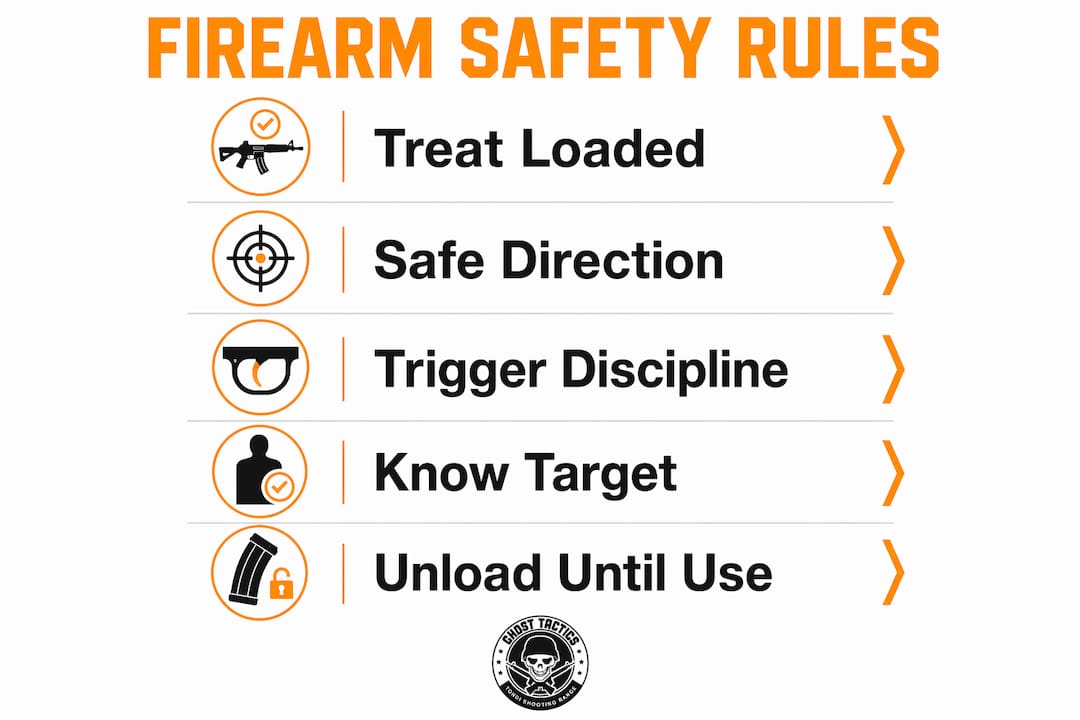
Loading only when needed is a core safe handling practice that reduces accidental discharge risk during transport, storage, and cleaning. An unloaded firearm in a locked safe is the safest possible state for any gun not in active use. This rule applies equally to handguns, rifles, and shotguns.
Applying basic gun rules correctly depends on where you are and what you are doing. The principles stay the same. The execution changes.
At home: The safest muzzle direction is typically toward the floor or an exterior wall. Never point toward a shared wall, ceiling with occupied rooms above, or any direction where a person could be standing. Store all firearms unloaded in a locked safe or cabinet, with ammunition in a separate locked location. This single practice prevents the majority of unintentional firearm injuries in the home.
At the range: Range safety protocols define the safe direction as downrange toward the backstop. Keep the muzzle pointed downrange at all times, even when not shooting. Follow all posted range commands and never handle a firearm when a cease-fire is called.
In the field: Hunting and outdoor shooting environments require constant muzzle awareness. When crossing terrain obstacles, always unload the firearm first or use a safe carry position that keeps the muzzle pointed away from your body and any companions.
During cleaning: Firearms should be unloaded before any cleaning begins. Clear the chamber, lock the action open, and visually confirm the firearm is empty before touching any cleaning tools. Set up your workspace so the muzzle faces a safe direction throughout.
During transport: Keep the firearm unloaded and secured in a case. Many states require firearms to be transported in a locked container, so understanding gun laws in your jurisdiction is part of responsible ownership.
Pro Tip: When handing a firearm to another person, lock the action open and have the recipient verify it is empty before they take it. Never hand over a firearm without this step.
Safe shooting practices break down in predictable ways. Recognizing these patterns is the first step to eliminating them.
Pro Tip: Build muscle memory through dry-fire practice at home with a verified empty firearm. Repetition under controlled conditions is what makes safe habits automatic under stress. Laskmine’s guide on diagnosing shooting errors walks through common technique failures and how to correct them.
Professional instruction accelerates this process significantly. A qualified instructor identifies bad habits before they become ingrained and provides real-time correction that self-study cannot replicate.
Secure storage is the extension of firearm safety rules into the hours when you are not actively handling a firearm. Most non-fatal firearm injuries are unintentional and preventable with consistent safe storage habits. That means the majority of these incidents could be stopped by a locked safe and a separate ammunition cabinet.
Combined storage methods increase protection against unauthorized use or accidental discharge. Using a locked safe alone is good. Adding a cable lock or chamber flag to a firearm inside that safe is better. Layering security measures creates redundancy that matters most when someone else, a child, a visitor, or a burglar, attempts to access the firearm.
| Storage method | Primary benefit | Best use case |
|---|---|---|
| Locked gun safe | Prevents unauthorized access | Long-term home storage |
| Locked cabinet | Organized, accessible storage | Multiple firearms at home |
| Cable lock | Renders action inoperable | Secondary layer inside safe |
| Chamber flag | Visual indicator of empty chamber | Range use and transport |
| Separate ammo storage | Reduces risk if firearm is accessed | All home storage situations |
Periodic reviews of your storage setup matter. Households change. Children grow older and become more curious. New people move in. What worked as a storage solution two years ago may not be adequate today. Reassess your setup at least once a year and after any significant change in your household.
The five firearm safety rules work as a system, and consistent application of all five is the only reliable way to prevent negligent discharges and unintentional injuries.
| Point | Details |
|---|---|
| Rules work as a system | Breaking two rules simultaneously is the leading cause of negligent discharges. |
| Treat every firearm as loaded | Always visually and physically verify status before handling, without exception. |
| Muzzle control requires footwork | Move your feet, not your arms, to maintain safe muzzle direction while moving. |
| Storage is active safety | Locked safes, separate ammo storage, and cable locks together prevent most home accidents. |
| Training builds automatic habits | Muscle memory developed through instruction makes safe behavior reliable under stress. |
The word “accident” implies randomness. Most firearm incidents are not random. They follow a clear pattern: someone skipped a rule, assumed a firearm was empty, or let their finger drift to the trigger before they were ready. Negligent shootings occur due to failure to maintain discipline, not bad luck.
I have watched new shooters at the range develop safe habits faster than experienced owners who came in with years of bad technique baked in. The experienced owner has to unlearn before they can learn. The beginner just has to learn. That is why I always tell people: get formal instruction early, before habits form on their own.
Safe direction is the rule I see people underestimate most. They think it means “point it somewhere safe.” What it actually means is that you must continuously assess your environment and update your answer. The safest direction in your living room is not the same as the safest direction at an outdoor range. Safe direction must be assessed continuously, not decided once and forgotten.
Responsible ownership is not about fear. Owners who internalize these rules report less anxiety around their firearms, not more. When the habits are automatic, you stop second-guessing yourself. You know you are safe because you know what you did. That confidence comes from training, repetition, and honest self-assessment.
— Tõnis
Reading about firearm safety rules is the starting point. Applying them under real conditions, with qualified instruction and a controlled environment, is where the learning actually happens.

Laskmine offers shooting range sessions designed around safe firearm handling from the first moment you step onto the range. Every session reinforces muzzle discipline, trigger control, and target awareness in a structured setting. For those who want a full curriculum, Laskmine’s shooting courses cover safe handling fundamentals through to advanced technique, with instructors who correct errors in real time. Whether you are picking up a firearm for the first time or refreshing habits that have drifted, Laskmine’s facilities give you the environment and the guidance to build skills that hold under pressure.
The four core rules are: treat every firearm as loaded, keep the muzzle pointed in a safe direction, keep your finger off the trigger until ready to shoot, and know your target and what is beyond it. A fifth rule, keep firearms unloaded until ready to use, is widely added by safety organizations.
A safe direction is the direction where an unintended discharge would cause the least harm given your specific environment. It changes based on where you are, so you must assess it continuously rather than assume it stays the same.
Indexing places the finger in a specific, controlled position along the frame above the trigger guard. This physical anchor is more reliable than a vague instruction to keep the finger “off,” especially when stress or surprise causes involuntary muscle reactions.
Firearms should be stored unloaded in a locked safe or cabinet, with ammunition in a separate locked location. Adding cable locks or chamber flags inside the safe creates a second layer of protection against unauthorized use.
No. Mechanical safeties are devices that can fail. The four core safety rules apply regardless of whether a firearm has a safety mechanism engaged. Relying on a mechanical safety as a substitute for proper handling discipline is a recognized cause of negligent discharges.