Best Practices for Trigger Control in Shooting
- Mo-Su 10.00 – 20.00
- +372 555 85 416
- sale@laskmine.ee


Low light shooting is firing a firearm when there is little light to see the target, the sights or what is around it. It is a real skill, and it rests on the same basics as any shooting: a safe grip, a steady stance, a clear sight picture and calm breathing. The best way to start is to build those basics first, under supervision, in a controlled indoor setting. At Tondi Lasketiir in Tallinn you can do exactly that with no experience, with professional instructors beside you and safety training included.
If you landed here looking for camera settings (aperture, shutter speed and ISO), that is a different kind of shooting. Canon’s low-light guide covers the exposure triangle for photographers. The rest of this article is about firearms.
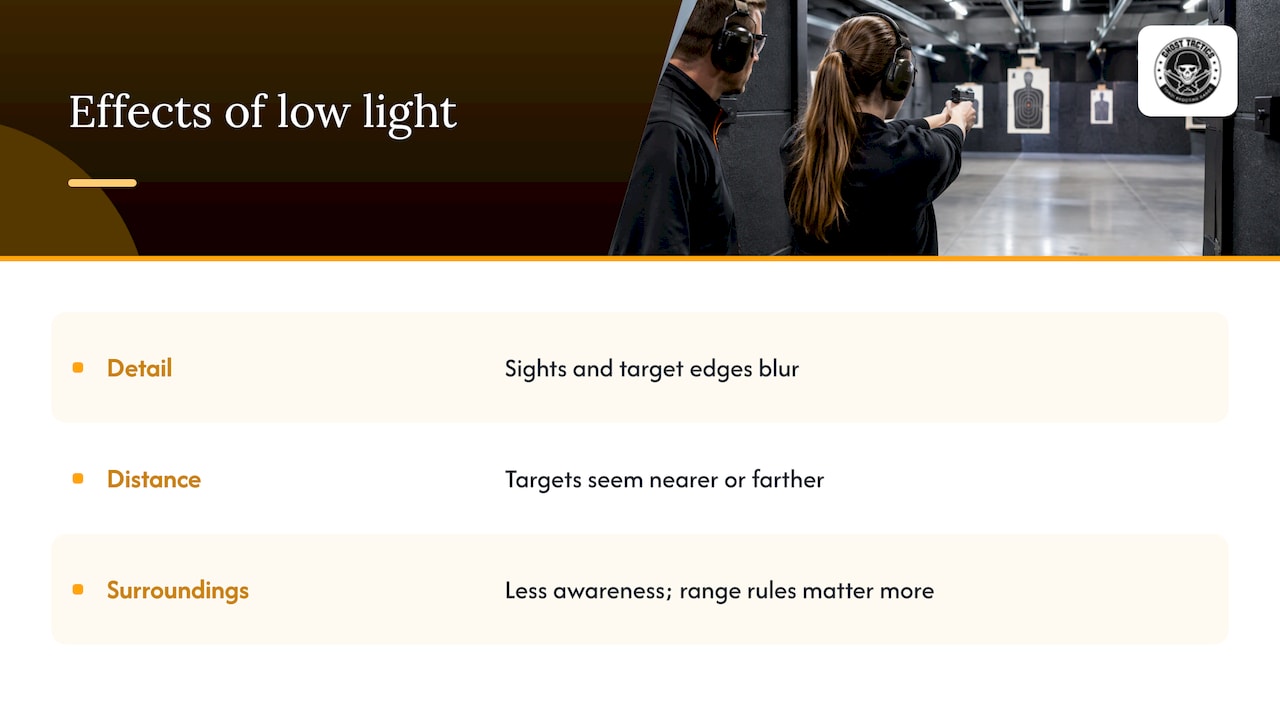
In daylight your eyes do a lot of work without you noticing. They pick out the front sight, lock onto the target and take in the whole scene in a fraction of a second. When the light drops, three things change.
Detail fades. The front sight, the rear sight and the edges of the target blur together. A sight picture that is easy at noon becomes a guess at dusk.
Depth and distance are harder to judge. Without clear contrast, a target can seem nearer or farther than it is. If you are curious how distance is judged in practice, our field guide to measuring shooting distances walks through it.
You see less of what surrounds the target. In any shooting, you must know what is in front of and behind the target. Reduced light shrinks that awareness, which is why instruction and strict range rules matter more, not less.
None of this is a reason to avoid the subject. It is the reason to build habits that still work when your eyes get less help.
People who do well in poor light almost always have solid fundamentals. These are the ones to learn first.
A stable stance and a firm, consistent grip are the base of every shot. They do not depend on light, so you can practice them anywhere. Once they feel automatic, you do not have to think about them when other things get harder.
Sight alignment is how the front sight sits inside the rear notch. Sight picture is that alignment placed on the target. Both rely on your dominant eye, and many beginners do not know which eye that is. Our eye dominance guide shows how to find out in a minute, and it is worth doing before your first visit.
If you wear glasses, read our guide to shooting with prescription glasses so your setup is safe and comfortable from the first shot.
A smooth trigger press keeps the sights on target. Slow, even breathing keeps your hands calm. When you cannot see well, rushing is the usual mistake, and a steady rhythm is the cure. Our article on mental focus in shooting explains how to stay calm and accurate, which carries over to every kind of shooting.
Safe handling means treating every firearm as loaded, keeping the muzzle in a safe direction and your finger off the trigger until you are ready to fire. Low light adds a rule of its own: never fire at something you cannot positively identify. Instructors build this habit in from the first session.
People who search for night shooting techniques are usually curious about how shooters cope when it is truly dark. At a beginner level, the useful ideas are simple.
These are principles, not a substitute for an instructor. Techniques involving lights and movement should be introduced by a professional once your basics are reliable.
Outdoor shooting depends on weather, season and daylight. In Estonia, winter days are short, and the light can be poor for much of the day. An indoor range removes those variables. Our range is indoors, so you shoot in a stable, controlled environment whatever the weather, and the conditions are the same from one visit to the next.
If you are planning a visit in the colder months, our guides to indoor winter shooting at Tondi Lasketiir and winter shooting in Tallinn, outdoor or indoor explain what to expect. For a closer look at the evening experience, read our night shooting range guide for beginners.
We built our sessions for people who have never held a firearm. The key points:
A typical first visit starts with the safety briefing, moves to handling and stance, and then to live shots at the target with your instructor next to you. Beginners often find that the first few magazines teach them more about focus and calm than they expected.
Low light and focus skills sound serious, but the sessions are social and approachable.
You can improve your fundamentals between visits. Dry fire practice, done safely and without ammunition, trains grip, sight alignment and trigger control. Our dry fire practice guide for beginners explains how to do it properly. When you want to go further, pistol shooting drills for beginners and precision shooting techniques give you structured exercises to bring to the range.
Two more skills help in any light. Situational awareness, noticing what is happening around you, is covered in our situational awareness training guide. Staying composed under pressure is a theme in our article on security scenarios in team training.
Our gift card and experience page lists the options. Some examples, with the prices published there:
| Package | Price | Good for |
|---|---|---|
| Minu esimene pauk | 45 EUR | First-time shooters |
| Juunior ja seenior | 55 EUR | Different ages shooting together |
| Shooting Foreplay | 76 EUR | A step up from the first shot |
| Dünaamiline Duo | 105 EUR | Couples and pairs |
| Eriüksuslane | 105 EUR | Those who want a tactical feel |
| Adrenaliinilaks | 138 EUR | A bigger adrenaline session |
| VIP Duo | 168 EUR | A premium experience for two |
If you want to learn the rules and handling in depth, our Relvakäsitsemise koolitus is 175 EUR, and the Relvaloa taotleja koolitus gift card is 280 EUR.
Ready to book? See all packages on our experience and gift card page, or choose the first-shot package and bring a friend.
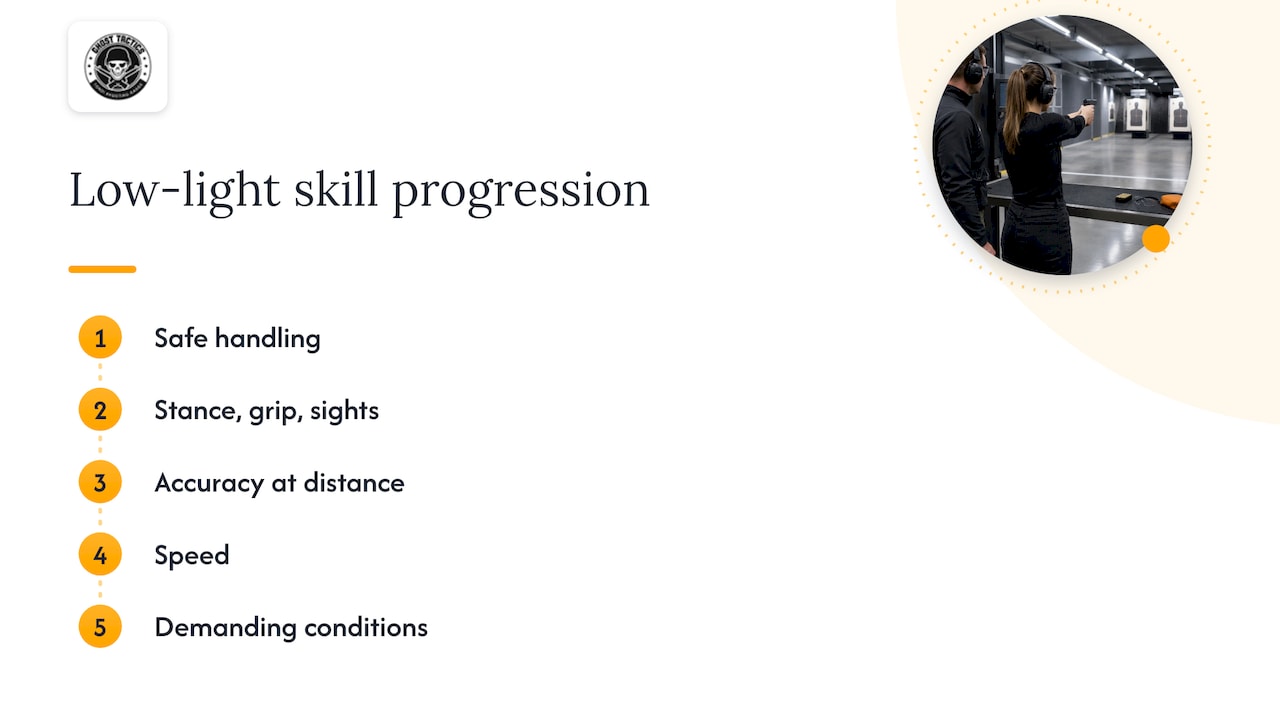
Think of low light shooting as a ladder. The first rung is safe handling. Next come stance, grip and sights. After that comes accuracy at distance, then speed, and only then more demanding conditions. Skipping rungs is how bad habits form. A supervised indoor range lets you climb one rung at a time, with an instructor who sees what you are doing and corrects it on the spot.
Many people find that the mental side improves first. Learning to slow down, breathe and commit to one clear sight picture is useful well beyond shooting.
No. Our sessions are designed for first-time shooters. Professional instructors supervise everything, and safety training is included before you handle a firearm.
Yes. The range is indoors, so weather and short winter days do not affect your booking. Conditions are consistent from visit to visit.
Low light shooting in this article means firearm shooting in dim conditions. Photography uses the word shooting for taking pictures, where aperture, shutter speed and ISO control exposure. The skills involved are entirely different.
Yes. Tourists, couples, friends, birthday groups, bachelor parties and corporate teams can all book. Group formats such as Poissmeesteõhtu start from 25 EUR per person.
Our Minu esimene pauk package costs 45 EUR. Other packages range up to 168 EUR for the VIP Duo, and all are listed on our experience page.