Shooting Range Warm-Up Drills: 10 Best Examples
- Mo-Su 10.00 – 20.00
- +372 555 85 416
- sale@laskmine.ee





Rifles give you a steadier, longer-range platform built for accuracy; pistols win on portability and concealability when you need something you can carry all day. Home defense and self-defense carry usually point toward a pistol, while hunting and sport shooting favor a rifle. That said, individual fit and training matter more than any general rule, so the smartest move is testing both under supervision before you decide.
TL;DR:
- Rifles provide better stability and accuracy at longer distances due to longer sight radii and shoulder support, making them ideal for hunting and sport shooting.
- Pistols are more portable and easier to maneuver in tight spaces, making them preferable for home defense and concealed carry situations.
- Proper fit and training are critical for both platforms, with weight, recoil, and technique significantly affecting shooting performance and control.
- Rifles typically have more parts requiring cleaning and disassembly, but they are generally more mechanically durable when maintained properly.
- Testing both firearms at a range with expert guidance is the best way to determine which platform suits your specific needs and physical fit.
The accuracy gap between the two platforms comes down to physics, not skill. A rifle’s longer barrel creates a longer sight radius, the distance between your front and rear sight, which makes small aiming errors far less noticeable at distance. Add a stock that rests against your shoulder and cheek, providing additional points of contact beyond those of a pistol. That extra contact turns your body into a tripod instead of a two-legged stand.
Pistols ask more of you technically. Without a stock, your arms and wrists absorb the entire job of holding the sights still, and the sight radius is a fraction of a rifle’s. A systematic review of air rifle and air pistol shooting found strong correlations between hold stability and shooting performance in both disciplines, with some stability measures showing correlation strength around 0.6 to 0.7. Stability isn’t a nice bonus. It’s the mechanical foundation accuracy is built on, whichever platform you choose.
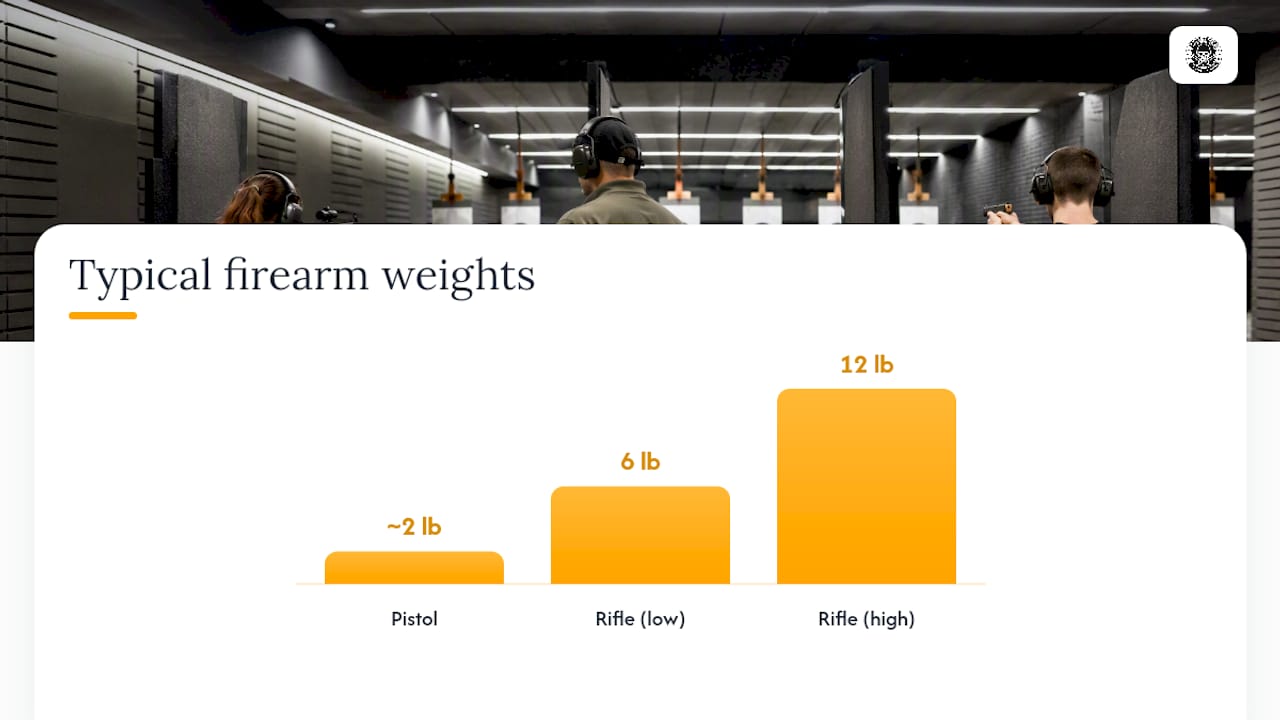
Recoil tells a similar story. A rifle might weigh 6 to 12 pounds against a pistol’s roughly 2 pounds, and that mass soaks up energy before it reaches your shoulder. But felt recoil isn’t just about weight. Fit changes everything: a firearm that fits your hand or shoulder properly reduces perceived recoil and improves control regardless of the cartridge behind it. A poorly fitted pistol with a light caliber can feel worse than a well-fitted rifle in a heavier one.
Where pistols pull ahead is size. You can holster one under a jacket, store it in a nightstand drawer, or maneuver it through a hallway without banging the muzzle on a doorframe. A rifle in that same hallway is a liability. Some practical differences worth knowing:
Neither platform is objectively “better.” Each solves a different problem, and the recoil control guide covers hands on ways to manage the differences once you’re actually shooting.
Home defense usually favors a pistol, mainly because of maneuverability in tight hallways and around furniture. But a rifle chambered in a lower powered round can outperform a pistol here too, since rifles versus pistols and shotguns is a genuinely scenario dependent debate rather than a settled one. Over-penetration through interior walls is a real concern with both platforms, so shot placement and ammunition choice matter as much as the gun itself.
Concealed carry is a pistol’s home turf. Nothing else fits comfortably under clothing or rides on a belt through a full day of errands.
Hunting shifts the calculation toward range and caliber. A rifle’s stability and longer effective range make ethical, humane shot placement far more achievable at typical hunting distances.
Sport and competition disciplines are built around specific equipment rules, and most beginners find rifle disciplines slightly more forgiving while they learn fundamentals.
Training progression almost always starts with a rifle. Instructors often put new shooters on a rimfire rifle first because it reduces noise and perceived recoil while teaching the same fundamentals that carry over to handguns later.
Stance, breath control, sight picture, trigger squeeze, follow-through. Those five fundamentals are identical across rifle and pistol shooting, which is why skill on one platform transfers faster than most beginners expect. The physical demands differ, though. Pistol shooting taxes your arms and wrists since you’re holding weight out in front of your body with no support. Rifle shooting spreads that load across your shoulder, cheek, and core.
Dry fire practice, aiming drills, and light physical conditioning are some of the most cost-effective training methods available to shooters at any level, and they cost nothing but time. Electronic feedback systems exist for competitive shooters chasing tenths of a point, but most beginners get more out of structured, supervised live fire.
Pro Tip: Ask your instructor to watch your grip and stance before you fire a single round. Fixing fit issues early saves you months of fighting bad habits later. The best practices for trigger control guide is a solid next stop if you want to work on this between sessions.
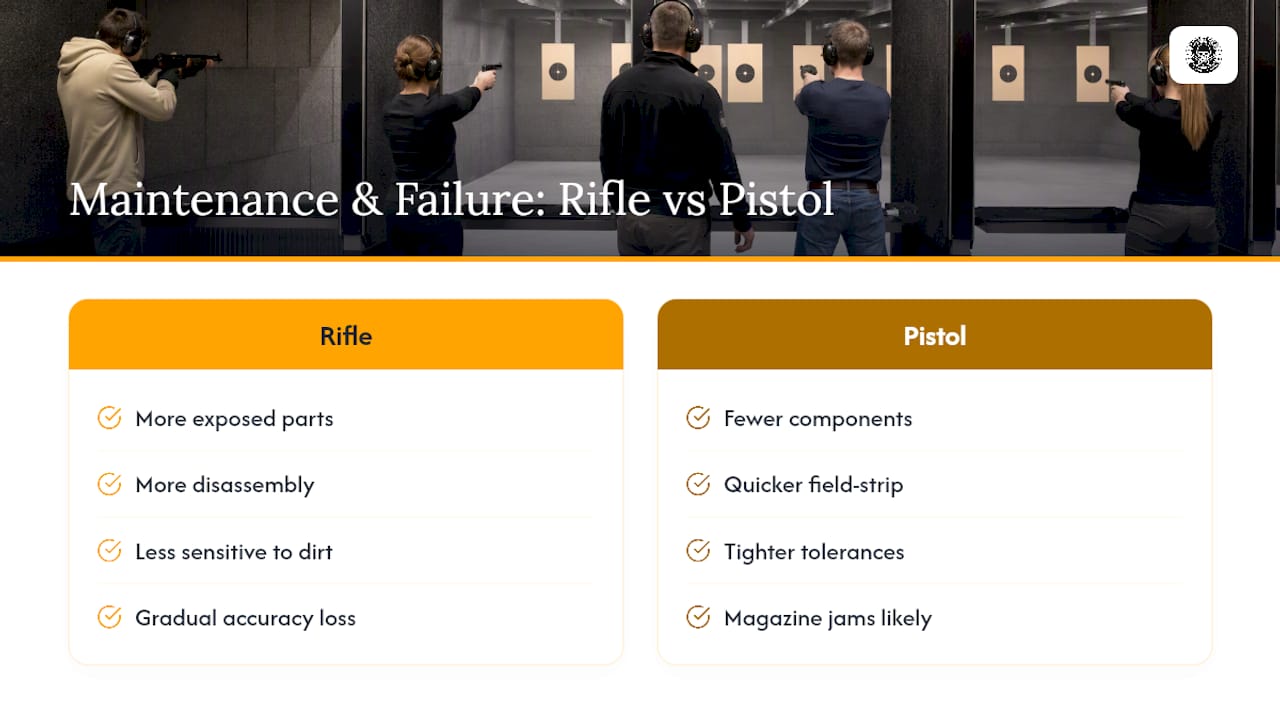
Rifles generally have more parts exposed to fouling from a longer barrel and often a gas system, which means more disassembly during cleaning. That complexity isn’t a downside so much as a routine: most rifles are mechanically simple once you learn the pattern, and a rifle cleaned on schedule will run reliably for decades.
Pistols are typically quicker to field strip and clean because there are fewer components involved. That simplicity comes with a tradeoff. Because pistols operate closer to your hands and face and cycle at higher pressures relative to their size, tighter tolerances mean dirt or lack of lubrication shows up as malfunctions sooner than it would in most rifles.
Durability-wise, both platforms hold up well when cared for, but they fail differently. A neglected rifle tends to lose accuracy gradually as fouling builds in the barrel. A neglected pistol is more likely to jam outright during a magazine, which matters more if you’re depending on it for self-defense. Either way, the fix is the same: clean it after every range session, lubricate the moving parts your owner’s manual specifies, and store it properly between uses. Reliability isn’t really about which platform you pick. It’s about whether you maintain what you own.
Reading about rifle versus pistol differences only gets you so far. At a reputable shooting range in Tallinn, you can actually feel the difference between a rifle’s stability and a pistol’s portability in one visit, with a professional instructor standing next to you the entire time. No experience is required. Every session starts with a full safety briefing, runs indoors regardless of weather, and gives you access to a wide selection of firearms so you’re not stuck guessing which platform suits you from a photo online.
Whether you’re a first-time shooter curious about the basics of pistol shooting, a couple looking for something different on a Tallinn evening, or a group planning a bachelor party, birthday, or corporate team-building event, Tondi Shooting Range builds the session around your group’s experience level. Corporate groups and team-building organizers regularly use the range for exercises that build collaboration and confidence under a bit of controlled pressure, and the instructors adjust the format for everything from a couple’s afternoon out to a full company outing.
Ready to find out which platform actually fits you? Book a supervised session at Tondi Shooting Range and try both for yourself.
The claims in this guide draw on published training and research material rather than opinion. For readers who want to go deeper:
If you want a broader look at common technique errors, the common rifle shooting mistakes guide rounds up fixes worth knowing before your next session.
Neither is universally better. Rifles offer more stability and longer effective range, while pistols offer portability and concealability, so the right choice depends on whether you need accuracy at distance or something easy to carry.
Rifle cartridges generally carry more energy and reach farther with better accuracy than pistol cartridges, largely because of the longer barrel and higher pressures rifles are built to handle.
No. They differ in barrel length, sight radius, weight, and how many points of contact you use to stabilize them, which changes both how they shoot and what tasks they suit.
For most beginners, yes. A rifle’s extra weight and shoulder and cheek contact create a steadier platform, which is why many instructors start new shooters on a rifle before moving to handguns.
Tondi Shooting Range in Tallinn lets first-timers try a wide selection of both platforms indoors under full instructor supervision, with no prior experience required.