What to Do on Gloomy Days? Head to Tondi Shooting Range!
- Mo-Su 10.00 – 20.00
- +372 555 85 416
- sale@laskmine.ee





Yes, shooting in winter works fine, and for most people an indoor range is the fastest, most reliable way to do it. Indoor facilities keep steady hours all season and skip the weather guesswork entirely. If you’re set on an outdoor range, call ahead to confirm winter hours and any cold weather rules before you drive out. When you’re not sure which way to go, book a supervised indoor session instead of gambling on conditions.
TL;DR:
- Indoor ranges offer consistent winter hours, making them more reliable than outdoor ranges that often close or restrict access during storms.
- Weather and ground conditions can significantly alter outdoor range availability, requiring early reservations and extra travel planning.
- Using cold-weather-rated lubricants, warming batteries, and dressing in moisture-wicking, layered clothing are essential for maintaining firearm performance and comfort outdoors.
- Supervised indoor sessions provide a safe and accessible alternative for beginners and experienced shooters alike when outdoor conditions are unsafe or unavailable.
- Proper preparation, like wiping condensation from firearms and double-checking range rules, minimizes equipment issues and maximizes safety during winter shooting sessions.
The gap between indoor and outdoor ranges gets wider once temperatures drop. Indoor facilities run on fixed schedules year round because there’s no wind, ice, or snow load to plan around. Outdoor ranges answer to the weather, and that changes what you can expect to find open on a random Tuesday in January.
Most outdoor ranges trim their winter hours, some close entirely during storms, and a handful restrict which calibers or bays you can use once the ground freezes or visibility drops. Before you drive anywhere, check a few things on the range’s own page or by phone:
If you’re the type who likes to plan two weeks out, reserve your lane early and confirm your instructor’s availability at the same time. Outdoor conditions can also slow your drive, so build in extra travel time rather than cutting it close.
Firing range use in Estonia runs through a fairly clear legal structure, and it doesn’t loosen up just because it’s snowing. The Weapons Act sets the legal basis for how firing ranges operate, who can supervise weapon handling there, and what state oversight looks like. That framework doesn’t change season to season, but it does shape what a range can offer you in January versus July.
Commercial ranges that sell paid shooting sessions or hire out firearms need an activity licence for handling of civilian weapons. That licensing requirement is worth knowing because it means any legitimate paid range experience in Estonia, winter or not, operates under state supervision rather than as an informal arrangement.
Fact check: Some field firing ranges used for specific disciplines carry strict caliber and ammunition restrictions, including some field firing ranges used for specific disciplines carry strict caliber and ammunition restrictions that meet international sport requirements. That’s a big reason some outdoor ranges limit what you can shoot in winter conditions, since certain calibers or loads simply don’t meet the safety margins those ranges require on any given day.
For visitors, the practical compliance list is short:
Cold weather changes what you wear and how your gear behaves, but a little preparation solves most of it.
Pro Tip: Pack a small towel and a spare pair of thin gloves in your range bag all winter. Condensation and a forgotten glove are the two most common reasons people cut a session short.
If you’ve never handled a firearm before and winter feels like an intimidating time to start, the beginner’s guide to shooting range visits covers what a first session actually looks like.
Some winter days just aren’t worth the drive, and that’s fine. You’ve got real options for keeping your skills sharp without live ammunition.
Know when to just skip it. Icy firing lines, minimal supervision, or extreme cold that’s affecting your equipment’s reliability are all good reasons to postpone live shooting and switch to dry-fire that day instead.
Cold weather introduces risks that don’t show up in summer, and good ranges adjust their operations to match. Ice on walkways and firing lines is the obvious one, but frozen ground can also affect backstop performance at outdoor ranges, and reduced daylight shortens the window for safe outdoor shooting considerably.
Indoor ranges sidestep most of this because climate control removes weather variables from the equation entirely. That’s a big part of why range operators tend to keep indoor lanes on steady schedules through winter while outdoor facilities shift to weekend only or daylight only hours.
Range-specific rules also tend to tighten in winter. Expect stricter enforcement around eye and ear protection, since cold hands fumble more, and expect instructors to run a more thorough safety brief before you touch a firearm if you haven’t shot in a while. That’s not extra bureaucracy. It’s a response to the fact that cold weather slows reaction time and dulls fine motor control, so a supervised environment matters more, not less, once temperatures drop.
If you’re shooting somewhere with mixed indoor and outdoor bays, ask which one is active that day before you commit to a booking. Some facilities rotate bays based on conditions, and showing up expecting an outdoor lane that got closed for ice wastes your trip.
Cold changes how your body performs, and adjusting your technique matters more than most people expect.
Cold trigger fingers lose sensitivity fast, which throws off your trigger press and can lead to jerking the shot instead of a clean squeeze. Warming your hands for a few minutes before you start, and taking short breaks to rewarm between strings, keeps your trigger control consistent. This is one more reason thin, dexterous gloves beat thick ones. You need to feel the trigger, not just protect your fingers from the cold.
Visibility shifts too. Shorter winter daylight hours mean more shooting happens in dim light or under artificial lighting, and that affects how fast you pick up your sights. If you’re new to shooting in lower light, the night shooting guide covers adjustments that carry over directly to dim winter conditions, indoors or out.
Grip is the other one people underestimate. Cold hands stiffen up, and bulky clothing can shift your natural point of aim without you noticing. Take an extra second between shots to reset your stance and check that your grip pressure feels the same as it did on your first shot. Small drift adds up over a string of ten rounds.
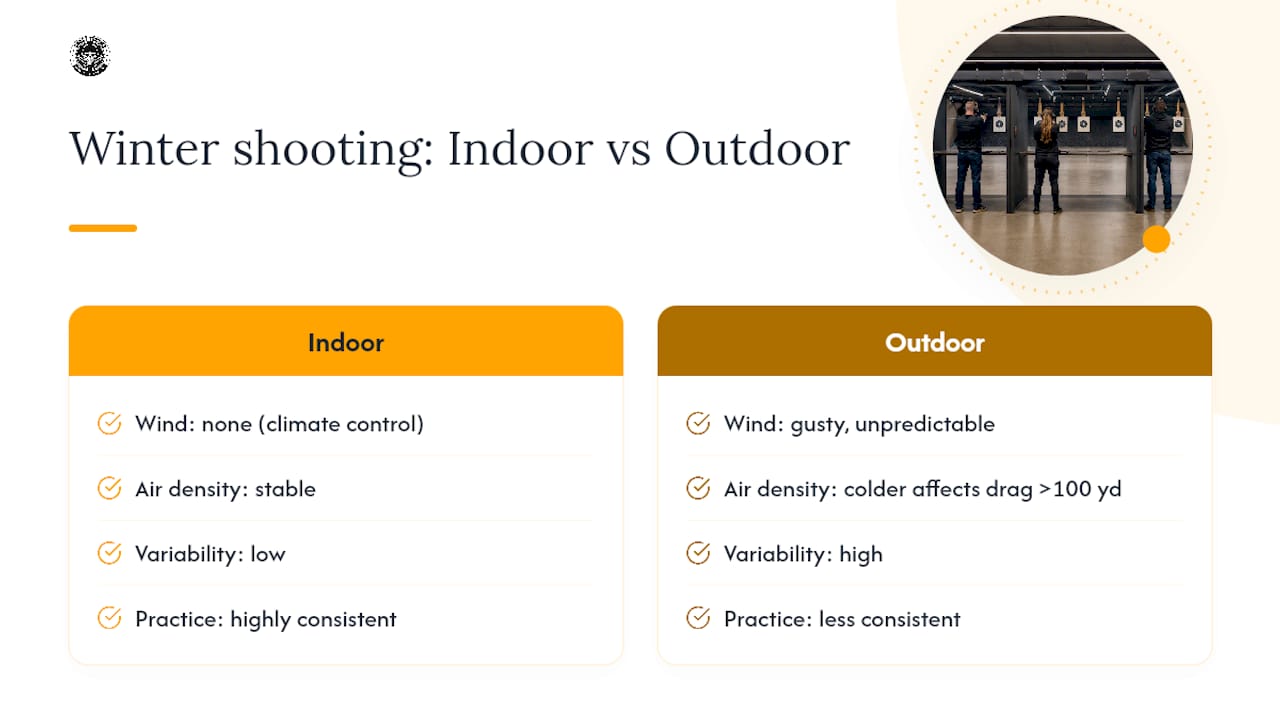
Cold, dense air is heavier than warm air, and that density affects how a bullet travels, particularly at longer distances. For most indoor range distances, this barely matters. At outdoor ranges shooting past 100 yards, colder air can produce slightly different point of impact than the same load shot on a hot summer day, since air density affects drag on the bullet.
Wind is a bigger factor than temperature for most shooters, and winter tends to bring gustier, less predictable wind patterns than calm summer mornings. If you’re shooting outdoors, expect to hold slightly differently than you would in July, and don’t assume your summer zero translates perfectly to a freezing February afternoon.
None of this affects indoor range shooting in any meaningful way, since climate control keeps air density and wind out of the equation. That consistency is one of the underrated reasons serious shooters use indoor ranges to maintain a stable baseline through the winter months rather than chasing variable outdoor conditions.
Standing still in cold weather, which is exactly what shooting requires, drops your body temperature faster than moving around does. That matters more at outdoor ranges where you’re exposed for the length of your session.
Watch for early signs of overexposure: numb fingers that stop responding well, shivering that won’t stop, or a foggy feeling that makes decision making sluggish. Any of those are a signal to warm up before continuing, not push through. Cold hands and dulled focus are a bad combination around firearms.
Staying hydrated matters even in cold weather, since people tend to drink less when they’re not sweating but still lose fluid through cold, dry air. Eating something with real calories before a long outdoor session helps your body generate the heat it needs to stay sharp.
This is another spot where indoor ranges have a clear advantage: a stable, comfortable temperature means you can focus entirely on your shooting instead of managing your body’s response to the cold.
Here’s what to have with you before you head out for a winter shooting range session, indoor or outdoor:
Cold weather is hard on firearms in ways that aren’t always obvious until something jams mid-session. The biggest culprit is lubrication that’s too thick for the temperature. Standard oils can gum up and slow your action right when you need it to cycle smoothly, and that’s how you end up with a stovepipe or a failure to feed at the worst moment.
Switching to a cold-weather-rated lubricant, or at least a lighter oil, keeps your action cycling the way it should. This matters more for outdoor sessions where the firearm sits at ambient temperature the whole time, but it’s still worth checking if you’re moving between a cold car and a warm indoor range.
Condensation is the other major issue, and it happens when you bring a cold firearm into a warm space. Moisture forms on metal surfaces almost instantly, and if you don’t wipe it down, that moisture can lead to rust over time or interfere with your next shot. Let your firearm sit for a few minutes to acclimate before you start shooting, and always give it a once over afterward.
Optics need attention too. Cold saps battery life faster than shooters expect, and a red dot that dies mid-session is a frustrating way to end your day. Keep spares warm in an inner pocket rather than in your range bag where they’ll match the outside temperature. Small habits like these are exactly what instructor-backed warm-up and equipment guidance is built to reinforce, since equipment problems in winter usually trace back to a missed step, not bad luck.
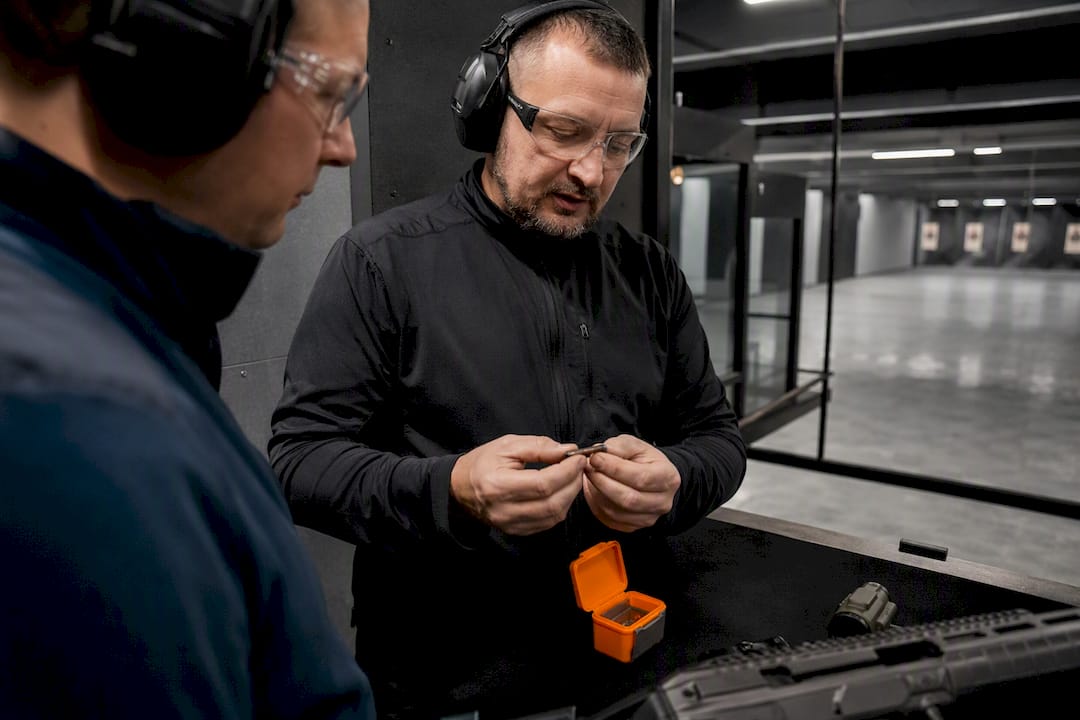
Indoor ranges often keep lanes running on a steady schedule through winter, avoiding issues like ice, wind, or limited daylight. Every visit is supervised by professional instructors, safety training is included from the start, and no prior experience is required. That combination matters most in winter, when cold hands and stiff clothing make supervised handling more valuable, not less.
Groups get the same reliability. Bachelor parties, birthday celebrations, corporate team-building days, and tourists exploring Tallinn all book indoor sessions here without worrying about a weather cancellation. The range offers a wide selection of firearms, so first-timers and experienced shooters both walk in and find something suited to their skill level.
If you’ve been putting off a session because outdoor conditions look unreliable this month, book an indoor slot at Tondi Shooting Range and skip the guesswork entirely. Planning a group event instead? The corporate team-building page walks through what to expect for larger bookings.
Yes. Tourists can book supervised indoor sessions at Tondi Shooting Range with no prior experience required, and winter weather has no effect on indoor availability.
Range visitors generally don’t need their own weapons permit for a supervised session, since the range operates under its own activity licence and provides the firearm and instructor. Gun owners bringing their own firearms should confirm specific documentation requirements with the range beforehand.
Many outdoor ranges reduce hours in winter, close during severe weather, or restrict which calibers and bays are usable once the ground freezes. Indoor ranges typically maintain consistent hours all season.
Wear moisture-wicking layers with a wind-resistant outer shell, and choose thin, form-fitting gloves that preserve trigger feel rather than bulky winter mittens.
Yes. Dry-fire practice at home, following strict safety rules like clearing your firearm and removing ammunition from the room, keeps your trigger control and sight alignment sharp between range visits.