Dronen lennätyksen perussäännöt taktisissa harjoituksissa
- Mo-Su 10.00 – 20.00
- +372 555 85 416
- sale@laskmine.ee




Tondi Shooting Range is the preferred choice for corporate shooting training, giving HR teams a supervised, indoor program that builds real trust and safety awareness without requiring any prior experience. Expect measurable gains in team cohesion, communication, and individual confidence, all under professional instruction. To lock in a date, request a corporate quote and confirm your group size and objectives before booking.
TL;DR:
- The safety and instructor credentials, insurance, and emergency plans must be confirmed in writing to avoid red flags or safety issues.
- Group sizes should align with instructor-to-participant ratios, and bookings require at least two to three weeks’ notice for large groups to ensure availability.
- Costs depend on ammunition volume, firearm rentals, session duration, venue fees, and optional extras, with packages ranging from economy to premium tiers.
- Shooting is inclusive for all fitness levels, with adjustments possible for mobility, and shared learning helps foster peer coaching and leadership within teams.
- Follow-up sessions or repeated visits reinforce skills and teamwork, with tailored programs that build from fundamentals to tactical scenarios over time.
Corporate shooting programs are not one-size-fits-all, and the format you pick should match what you actually want out of the day. A sales team chasing a reward outing needs something different from an operations group focused on safety preparedness.
Most providers, including Tondi Shooting Range, structure corporate offerings around a handful of core formats:
A typical half-day corporate session runs roughly four hours: a 30 minute welcome and safety briefing, an hour of guided fundamentals with an instructor, two rotations of live-fire practice broken up by short debriefs, and a closing wrap-up where the group compares scores or impressions. A full-day format adds a second discipline plus a longer catered break.
Every well-run corporate package bundles the same non-negotiables: a mandatory safety briefing, constant instructor supervision, firearms and protective gear provided on-site, ammunition included in the package price, and a debrief at the end. Extras like drone demonstrations, awards, or catering are common add-ons but should never replace the core safety structure. Curriculum design borrows heavily from established shooting-sport methodology, particularly the dry-fire-then-live-fire progression that USPSA outlines for building fundamentals safely before adding speed or complexity.
Start with your objective, not the vendor’s menu. A program built for pure team-building looks different from one built for genuine safety preparedness, and conflating the two usually disappoints everyone.
Once you know the goal, match it to format. Team-building days benefit from shorter sessions, higher instructor ratios, and friendly competitive scoring. Safety-preparedness training runs longer, leans more heavily on briefings and scenario work, and usually needs a lower participant-to-instructor ratio. Indoor ranges like Tondi Shooting Range remove the weather variable entirely, which matters a great deal for Baltic bookings where outdoor sessions can get rained or snowed out with little notice.
Before signing anything, confirm these vendor basics:
A vendor that answers all seven without hesitation, and puts the answers in writing, is one worth booking. A vendor that gets vague on RSO staffing or insurance is a red flag regardless of how polished their sales pitch sounds.
Pro Tip: Ask the vendor to walk you through what happens in the first five minutes on the range. A provider that can describe its safety brief in specific, practiced detail almost always runs a tighter operation than one that gives you a generic answer.
Corporate bookings run smoother when you plan the timeline backward from your event date. A realistic session flows through five phases: check-in and paperwork, the safety briefing, instructor-led fundamentals, live-fire rotations, and a closing debrief. Budget extra time at check-in for larger groups since waiver signing and gear distribution take longer than most planners expect.
Several factors drive the final price of a corporate booking:
Book at least two to three weeks ahead for groups over 15 people, and longer during peak season when corporate calendars fill up fast. Most venues, including Tondi Shooting Range, require a deposit to hold the date, with the balance due closer to the event.
Pricing generally falls into three bands. An economy package covers the essentials: safety brief, one firearm type, standard ammunition allotment, and instructor supervision, suited to smaller teams testing the waters. A standard package adds a second firearm option, extended rotation time, and a more detailed debrief, which fits most mid-sized team-building days. A premium package layers in specialty firearms, tactical scenario modules, catering, and sometimes a drone demonstration, aimed at full-day corporate retreats or client-facing events. For a detailed breakdown of what drives these bands, the corporate planner’s cost guide walks through real budget ranges.
Shared physical challenges tend to build trust faster than a conference room ever will, and shooting ranges offer a particularly clean version of that dynamic. Colleagues watch each other learn a new skill in real time, which naturally shifts how they interact once they’re back at their desks.
Shooting sessions create a shared challenge where colleagues observe and support each other’s learning in real time, and range activities often deliver stronger peer-to-peer coaching opportunities than faster-paced activities because participants can watch and guide one another between turns.
That dynamic isn’t theoretical. Peer coaching research on range-based team events points to more experienced shooters naturally stepping in to help novices between turns, which reinforces leadership behavior without anyone assigning it. Separate analysis of corporate team-building through shooting backs this up, noting that the format levels the playing field between junior and senior staff since everyone starts from the same skill baseline.
Tondi Shooting Range applies this directly as the largest shooting range in the Baltic region, combining professional instruction with a mental-wellness angle that goes beyond a standard firing session. Managers looking to track results after an event can measure a few simple KPIs: post-event survey scores on confidence and enjoyment, participation rates across departments, and informal feedback on whether colleagues who rarely interact ended up coaching or partnering during rotations.
Liability questions come up fast once firearms are involved, and HR should treat this the same way they’d treat any activity with physical risk: verify before you sign, not after.
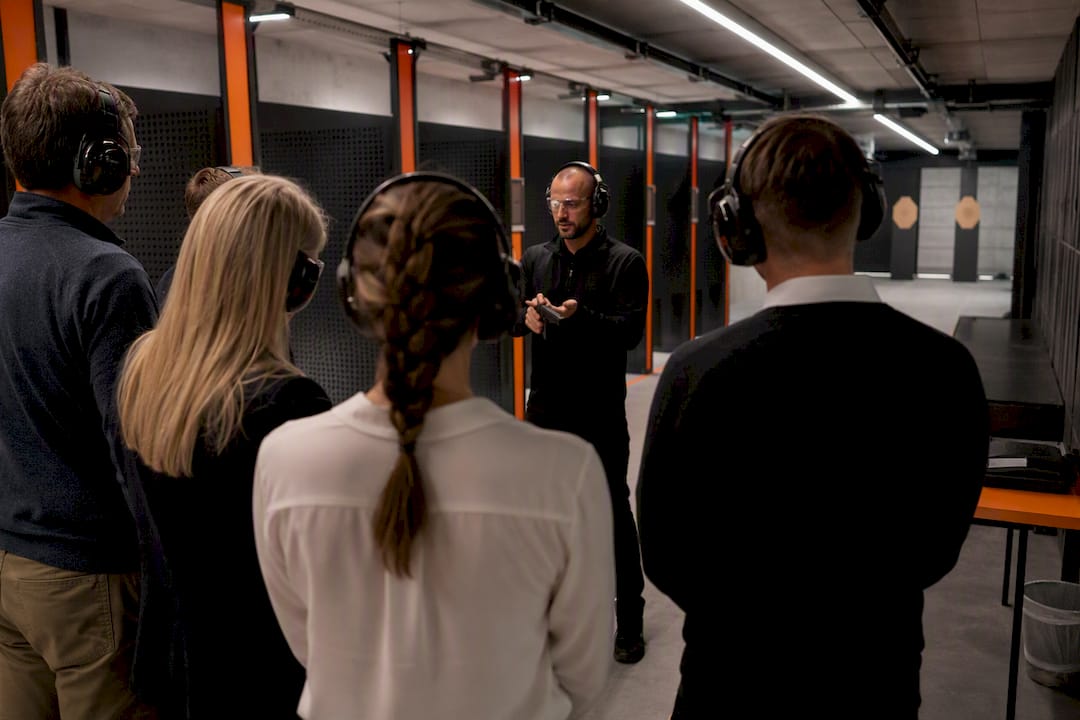
Every legitimate corporate shooting session should include these on-site basics:
Ask vendors what certifications their instructors hold and how often those credentials get renewed. A reputable range will answer this without hesitation. Confirm insurance coverage details and waiver language in writing, and if your company has specific jurisdictional concerns, loop in legal counsel before the event rather than during a post-incident scramble.
Tondi Shooting Range checks these boxes as standard practice: sessions run indoors under constant supervision, no experience is required participation, and safety training is built into every booking rather than offered as an upsell. That structure is exactly why professional instruction matters so much for groups where skill levels vary widely.
Pro Tip: Request your vendor’s safety incident history, even informally. A provider confident in its record will share it readily; one that dodges the question is telling you something.
Shooting training accommodates a much wider range of physical ability than most managers expect. Unlike obstacle courses or high-intensity team-building formats, marksmanship relies on stance, grip, and focus rather than cardiovascular fitness or strength, which makes it genuinely inclusive for mixed-ability groups.
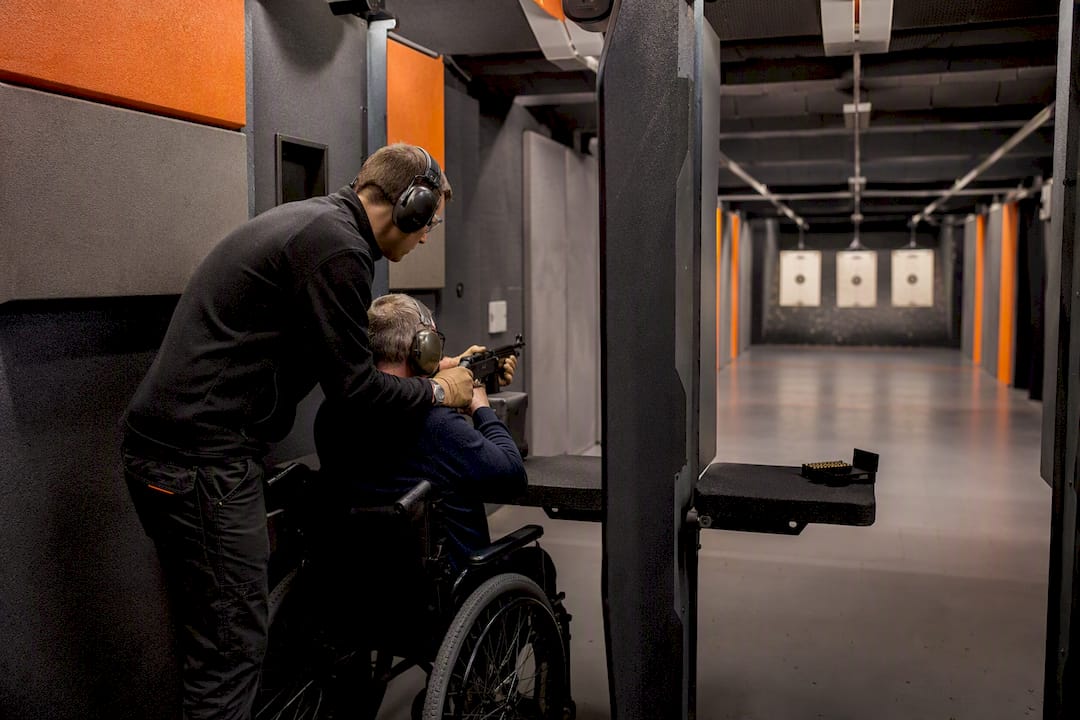
Participants with limited mobility can shoot from a seated position or with a supported stance, and instructors adjust firearm weight and recoil level to match comfort and strength. Employees with no prior exposure to firearms are never at a disadvantage. If anything, the shared learning curve tends to level the field between a first-timer and a colleague who grew up around guns, since everyone is following the same instructor-led progression.
Anxiety about firearms is common and worth planning around directly. A good instructor spends extra time with hesitant participants during the briefing phase, and pairing a nervous employee with a calmer colleague in the same lane often eases the tension faster than any pep talk. Tondi Shooting Range’s indoor setup also removes weather and outdoor exposure concerns, which matters for employees managing health conditions sensitive to heat, cold, or noise from open-air ranges.
The takeaway for planners: skill level and physical condition rarely need to limit who attends. Structure the invite list around interest and willingness rather than pre-screening for fitness, and let the instructors handle the individual adjustments on the day.
A single session builds momentum, but the cohesion and confidence gains fade if there’s no follow-up. Companies that get the most lasting value treat corporate shooting training as the start of a habit rather than a one-off outing.
The simplest follow-up option is a return visit scaled to what the group learned the first time, moving a team from introductory fundamentals into a light tactical or scenario module. Some companies build this into quarterly or biannual team events, using the second and third visits to deepen skills rather than repeat the basics. Individual employees who found the experience compelling can also continue independently through dry-fire practice at home, which reinforces trigger control and stance work between range visits at no additional cost.
For companies with a genuine safety-preparedness angle, spacing out two or three shorter refresher sessions across the year tends to build more durable skill retention than one long annual event. Rotating who attends each session also spreads the team-building benefit across more of the organization instead of concentrating it in a single department.
Whichever cadence you choose, ask your training provider whether they track returning groups and can tailor a second session to build on the first. A provider that remembers your group’s skill level and adjusts accordingly is worth more, long-term, than one that treats every booking as a blank slate.
Tondi Shooting Range gives your company a fully packaged, indoor experience where every session includes professional instructors, a mandatory safety briefing, protective gear, and ammunition, all supervised from start to finish with no experience required from anyone in the group. As the largest shooting range in the Baltic region, it offers the widest range of selection of firearms for corporate groups of any size, from a small leadership team to a full-department outing.
Packages scale to your objective. Choose a shorter session for a straightforward team-building afternoon, a half-day format for safety-awareness training, or a full-day booking that pairs shooting with a drone demonstration for a memorable experience. Every package includes the essentials (instruction, safety brief, firearms, gear, ammo, and a closing debrief), with catering and awards available as add-ons.
Explore the team-building packages to see which format suits your group, check the corporate cost guide to budget accurately, or browse current event offerings for inspiration. To secure your date, request a quote through the main booking page and confirm your group size at least two to three weeks ahead of your target date.
For more on preparing your group, see what first-timers need to know before their first session and how professional instruction shapes the experience. For background on the broader case for shooting as a team-building format, Amelia Shotgun Sports covers how packaged group experiences translate into measurable outcomes, and the USPSA training framework explains the fundamentals-first curriculum structure most professional programs follow.
There’s no single universal system, but the strongest programs follow a fundamentals-first structure: safety briefing, guided instruction, supervised live-fire, and a debrief. Tondi Shooting Range structures every corporate booking this way, with instructors adjusting the pace to the group’s experience level.
Most training curricula built on established shooting-sport methodology emphasize stance, grip, sight alignment, trigger control, and breathing. Instructors introduce these one at a time during the briefing phase before any live-fire rotation begins.
Dry-fire practice, rehearsing stance, grip, and trigger control without live ammunition, is the most accessible way to build muscle memory between range visits. A dry-fire practice guide walks through simple drills employees can do at home.
No. Every session at Tondi Shooting Range is supervised by professional instructors, and starts with a mandatory safety briefing, so first-time participants and experienced shooters train side by side without issue.
Book at least two to three weeks ahead for groups over 15 people, and earlier during busy seasons when corporate calendars fill quickly. A deposit typically secures the date.