Nõukogude armee relvad
- E-P 10.00 – 20.00
- +372 555 85 416
- sale@laskmine.ee




Olympic shooting is defined as a precision sport divided into three primary disciplines: rifle, pistol, and shotgun, each with distinct events, rules, and equipment standards governed by the International Shooting Sport Federation (ISSF). The LA 2028 Olympics will feature 15 medal events across these categories, with 340 athletes split equally by gender. For any athlete or sports enthusiast studying examples of Olympic shooting disciplines, understanding the structure of each category is the foundation for everything else. Rifle and pistol events run indoors; shotgun events run outdoors at dedicated clay target venues.
Olympic shooting competition organizes all events under three headings: rifle, pistol, and shotgun. Each category uses different firearms, distances, and target types. Rifle and pistol events are held indoors, while shotgun events take place outdoors at venues such as Whittier Narrows Clay Shooting Center in Los Angeles. This indoor/outdoor split reflects fundamental differences in the physics of each discipline, not just tradition.
The ISSF sets the technical standards for every event, from trigger pull weight to target diameter. Athletes who compete at the Olympic level train for years within these exact specifications. Knowing which category fits your strengths is the first decision any serious competitor makes.
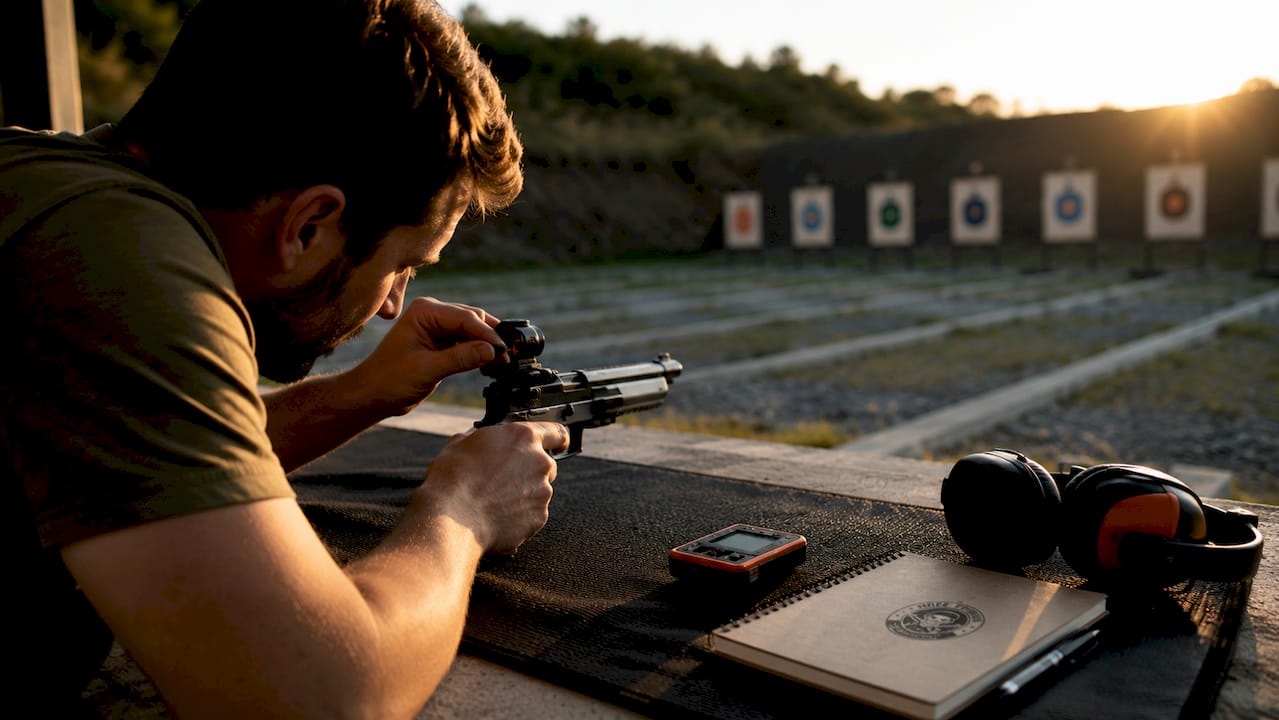
Rifle shooting is the most technically demanding category in Olympic marksmanship. The two primary events are the 10m air rifle and the 50m rifle 3 positions. Both require extreme stillness, breath control, and mental focus over extended competition periods.
The 10m air rifle is fired from a standing position only, indoors, at a target roughly the size of a thumbtack’s head. The 50m rifle 3 positions event requires athletes to shoot from three stances: prone, standing, and kneeling. Each position demands a different muscle group and a different mental approach, making this one of the most physically varied events in the sport.
Equipment standards are strict. Olympic rifles must meet ISSF specifications, including single-loading mechanisms and a minimum trigger pull weight of 500 grams for the 10m air rifle. These rules exist to standardize competition and prevent mechanical advantages from distorting results.
Key characteristics of rifle events:
Pro Tip: If you are preparing for rifle events, train your movement and stability separately from your shooting sessions. Athletes who build postural endurance off the range hold steadier positions when it counts.
Pistol events reward a different skill set than rifle shooting. The three Olympic pistol disciplines are the 10m air pistol, the 25m rapid fire pistol, and the 25m sport pistol. Speed and nerve control matter far more here than in rifle events.
The 10m air pistol is fired one-handed from a standing position, indoors. Athletes hold the pistol with one arm extended, unsupported, for each shot. The 25m rapid fire pistol is the most time-pressured event in all of Olympic shooting. Competitors fire at five targets in sequences of eight, six, and four seconds, demanding fast target acquisition and trigger discipline under real time pressure.
The 25m sport pistol is contested by women and combines a precision phase with a rapid fire phase. Pistols in 25m events use five-shot magazines, which changes the rhythm of competition compared to single-shot rifle events. Joining competitive shooting clubs is one of the fastest ways to develop the nerve control these events demand.
Core pistol event formats at a glance:
Shotgun events are the most visually dramatic of all Olympic shooting types. Trap and skeet are the two disciplines, and both involve shooting at moving clay targets launched at high speed. This is where reflexes and target tracking replace the stillness required in rifle and pistol events.
In trap, clay targets launch away from the shooter from a single house in front of the firing line. The targets fly outward at unpredictable angles, simulating flushed game birds. In skeet, targets launch from two houses positioned at opposite ends of a semicircular field, crossing each other’s paths. Skeet targets follow more predictable arcs, but the crossing angles demand faster gun movement.
Olympic shotgun targets are 10 cm diameter clays launched at over 100 km/h. That speed gives shooters less than two seconds to track, lead, and fire. Equipment reflects the challenge: trap shotguns weigh approximately 4 kg, while skeet shotguns weigh around 2.9 kg. The heavier trap gun absorbs recoil from the higher volume of shots fired at longer distances.
| Feature | Trap | Skeet |
|---|---|---|
| Target launch direction | Away from shooter | Crossing from two houses |
| Target trajectory | Unpredictable angles | More predictable arcs |
| Shotgun weight | ~4 kg | ~2.9 kg |
| Primary skill | Tracking and leading | Speed and angle reading |
| Venue type | Outdoor | Outdoor |
Pro Tip: For moving target events, practice shooting at the range with varying target speeds before competition. Athletes who train on static targets only struggle to read real clay trajectories under pressure.
The structure of an Olympic shooting competition divides into two phases: qualification and finals. Understanding this format explains why mental toughness matters as much as technical skill.
In the qualification round, athletes fire a set number of shots to accumulate a score. The top performers advance to the final. The critical detail is what happens next. Olympic shooting finals use a progressive elimination format where scores reset to zero after qualification. Every athlete starts the final on equal footing, regardless of how dominant their qualification performance was.
Elimination then proceeds shot by shot. After each shot or series, the lowest-scoring athlete is eliminated. This format creates a pressure environment unlike almost any other Olympic sport. A single poor shot can end a medal run that took four years to build.
Modern changes to the format include:
Practicing under simulated pressure is the only way to prepare for this format. Athletes who use competitive shooting drills that replicate elimination conditions report better performance when real stakes arrive.
Olympic shooting features three distinct disciplines, each with specific events and formats that reward different physical and mental skills.
| Point | Details |
|---|---|
| Three core disciplines | Rifle, pistol, and shotgun each have separate events, rules, and equipment standards. |
| Finals format resets scores | Qualification scores do not carry into finals; elimination is shot by shot. |
| Equipment is strictly regulated | Trigger weights, gun mass, and loading mechanisms are all ISSF-specified. |
| Mixed team events added | ISSF replaced three male-only events with mixed team competitions to promote equality. |
| Shotgun demands reflexes | Clay targets travel at over 100 km/h, giving shooters under two seconds to react. |
By Tõnis
The shift to mixed team events and equal shot counts is not just a political gesture. It fundamentally changes how nations build their squads and how athletes train together. I have watched teams that previously focused on individual medal campaigns completely restructure their preparation around mixed pair chemistry. That is a real tactical shift, not a cosmetic one.
What surprises most athletes new to Olympic shooting is how much the finals format changes the mental game. You can shoot a near-perfect qualification and still lose a medal because the reset puts you back at zero. The athletes who handle that best are the ones who treat every shot in finals as its own isolated event, not as part of a cumulative score. That mental separation is a trained skill, not a personality trait.
ISSF’s push toward virtual reality for training and fan engagement is the development I watch most closely. VR allows athletes to simulate finals pressure without burning live ammunition, and it gives coaches data on decision timing that traditional range sessions cannot capture. The sport is becoming more technical at the preparation level, even as the competition itself stays elegantly simple.
The athletes who will dominate LA 2028 are already training with these tools. If you are serious about competitive shooting, the gap between those who adapt and those who do not is widening every year.
— Tõnis
Reading about Olympic shooting types builds knowledge. Firing a rifle, pistol, or shotgun under real range conditions builds skill. Laskmine’s Tondi Shooting Range in Tallinn offers facilities for all three discipline categories, with structured courses designed for athletes at every level.

Whether you want to work on the stillness required for rifle and pistol training or experience the fast-paced challenge of moving clay targets, Laskmine provides the range time and coaching to make it happen. The Tondi Shooting Range runs sessions that mirror real competition conditions, so the pressure you feel on the range is the same pressure you will face in a match. Book your session and find out which discipline fits your strengths.
Olympic shooting is divided into rifle, pistol, and shotgun. Rifle and pistol events are held indoors, while shotgun events take place outdoors at clay target venues.
Scores reset to zero after the qualification round, and athletes are eliminated shot by shot in the final. This format means a strong qualification performance does not guarantee a medal.
Trap launches clay targets away from the shooter at unpredictable angles, while skeet launches targets from two houses in crossing arcs. Trap shotguns weigh approximately 4 kg; skeet shotguns weigh around 2.9 kg.
Athletes must achieve a Minimum Qualification Score in ISSF-sanctioned competitions during the designated qualification window to earn a national quota place.
Mixed team events pair one male and one female athlete from the same nation to compete together. The ISSF introduced these events to replace three male-only competitions and promote gender equality across the sport.