What Is an AR 15 and What Should Buyers Know Before Purchasing?
- Mo-Su 10.00 – 20.00
- +372 555 85 416
- sale@laskmine.ee





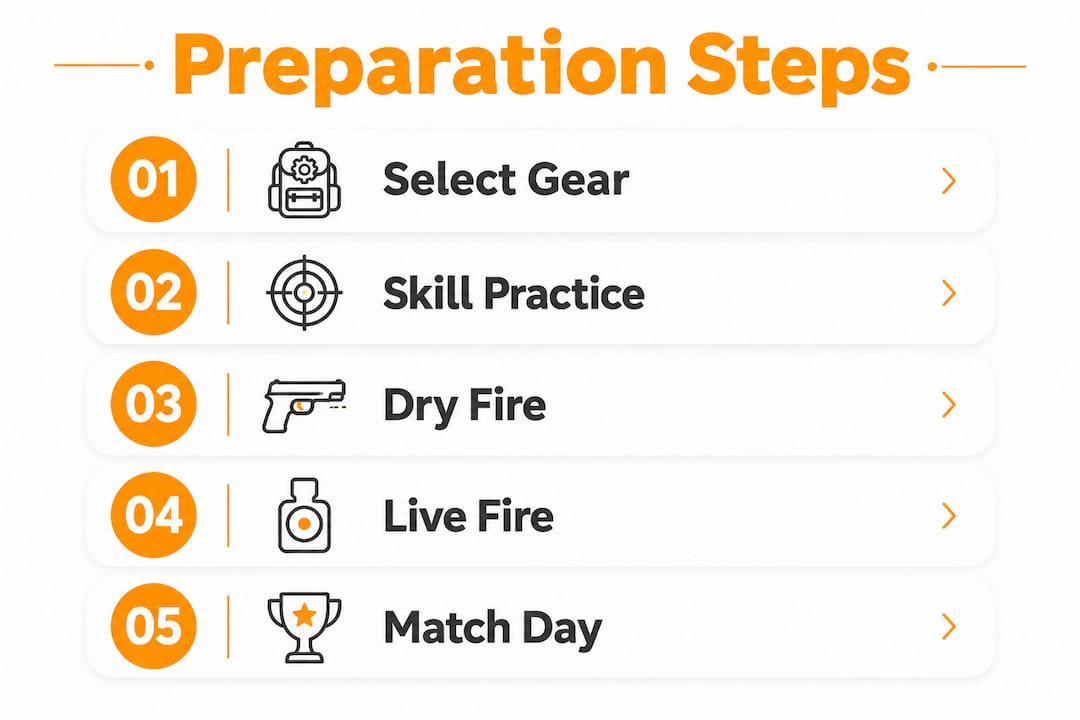
Practical shooting competition preparation is the process of building the skills, selecting the right gear, and mastering the strategies needed to compete safely and confidently in dynamic shooting matches. Known formally as action shooting or dynamic shooting, this sport is governed internationally by the International Practical Shooting Confederation (IPSC), with regional bodies across Northern Europe running local and national matches year-round. Whether you are stepping into your first IPSC match in Estonia, Finland, or Sweden, or targeting a higher classification, structured preparation separates shooters who finish strong from those who struggle through stages. Laskmine’s Tondi Lasketiir in Tallinn offers one of the most accessible indoor training environments in the region for exactly this kind of focused preparation.
Focused, deliberate practice beats raw volume every time. 50–100 rounds of deliberate practice outperforms 500 rounds of unfocused shooting for skill development. That means every round you fire should have a specific purpose: testing a draw, refining a transition, or confirming a reload under pressure.
Three drills form the backbone of most competitive training programs.
Pair live fire with daily dry fire practice of 15–20 minutes. Elite competitors spend more time on dry fire than live fire because it lets you rehearse draws, reloads, and transitions without burning ammunition. A snap cap and a safe room are all you need.
Mental rehearsal matters just as much as physical repetition. Stage walkthroughs with detailed visualization reduce procedural penalties and sharpen stage execution. Walk the stage, plan your movement path, identify reload points, and run the sequence in your head before you ever touch the gun.
Pro Tip: Use a shot timer during every dry fire session. Tracking your draw time to first shot gives you an honest benchmark and shows real progress over weeks of training.
For shooters building foundational pistol skills, beginner pistol drills provide a structured starting point before moving to competition-specific sequences.
Equipment selection in practical shooting follows division rules, and choosing the wrong setup for your division costs you before you fire a single shot. IPSC divides competitors into divisions such as Standard, Production, Open, and Classic, each with specific rules on modifications, magazine capacity, and holster type. Match your gear to the division you plan to enter before you buy anything.
| Item | What to check |
|---|---|
| Firearm | Function test, zero confirmation, clean and lubricated |
| Magazines | Load and drop-free test each one; replace any that hesitate |
| Holster | Secure retention, correct cant, IPSC-legal for your division |
| Magazine pouches | Positioned for fast access; tested during dry fire |
| Competition belt | Stiff enough to hold position under movement |
| Eye protection | Rated for ballistic impact; fits under ear protection |
| Ear protection | Double up with foam plugs under muffs during competition |
| Ammunition | Prepare 20% more than your expected round count |
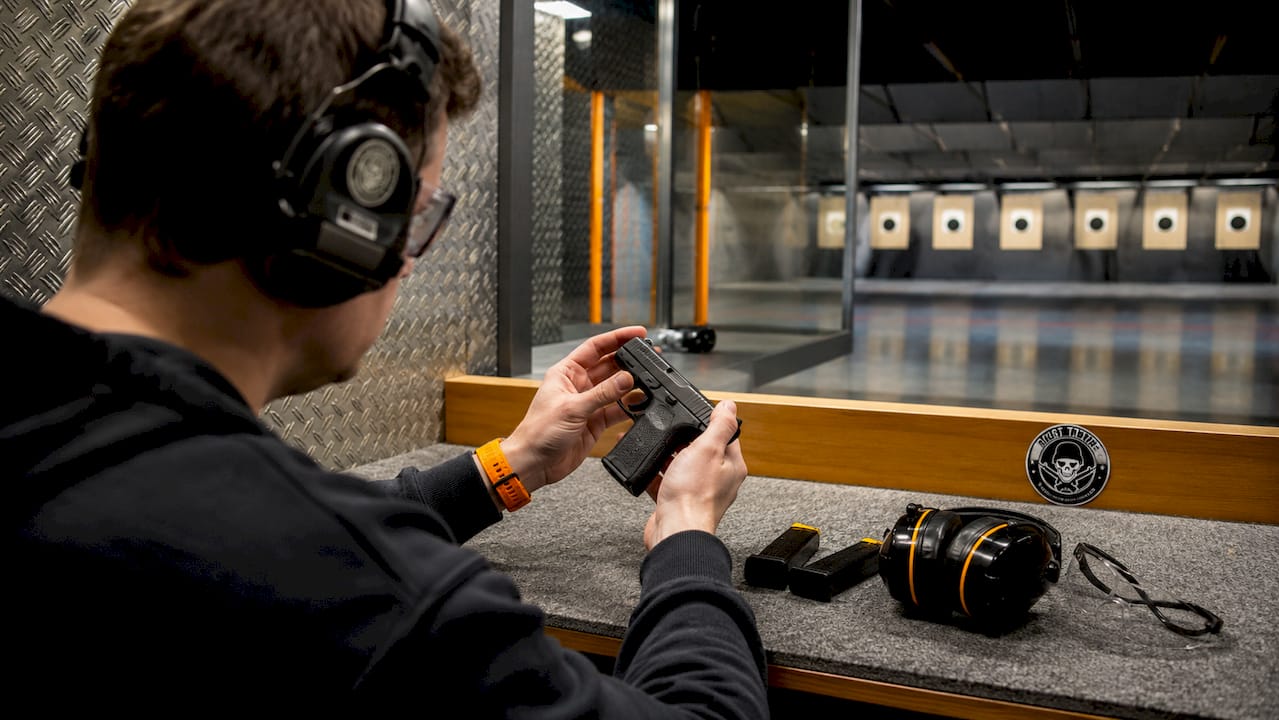
Prepare 20% additional ammunition one week before the match and complete a full function check at the same time. Competition day is not the time to discover a magazine that fails to drop free or a round that does not cycle reliably.
Trigger control is a detail many shooters overlook during equipment prep. A trigger that feels fine at the range can feel unfamiliar under match pressure. Reviewing trigger control best practices before your match helps you stay consistent when it counts.
Pro Tip: Label each magazine with a number using a paint pen. If one causes a malfunction during the match, you can pull it immediately and report it to your armorer afterward without losing track of which one failed.
Match day success starts before you arrive at the range. Arriving early gives you time to complete registration, pass the safety check, and settle your nerves before the shooters’ meeting. Arrive early for registration and attend the mandatory shooters’ meeting, which typically takes place 30 minutes before the first stage fires. Missing the meeting means missing critical stage-specific safety instructions.
The match flow follows a consistent sequence: stage walkthrough, range officer briefing, make ready command, start signal, stage execution, and post-stage unload and show clear. Use the walkthrough to plan your exact path, not just your shooting positions. Know where you will reload before you need to.
“Hesitating at the buzzer is one of the most costly mistakes a new competitor makes. Any delay after the start signal represents time you cannot recover in a Hit Factor competition. Train your reaction to the buzzer the same way you train your draw.”
Reacting instantly to the start signal is a trainable skill. Add buzzer-response drills to your dry fire sessions so the sound triggers movement automatically rather than a moment of hesitation.
For shooters working on movement under pressure, movement training for accuracy explains how to stay accurate while transitioning between positions during dynamic stages.
Northern European shooters have access to several well-organized competition formats, each with different rules, scoring systems, and equipment requirements. Understanding the differences helps you pick the right entry point and train accordingly.
| Format | Scoring system | Stage type | Best for |
|---|---|---|---|
| IPSC | Hit Factor (points divided by time) | Dynamic, multi-position | All levels; most common in Northern Europe |
| IDPA | Time plus (raw time plus penalties) | Scenario-based, cover use required | Shooters who prefer tactical realism |
| Steel Challenge | Fastest time across five runs | Fixed steel plates, no movement | Beginners building speed and safety habits |
| USPSA | Hit Factor, similar to IPSC | Dynamic, multi-stage | Shooters familiar with IPSC rules |
The Hit Factor scoring system calculates your score by dividing points earned by the time taken to complete the stage. This rewards a balance between speed and accuracy rather than pure speed alone. A fast run with poor hits scores lower than a slightly slower run with clean A-zone hits.
Steel Challenge offers the most accessible entry point for new competitors. Five steel plates shot from fixed positions, minimal movement, and simple rules make it ideal for building firearm safety habits and draw speed before moving to more complex formats.
IPSC remains the dominant format across Estonia, Finland, Sweden, and Denmark. Most regional clubs run IPSC matches monthly, and the Northern European shooting calendar fills up quickly from march through october. Registering early for local matches is standard practice.
Types of shotgun shooting sports also appear in the regional calendar, with practical shotgun divisions in IPSC and dedicated 3-gun competitions combining pistol, rifle, and shotgun stages. These formats demand additional equipment preparation but follow the same core safety and scoring principles.
Tondi Lasketiir is a modern indoor shooting range in Tallinn that gives competitive shooters a controlled, professional environment to build and test their skills year-round. Northern European weather makes outdoor training unreliable for much of the year, and an indoor range removes that variable entirely.

Laskmine offers shooting range sessions suited to both first-time visitors and experienced competitors working through a structured preparation program. Group events, team bookings, and individual sessions are all available, making Tondi Lasketiir a practical choice for clubs preparing for regional matches together. The range’s professional staff support safe, focused training without the pressure of a competition environment. Whether you want to run Bill Drills, test new gear, or simply get comfortable with your draw before your first match, Tondi Lasketiir is the place to do it in Tallinn.
Effective practical shooting competition preparation combines deliberate training, reliable equipment, and disciplined match-day execution to produce consistent results across all competition formats.
| Point | Details |
|---|---|
| Prioritize deliberate practice | 50–100 focused rounds per session build more skill than high-volume unfocused shooting. |
| Dry fire daily | 15–20 minutes of dry fire each day sharpens draws, reloads, and transitions without live ammunition. |
| Prepare equipment one week out | Complete function checks and prepare 20% extra ammunition before match day, not on it. |
| Know the 180-degree rule | Muzzle discipline is the single most important safety rule; violations result in immediate disqualification. |
| Choose the right format | Steel Challenge suits beginners; IPSC is the dominant format across Northern Europe for all levels. |
Practical shooting is a dynamic sport where competitors engage multiple targets while moving through stages, scored on a combination of speed and accuracy. IPSC and IDPA are the two most widely recognized governing bodies worldwide.
Hit Factor is calculated by dividing the total points scored on a stage by the time taken to complete it. A higher Hit Factor means better balance between speed and accuracy.
Prepare 20% more ammunition than the match’s listed round count to account for reshoot opportunities and stage resets. Confirm the exact count with your club or match director before the event.
Steel Challenge is one of the best entry points for new competitors because stages use fixed steel plates with minimal movement and straightforward rules, letting beginners focus on safety and draw speed.
Violating the 180-degree muzzle rule is the most common cause of immediate disqualification in IPSC competition. Keeping the muzzle pointed downrange at all times is non-negotiable.