Relvaomanik too sõber Tondi Lasketiiru
- E-P 10.00 – 20.00
- +372 555 85 416
- sale@laskmine.ee




Professional shooting instruction is the most direct path to building safe, accurate, and confident marksmanship skills. Without expert guidance, shooters develop mechanical errors that compound over time and become difficult to correct. Credentialed instruction is rated the most credible source of firearm safety training by 75% of surveyed gun owners, placing it above informal peer teaching and self-study. That figure reflects a clear consensus: structured, expert-led training produces results that unguided practice cannot replicate. Whether you are new to firearms or looking to sharpen existing skills, understanding why professional instruction matters in shooting is the first step toward real improvement.
The most common shooting errors are not random. Poor grip, incorrect stance, and weak trigger discipline follow predictable patterns that form quickly and harden into muscle memory without correction.
Self-taught shooters often reinforce bad habits by repeating the same flawed mechanics thousands of times. The body learns what it practices. If you practice a poor grip, your nervous system encodes that grip as the default. A professional instructor interrupts that cycle before it sets.
Professional instruction prevents mechanical errors like poor grip and trigger discipline that lead to long-term habit formation problems. That means early intervention from a credentialed instructor is not just helpful. It is the difference between building a solid foundation and spending years unlearning damage.
Instructors use specific drills to address each error type:
Pro Tip: Start formal instruction before you develop any ingrained habits. Correcting a bad grip after 5,000 repetitions takes far longer than learning the correct grip from the first session.
Safety in shooting is not a mindset you develop alone. It is a set of behaviors that require consistent external reinforcement until they become automatic.
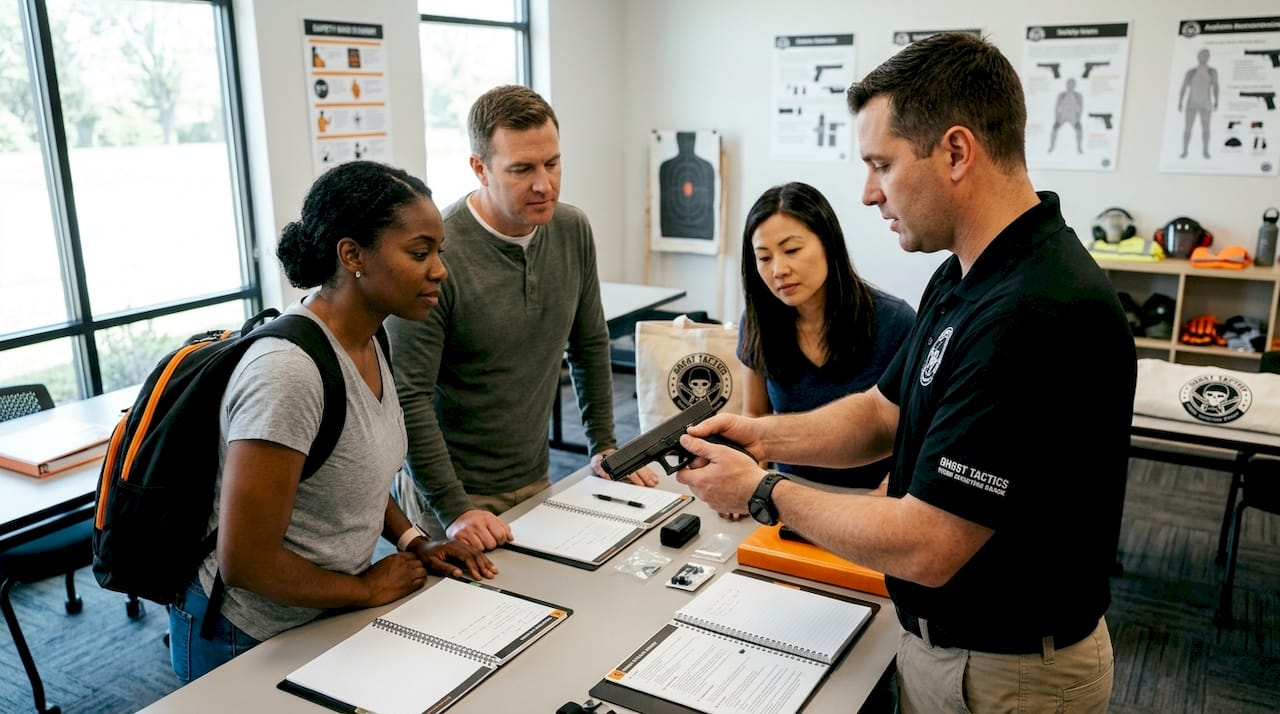
Professional oversight delivers accountability for muzzle discipline, trigger control, and situational awareness that informal peer teaching cannot match. A friend at the range may notice an unsafe muzzle direction once. A certified instructor enforces it every single repetition, every single session.
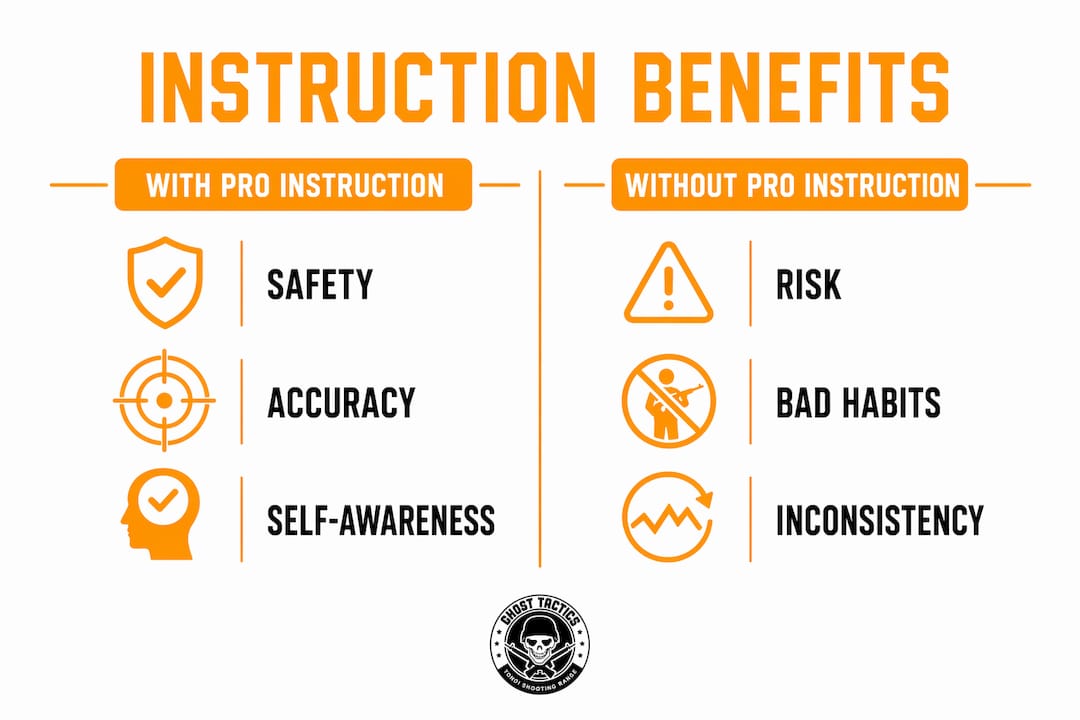
The contrast between professional oversight and informal “buddy” teaching is significant. Informal settings lack structured protocols, standardized correction language, and the authority to stop unsafe behavior immediately. Certified instructors operate under recognized safety frameworks, including the four fundamental firearm safety rules, and they hold students accountable to those standards without exception.
| Safety factor | With professional instruction | Without professional instruction |
|---|---|---|
| Muzzle discipline | Consistently enforced each session | Corrected inconsistently or not at all |
| Trigger control | Drilled through structured repetition | Often self-assessed with limited feedback |
| Situational awareness | Taught as a core skill with scenario drills | Rarely addressed in informal settings |
| Accident risk | Significantly reduced through procedural rigor | Higher due to unchecked unsafe habits |
| Accountability | Instructor holds student to safety standards | Peer pressure or social comfort may override safety |
The certification behind a credentialed instructor matters. Organizations like the National Rifle Association and the United States Concealed Carry Association set instructor qualification standards that require demonstrated competency, not just familiarity with firearms. When you train with a certified instructor, you train within a system designed to keep you and everyone around you safe.
Passing a qualification course does not mean you know how to shoot under pressure. Qualification tests measure rote performance on a fixed course of fire. Professional instruction builds adaptable skills that hold up in dynamic, stressful conditions.
The most underrated benefit of structured shooting courses is what they teach you about yourself. A skilled instructor does not just correct your errors. They teach you to recognize those errors on your own. That capacity for self-diagnosis is what separates a shooter who improves between sessions from one who stagnates.
Consistent training fosters resilience against skill degradation between sessions. Shooters who understand their own mechanics can identify when something feels off and adjust without waiting for the next lesson.
Instructors build this self-awareness through several mental frameworks:
Pro Tip: Keep a short training log after each session. Write down one thing you did well and one thing to correct. Instructors use this method to track progress, and it works just as well when you practice alone.
Incorporating movement into training adds another layer of self-awareness, forcing shooters to manage footwork, balance, and sight alignment simultaneously under realistic conditions.
The format of your training shapes how fast you improve and what kind of skills you build. Both private and group instruction have clear strengths, and the right choice depends on your current level and specific goals.
Private one-on-one lessons promote faster skill progression through personalized adjustments and in-depth focus on firearm-specific mechanics. An instructor working with you alone can address your exact grip on your specific firearm, adjust for your hand size, and tailor recoil management coaching to your body mechanics. Group classes cannot deliver that level of individual attention.
Beginners benefit significantly from private lessons that adjust pace and content to individual learning styles, improving both retention and engagement. When you are new, questions come fast. A private format lets you ask every one of them without slowing down a class.
Group classes serve a different purpose. They build foundational knowledge efficiently, expose shooters to a range of scenarios and peer learning, and often cost less per session. For shooters who have completed private instruction and want to practice in a more social, varied environment, group formats reinforce skills under mild social pressure, which itself is a useful training variable.
| Factor | Private instruction | Group instruction |
|---|---|---|
| Feedback quality | Individualized, immediate, and specific | General, shared across all participants |
| Pace | Set by the individual shooter | Set by the group’s average progress |
| Cost per session | Higher | Lower |
| Best for | Beginners, skill correction, firearm-specific coaching | Foundational learning, social reinforcement |
| Scenario variety | Tailored to shooter’s goals | Standardized for the group |
The most effective approach combines both formats. Start with private instruction to build correct mechanics, then use group classes to practice those mechanics under varied conditions.
Professional shooting instruction builds safety, accuracy, and self-awareness faster and more reliably than any form of unguided practice.
| Point | Details |
|---|---|
| Early instruction prevents bad habits | Correct mechanics learned first are far easier to maintain than habits corrected later. |
| Credentialed instructors enforce safety | Certified professionals apply consistent accountability that informal peer teaching cannot replicate. |
| Self-diagnosis is a trainable skill | Structured courses teach shooters to identify and correct their own errors between sessions. |
| Private lessons accelerate progress | One-on-one formats allow firearm-specific, body-specific coaching that group classes cannot provide. |
| Qualification is not proficiency | Passing a fixed course of fire does not build the adaptable skills that professional instruction develops. |
The clearest pattern I have seen is this: shooters who arrive at formal training with years of self-taught experience almost always need to unlearn before they can learn. The grip feels natural to them. The stance feels comfortable. And both are wrong in ways that took thousands of repetitions to encode.
The concept of conscious incompetence is the psychological starting point for effective firearms instruction. You have to know what you do not know before you can accept correction. Shooters who walk in convinced they already have the basics down are the hardest to teach. Shooters who walk in genuinely curious about their own errors make the fastest progress.
The other thing I want to push back on is the idea that online video tutorials are a reasonable substitute for live instruction. They are not. A video cannot see your trigger finger. It cannot watch your muzzle during a reload. It cannot stop you mid-drill and show you exactly where your elbow is going. The feedback loop that makes professional instruction work simply does not exist in recorded content.
Ongoing training matters more than most shooters realize. A single course gives you a foundation. Regular sessions with a qualified instructor build the kind of stress-resilient, adaptable skill that holds up when conditions are not ideal. That is the real goal.
— Tõnis
Laskmine offers professional shooting instruction and range access designed for shooters at every level, from first-timers building safe fundamentals to experienced shooters refining technique under realistic conditions.
Instructors at Laskmine bring real-world experience and structured methodology to every session. The Tondi Shooting Range provides a controlled environment where both private and group instruction formats are available, with courses built around the safety standards and skill-building frameworks covered in this article. If you are ready to move from unguided practice to structured development, Laskmine is the place to start.
Professional instruction provides real-time feedback, safety accountability, and structured correction that self-teaching cannot replicate. Bad habits formed through unguided practice are significantly harder to correct once they become muscle memory.
New shooters benefit most from professional instruction before they develop any independent habits. Starting with a credentialed instructor from the first session prevents the need for correction later.
A qualification course tests performance on a fixed, predictable course of fire. Real proficiency requires adaptable skills built through professional instruction under varied and dynamic conditions.
Private lessons deliver faster skill progression through personalized coaching tailored to your specific firearm and body mechanics. For most shooters, the accelerated improvement justifies the investment.
Look for certification from recognized organizations such as the National Rifle Association or the United States Concealed Carry Association. Credentialed instructors can provide proof of their qualifications and operate under established safety standards.