The Role of a Shooting Instructor: Skills and Responsibilities
- Mo-Su 10.00 – 20.00
- +372 555 85 416
- sale@laskmine.ee




A shooting course certificate documents that you completed supervised firearms training with a private provider, but it does not grant you a firearms licence on its own. In Estonia, the Police and Border Guard Board (PPA) administers the legally binding theory and practical exam, and your certificate is the preparation and paperwork that supports that application. Tondi Shooting Range issues completion certificates for exactly this purpose, under full instructor supervision.
TL;DR:
- A shooting course certificate confirms completion of training but does not fulfill legal licensing requirements; the PPA conducts the official exam.
- Valid certificates must include specific details like full name, personal code, course hours, trainer’s signature, and a verification number to prevent delays.
- The PPA exam assesses safe firearm handling and muzzle discipline, with handling skills weighted more than shooting accuracy for passing.
- Preparing with a structured practice plan over four to six weeks and doing timed mock exams significantly improves chances of passing on the first attempt.
- Application processing typically takes one to two months after submitting the certificate and fees, with most delays caused by paperwork errors rather than exam failures.
A course completion certificate is different from a licensing document. It confirms you attended and finished a defined training program. It doesn’t evaluate whether you meet the legal threshold to own or carry a firearm. That distinction trips up a lot of first-time applicants who assume the certificate itself is the finish line.
A properly issued certificate should include specific fields, and their absence is one of the most common reasons paperwork gets delayed. Training-certification standards from providers like Smartkoolitus recommend that every valid certificate list:
These details matter because the PPA needs a paper trail it can verify quickly. A certificate missing a trainer’s name or showing inconsistent dates raises questions during review, and questions mean delays. Providers that number and log every certificate they issue make it far easier to confirm authenticity later, which is exactly the kind of recordkeeping gun safety training programs should maintain as standard practice.
The PPA, not any private training provider, conducts the legally binding exam for a firearms acquisition licence. That exam has two parts: a theoretical test and a practical shooting test, both administered under the state’s own rules rather than a range’s internal grading. Private shooting range course certificates play a supporting role, not a substitute one, in this process.
Here’s how the coordination usually works in practice:
In short, the certificate gets your foot in the door and often makes scheduling easier, but the PPA holds the actual decision-making authority over whether you pass.
The path from “I want a licence” to “I have a certificate and an exam date” follows a predictable sequence, and skipping steps almost always costs you time later.
Before the course, gather your documents. Bring valid photo identification, and if your chosen provider requires a medical or first-aid prerequisite, sort that out ahead of time rather than the morning of your session. Book early. Popular weekend slots at busy ranges fill up fast, especially around holidays.
During the course, expect a structured flow:
After the course, your certificate gets issued, either on paper the same day or electronically within a short window depending on the provider. Check every field before you leave: your name spelled correctly, the personal code accurate, the course hours and dates listed, and the trainer’s signature present. A certificate with a typo in your personal code is a certificate you’ll be resubmitting.
Submission to the PPA comes next. You’ll file your application with the required documents, including your training certificate, and pay the associated application fee. This is the point where a training provider that offers to help coordinate your exam date, as Riigi Teataja’s exam procedure allows, saves you a separate trip to arrange scheduling yourself.
Pro Tip: Photograph or scan your certificate the same day you receive it. If a page goes missing during PPA processing, you’ll have proof of issuance ready to resend instantly.
The theory exam runs under a strict time limit with a set number of questions, and you need a defined minimum of correct answers to pass, details spelled out in official summaries from Relvaload.ee. Candidates who haven’t practiced under timed conditions often underestimate how much the clock affects performance, not the difficulty of the material itself.
The practical test measures something different from marksmanship. Examiners are watching for:
Marksmanship matters less than most applicants expect. The Riigi Teataja exam conduct rules put safe handling fundamentals ahead of hit accuracy, and that emphasis shows up in how examiners score candidates. A shooter who lands every shot but breaks muzzle discipline once will fail faster than a shooter with a mediocre grouping but flawless handling technique.
The pattern examiners see most often: candidates who fail typically do so on handling errors, not shooting accuracy. Rushing the loading sequence because of nerves is the single most repeated mistake instructors report.
Cramming the night before a firearms exam rarely works, and the material rewards spaced repetition more than last-minute review.
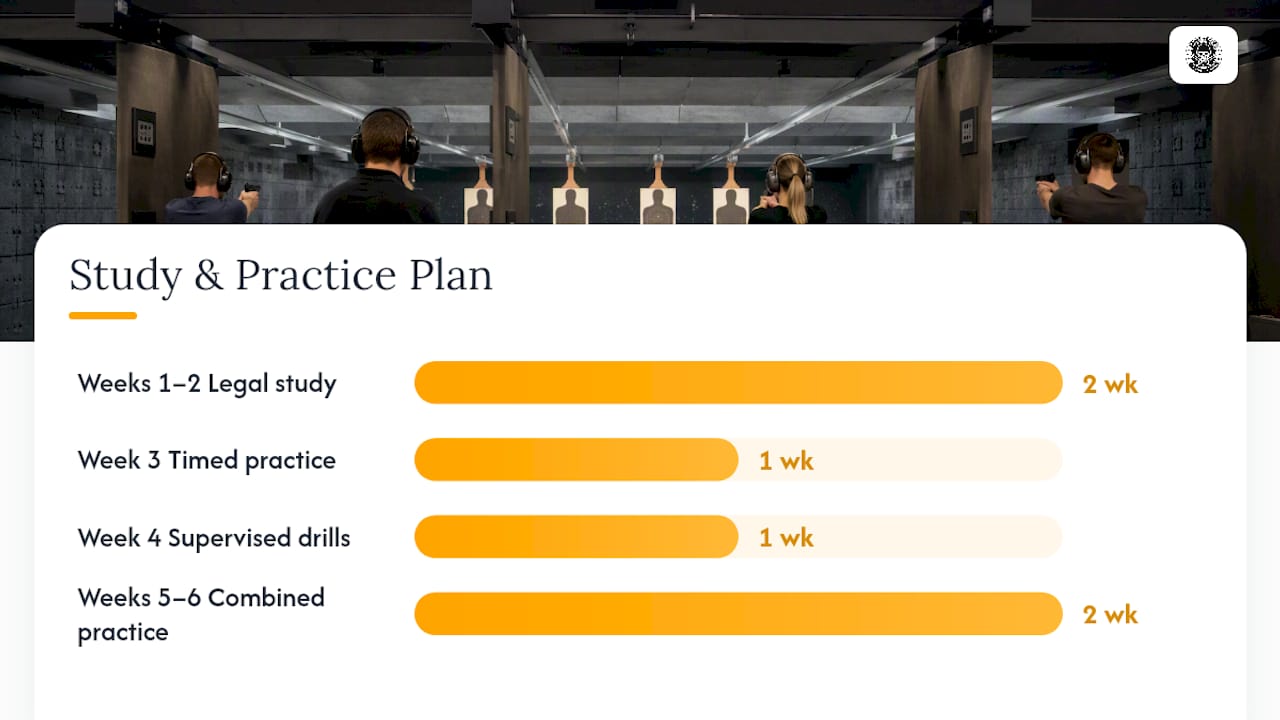
A workable four to six week schedule looks something like this:
Hands-on drills matter more than most applicants expect going in. Practice the loading and unloading sequence until it’s mechanical, not something you have to think through step by step. Add timed reloads once the basic motion is solid. Muzzle control drills, where an instructor watches your barrel direction through every transition, catch habits you don’t notice on your own.
Supervised range time accelerates all of this considerably. A professional instructor spots the small errors, a dropped elbow, an early trigger finger, a rushed magazine seat, that you’d otherwise repeat for weeks without realizing it. Structured courses that pair theory review with supervised practicals shorten the learning curve substantially for people who’ve never handled a firearm before.
Pro Tip: Run one full mock exam under real time pressure, with someone else timing you and grading your handling. The nerves you feel during a timed simulation are the closest thing to what you’ll feel at the actual PPA exam.
On exam day itself, bring your identification, your course certificate, any required medical documentation, and arrive early enough to settle your nerves before the clock starts. A rushed arrival compounds the same panic that causes handling mistakes.
Most private courses run a single day or a compact weekend, and certificates are typically issued the same day training wraps up, though some providers process electronic certificates within a few business days.
PPA processing adds its own timeline. Relvaload.ee estimates application review at roughly one to two months, with separate fees for the application and the exam components. Those figures shift periodically, so confirm current amounts directly with the PPA before budgeting.
Expect a few additional costs beyond the course and application itself:
The recurring pattern in delayed applications: paperwork errors, not exam failures, cause most scheduling setbacks. Double-checking every certificate field before submission avoids the bulk of these headaches entirely.
The shooting range operates with licence-prep courses built around exactly the process outlined above. The Relvaloa taotleja koolitus course exists specifically for licence applicants, and it comes with a completion certificate issued directly upon finishing.
No prior experience is required is required for any course at Tondi Shooting Range. Every session runs under the direct supervision of professional instructors, and safety training is is built into the curriculum from the first minute, not treated as an afterthought. The facility is entirely indoor, which means weather never cancels a booking, and the range offers a wide selection of firearms so that you can train with the type most relevant to your intended licence category.
Beyond licence prep, the range hosts everything from bachelor parties to corporate team-building sessions, but the core supervised, no-experience-needed structure stays the same across every program. If you’re serious about walking into your PPA exam prepared, structured training with direct instructor feedback closes the gap between reading about handling fundamentals and actually performing them under pressure.
Course completion certificates document a specific training event with a fixed date, and they don’t come with an automatic renewal clock attached the way, say, a professional license might. What matters more in practice is whether the PPA’s own application and licence-related deadlines have shifted since you trained.
If significant time passes between finishing your course and submitting your PPA application, some providers recommend a refresher session, particularly on handling fundamentals, since motor skills around loading and muzzle discipline fade without regular practice. This isn’t usually a legal requirement so much as a practical one: showing up to your exam months after your last supervised session with rusty handling habits is a common way to fail on technique rather than knowledge.
For licence holders who need to renew an existing firearms licence down the line, separate refresher or requalification requirements may apply depending on the licence category and how much time has passed. Those rules live with the PPA’s own renewal procedures, not with the original training certificate, so it’s worth checking directly with the PPA if you’re unsure whether your specific licence type requires periodic requalification.
The practical takeaway: treat your certificate as proof of a training milestone, not a permanent credential. If you haven’t handled a firearm since your course and your PPA appointment is weeks or months away, a short refresher session keeps your practical skills sharp enough to pass on the first attempt rather than needing a second try.
Most failed attempts trace back to a handful of repeatable mistakes, and nearly all of them are avoidable with a little forethought.
Underestimating the theory clock. Candidates study the material thoroughly but never practice under actual time pressure, then panic when the exam’s strict limit hits harder than expected. Timed mock tests fix this before exam day, not during it.
Treating the practical test as a marksmanship contest. Applicants show up ready to shoot tight groups and get caught off guard when a fumbled loading sequence costs them the pass. Handling fundamentals decide most outcomes, not accuracy.
Submitting incomplete certificates. A missing trainer signature, an incorrect personal code, or an unclear date stamp are small clerical issues that create real processing delays at the PPA. Checking every field before you leave the training venue takes two minutes and saves weeks.
Skipping supervised practice between the course and the exam. Motor skills fade. Someone who trains once and doesn’t touch a firearm again for two months often shows up rustier than they expect, and nerves make rusty handling worse.
Arriving unprepared on exam day. Forgetting identification, the certificate itself, or required medical documentation forces a rescheduled appointment, which pushes the entire timeline back by weeks in some cases.
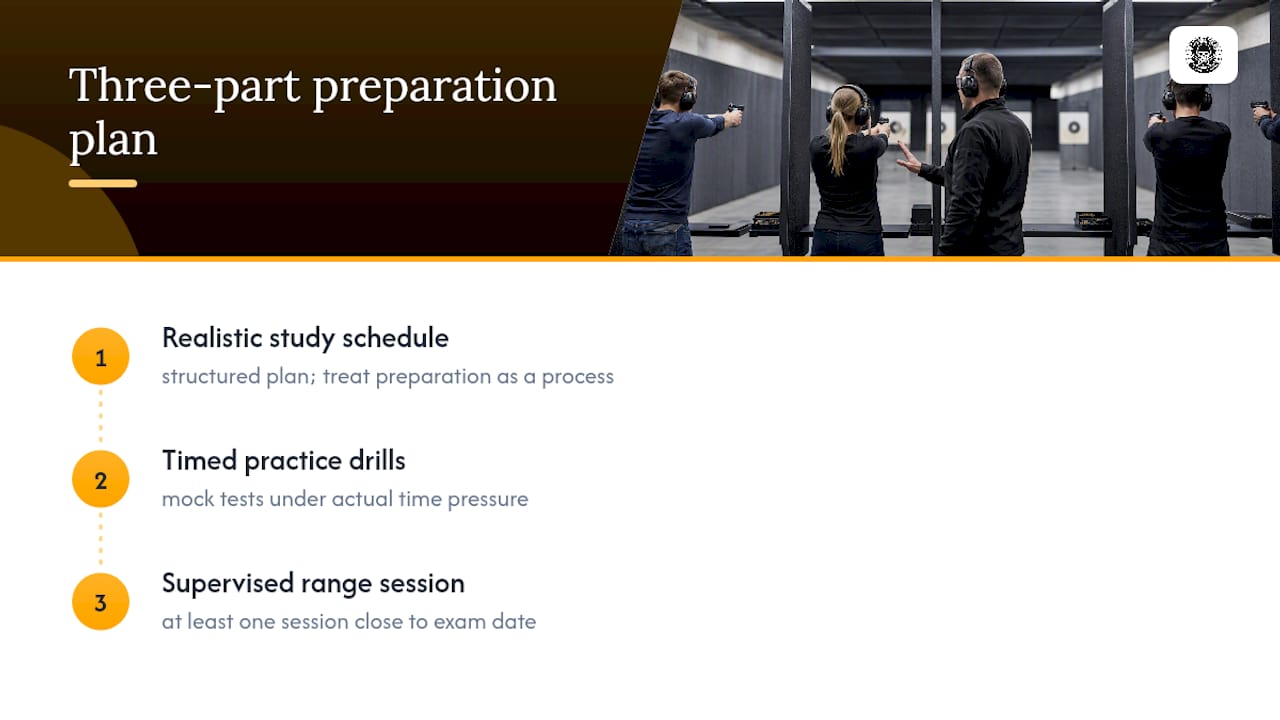
Every one of these is preventable with structured preparation: a realistic study schedule, timed practice drills, and at least one supervised session close to your actual exam date. The applicants who pass on the first attempt are rarely the most naturally talented shooters. They’re the ones who treated preparation as a process instead of a formality.
Tondi Shooting Range gives licence applicants something a self-study approach can’t: direct instructor feedback on the exact handling habits examiners score, inside an indoor facility where weather never forces a reschedule. The Relvaloa taotleja koolitus course includes a completion certificate issued the same day, built specifically around the skills the PPA practical test evaluates. For readers who want to try the range experience before committing to full licence prep, several packages are listed on the gift card and package page, which also makes for a solid gift for someone else working toward their own licence.
Gun owners looking for extra supervised practice between their course and their PPA exam date can book range time directly through the range rental and gun owner packages, including a 10x or 20x visit card if you know you’ll want repeated sessions.
Here’s what to do next: check available dates, pick the package that matches where you are in the process, bring valid photo identification, and arrive a little early so you’re settled before your session starts. Because PPA exam coordination often runs smoother when it’s arranged through your training provider, booking early gives you more flexibility on scheduling that date once your certificate is in hand.
For exact forms, current fees, and the legal text governing the exam process, consult these primary sources directly rather than relying on secondhand summaries:
No. It documents completed private training and supports your application, but the PPA’s own theory and practical exam is the legally binding step toward a licence.
A valid certificate lists your name and personal code, the course name and total hours, the trainer’s signature, the issuing organization’s details, the date, and a unique certificate number.
Examiners focus on safe loading, unloading, and muzzle discipline throughout handling. Marksmanship matters less than consistent, controlled technique.
The Relvaloa taotleja koolitus course costs €280 and includes a completion certificate issued the same day, alongside supervised instruction with no prior experience required.
Processing timelines vary, but estimates from official summaries put typical application review at around one to two months, so confirm current timing with the PPA directly.